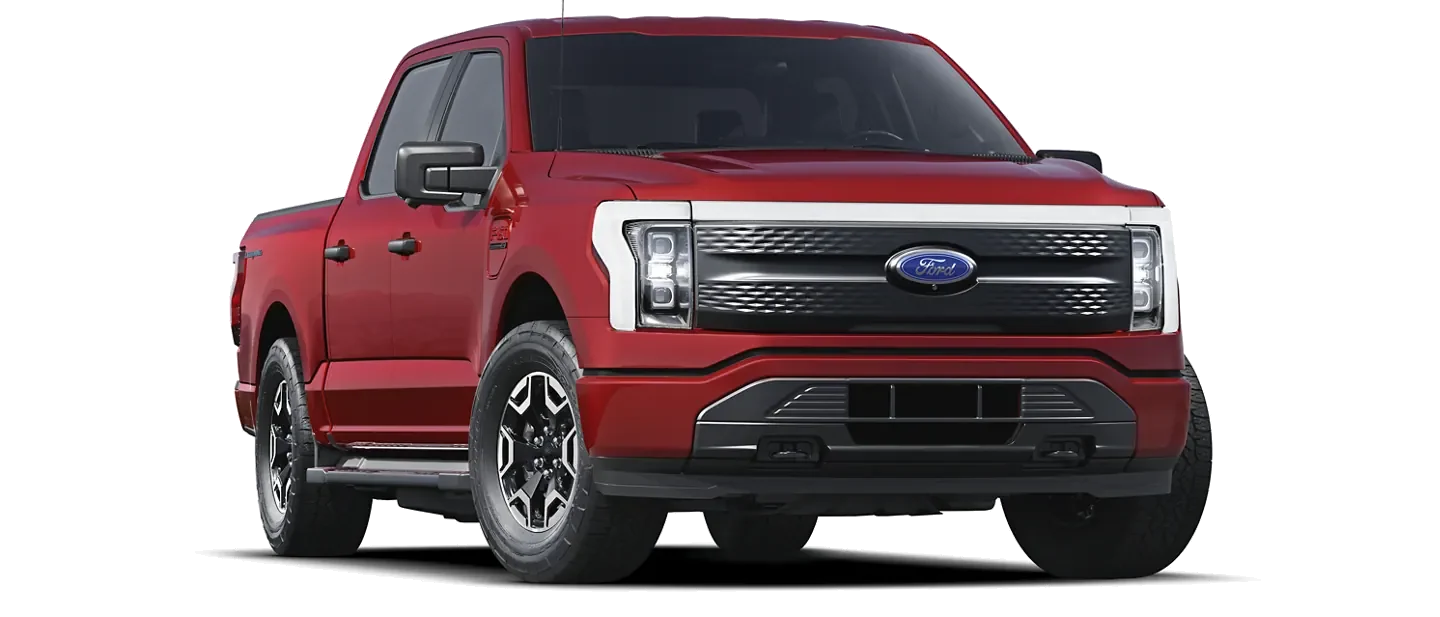
December 16, 2021 NHTSA CAMPAIGN NUMBER: 21V986000
Damaged Driveshaft May Fracture
A fractured driveshaft can cause a loss of drive power, or a loss of vehicle control if the driveshaft contacts the ground. Additionally, unintended movement could occur while parked if the parking brake is not engaged. Any of these scenarios can increase the risk of a crash.
NHTSA Campaign Number: 21V986
Manufacturer Ford Motor Company
Components POWER TRAIN, STRUCTURE
Potential Number of Units Affected 184,698
Summary
Ford Motor Company (Ford) is recalling certain 2021-2022 F-150 vehicles. Underbody heat and noise insulators may loosen and contact the aluminum driveshaft, which could damage the driveshaft and cause it to fracture.
Remedy
Dealers will inspect and repair the driveshaft as necessary, and properly attach the underbody insulators, free of charge. Owner notification letters were mailed February 4, 2022. Owners may contact Ford customer service at 1-866-436-7332. Ford’s number for this recall is 21S56.
Notes
Owners may also contact the National Highway Traffic Safety Administration Vehicle Safety Hotline at 1-888-327-4236 (TTY 1-800-424-9153), or go to www.nhtsa.gov.
Check if your Vehicle has a Recall
August 10, 2022
NEW VEHICLE DEMONSTRATION / DELIVERY HOLD – Safety Recall 21S56 – Supplement #7
Certain 2021 – 2022 Model Year F-150 Vehicles Equipped with Crew Cab, 145” Wheelbase, 4×4, 302a & Above Option Package, and One-Piece Aluminum Driveshaft Loose/Sagging Underbody Insulators
AFFECTED VEHICLES
| Vehicle | Model Year | Assembly Plant | Build Dates |
| F-150 | 2021 | Dearborn (DTP) | January 10, 2020 through November 20, 2021 |
| F-150 | 2021 | Kansas City (KCAP) | February 17, 2020 through October 19, 2021 |
| F-150 | 2022 | Dearborn (DTP) | October 29, 2021 through November 6, 2021 |
| F-150 | 2022 | Kansas City (KCAP) | October 13, 2021 through October 13, 2021 |
The eleventh VIN position is the assembly plant code.
- F – Dearborn Assembly (Dearborn, Michigan) = DTP
- K – Kansas City Assembly (Claycomo, Missouri) = KCAP Affected vehicles are identified in OASIS and FSA VIN Lists.
REASON FOR THIS SAFETY RECALL
In some of the affected vehicles, underbody insulators may loosen and contact the aluminum driveshaft, resulting in marking or scoring of the driveshaft. Over time, the aluminum driveshaft may fracture, which can result in loss of motive power while driving, unintended vehicle movement while the vehicle is in park if the parking brake is not applied, and secondary damage to surrounding components. A fractured driveshaft may also contact the ground which may cause loss of control of the vehicle while driving. A fractured driveshaft increases the risk of injury or crash.
SERVICE ACTION
Before demonstrating or delivering any new in-stock vehicles involved in this recall, dealers are to secure both the driver and passenger-side underbody insulators and inspect the driveshaft, fuel vapor lines and electrical connectors for damage and repair as required. This service must be performed on all affected vehicles at no charge to the vehicle owner.
OWNER NOTIFICATION AND MAILING SCHEDULE
Owner letters were mailed the week of January 31, 2022. Dealers should repair any affected vehicles that arrive at their dealerships, whether or not the customer has received a letter.
PLEASE NOTE:
Federal law requires dealers to complete this recall service before a new vehicle is delivered to the buyer or lessee. Violation of this requirement by a dealer could result in a civil penalty of up to $21,000 per vehicle. Correct all vehicles in your new vehicle inventory before delivery.
SOLD VEHICLES
- Ford has not issued instructions to stop selling/delivering or driving used vehicles under this safety recall. Owners should contact their dealer for an appointment to have their vehicles remedied as soon as practicable. Owners can continue to safely drive their vehicles.
- Immediately contact any of your affected customers whose vehicles are not on your VIN list but are identified in OASIS. Give the customer a copy of the Owner Notification Letter (when available) and schedule a service date.
- Correct other affected vehicles identified in OASIS which are brought to your dealership.
- Dealers are to prioritize repairs of customer vehicles over repairs of new and used vehicle inventory.
STOCK VEHICLES
- Correct all affected units in your new vehicle inventory before delivery.
- Use OASIS to identify any affected vehicles in your used vehicle inventory.
DEALER-OPERATED RENTAL VEHICLES
The Fixing America’s Surface Transportation (FAST) Act law effective June 2016 prohibits a rental company from selling, renting or leasing vehicles subject to a safety or compliance recall. Please consult your legal counsel for legal advice.
TITLE BRANDED / SALVAGED VEHICLES
Affected title branded and salvaged vehicles are eligible for this recall.
OWNER REFUNDS
Refunds are not approved for this program.
RENTAL VEHICLES
- PASS INSPECTION: Vehicles that pass the applicable driveshaft, fuel systems, and electrical inspections are NOT affected and are not approved for rental vehicles. Refer to the 21S56 technical instructions for additional information.
- FAIL INSPECTION: Vehicles that fail either the applicable driveshaft, fuel systems, or electrical inspections o Parts are NOT available:
- Driveshaft, vapor line, or pigtail is on back-order.
- PARTS ESCALATION PROCESS (Vehicle Off Road) process has been followed and COPIS ticket with VOR flagged has been submitted.
- Prior approval is required from the SSSC, submit contact type long-term rental for consideration and approval if appropriate.
- A ten-digit prior-approval code is required from the SSSC for rental vehicles, a new approval code is required from SSSC every 30 days.
- If rental vehicles are needed beyond June 30, 2022, dealers will have to contact SSSC for an extension.
- Approval for all rental vehicles for this program will end on June 30, 2022.
- Follow Extended Service Plan (ESP) guidelines for dollar amounts. Prior approval is required from the SSSC.
PARTS REQUIREMENTS
Video Instruction:
Review the following video clips before ordering parts or attempting to repair a vehicle:
https://bcove.video/3rdmqR0. This video does not include the updated HEV repair procedure.
Driveshaft – Only replace the driveshaft if marks are present per the technical instructions.
| Part Number | Description | Order Quantity |
| *-4602-* | Driveshaft (part number varies by vehicle – use Ford ECat to identify the specific part number by VIN) | As Required |
NOTE: The Driveshaft flange to pinion flange bolt part number N800594-S100 has been removed from the parts list for this program, and may be reused. Refer to the 21S56 Technical Information on updated instructions for thread cleaning and application of thread adhesive.
| Rivet Part Number’s | Description | Order Quantity | Claim Quantity | ||||||||
Any of the following part numbers may be used:
| Rivets
(Pack of 4, 5 needed per DTP vehicles, 2 needed per KCAP vehicles) NOTE: Part numbers ending in S900C are packages of 100 | 2 DTP | 5 Rivets | ||||||||
| 1 KCAP | 2 Rivets |
| Repair | Part Number | Description | Order Quantity | Claim Quantity | |
| All |
or Equivalent (use OSP) | Motorcraft Anti-Corrosion Coating
(16 fl. Oz per container, applied to all rivets liberally, 2 Oz. per repair, repair 8 vehicles per can) Check dealer inventory before ordering additional quantities | As Needed | 0.13 | |
| All |
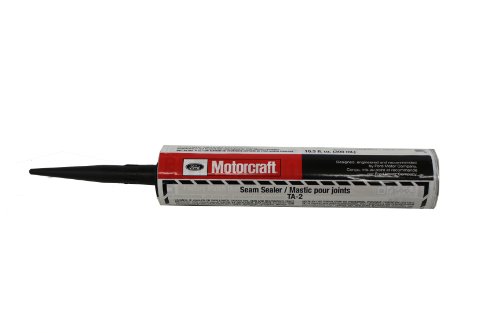
or Equivalent (use OSP) | Motorcraft Seam Sealer
(9.5 fl. Oz per tube, applied to all rivets liberally, 1 Oz per rivet, 1-5 Oz per vehicle, repair 1-5 vehicles per tube) Check dealer inventory before ordering additional quantities | As Needed | 0.11 each rivet
0.5 maximum per repair | |
| Driveshaft Replacement | XG-1-E1
No products found. | Motorcraft® Premium Long-Life Grease | 1 | As Required | |
| Driveshaft Replacement | XT-10QLVC | MERCON® LV Automatic Transmission Fluid (12 per case, 1 Quart bottle required) | 1 | 1 Quart | |
| HEV | ML3Z-
1611165-A | Lytherm Patch for interior of vehicle | 1 | 1 |
| Part Number | Description | Quantity Needed |
| Obtain Locally | Zinc coated steel or Aluminum washers, ¼ inch ID, 2-inch OD, Thickness 2mm (Max). | 5 needed per DTP Vehicle Claim as Misc. Other |
| 2 needed per KCAP Vehicle Claim as Misc. Other | ||
| Obtain Locally | LOCTITE 243 Blue Medium Strength Threadlocker or equivalent – Specification
WSK-M2G349-A7 | 1 tube needed per vehicle Claim as Misc. Other |
CERTAIN 2021-2022 MODEL YEAR F-150 VEHICLES EQUIPPED WITH A CREW CAB, 145″ WHEELBASE, 4X4, 302A AND ABOVE OPTION PACKAGE, AND ONEPIECE ALUMINUM DRIVESHAFT – LOOSE/SAGGING UNDERBODY INSULATORS
SERVICE PROCEDURE
GAS ENGINES – VEHICLES MANUFACTURED AT DEARBORN TRUCK ASSEMBLY PLANT
Table Of Contents
Check for DTCs – 2
Inspection – 3
Driveshaft – 3
Zones 1, 3 and 4 – 3
Zone 2 – 5
Driver Side Insulator – 7
Vapor Line – 7
Securing Underbody Insulators – 9
Appendix A – Acceptable Photos – 13
Review the video link below before starting this repair procedure:
Materials List
Ruler/Scale
13 mm (1/2 in) Drill Stop
Small Brush
M18-1/4″ Rivet Gun
Drill 6.7 mm (17/64 in) Drill Bit
Marker
1/4″ Rivet Gun
5.1 mm (13/64 in) Drill Bit – Rivet W719880-S417
Tape
NOTE: A ¼” air over hydraulic rivet gun was used for the service trials for this program, however a pneumatic rivet gun or a manual rivet gun may also be used. However, it may not be possible to access and properly secure the rivets into the floor pan using a manual rivet gun. It is important to always confirm the rivet is properly secured to the floor pan of the vehicle.
NOTE: The driver side insulator is located directly above the fuel tank.
NOTE: The passenger side insulator is located directly above the exhaust.
NOTE: Insulators are highlighted for illustration purposes only.
Dearborn Truck Plant Build Date – Design change that removed underbody insulators from production
Passenger Side Insulator 10/15/2021 and later
Driver Side Insulator 11/19/2021 and later
1. Where was the vehicle manufactured?
Kansas City – See Attachment VI for correct Technical Instructions to complete repair.
Dearborn Truck – Proceed to step 2.
2. Is the production date of the vehicle 10/15/2021 and later?
Yes – If the passenger-side insulator is not present, follow technical instructions and per dealer bulletin claim 21S56B.
No – Proceed to step 3.
3. Is the production date of the vehicle 11/19/2021 and later?
Yes – If the driver-side insulator is not present, follow technical instructions and per dealer bulletin claim 21S56B.
– If both the passenger-side and driver-side insulators are not present, no repair is necessary, close recall and claim 21S56E with 0.3 hours.
No – Proceed to step 4.
NOTE: Underbody Insulators should not be installed on vehicles where they were removed from production as indicated above.
Check for DTCs
4. Using the Ford Diagnostic and Repair System (FDRS), check the Powertrain Control Module (PCM) for DTCs. Are either of the following DTC’s present in the PCM, P0442 and/or P0456?
Yes – Please follow Workshop Manual (WSM) procedures for pinpoint test HX in Section 303-13, then proceed to step 5.
No – Proceed to step 5.
Inspection
5. With the vehicle in NEUTRAL, position it on a hoist. Please follow Workshop Manual (WSM)
procedures in Section 100-02.
6. Is the vehicle a Raptor?
Yes – Proceed to step 7.
No – Proceed to step 8.
7. Remove the muffler inlet pipe. Please follow WSM procedures in Section 309-00C then proceed to step 9.
8. Remove the driveshaft. Please follow WSM procedures in Section 205-01.
NOTE: Do NOT discard the driveshaft flange to pinion flange bolts.
Zones 1, 3 and 4
9. Inspect Zones 1, 3 and 4 of the rear driveshaft for any marks caused by the front and/or rear edges of the passenger side insulator. Are there any marks present in Zones 1, 3 or 4? See Figure 2.
Yes – Proceed to step 10.
No – Proceed to step 12.
10. What is the current odometer reading?
2,500 miles – Proceed to step 11.
< 2,500 miles – Proceed to step 12.
11. Place a straight edge along the driveshaft over the wear mark and attempt to fit a 0.018in (0.45mm) feeler gauge between the flat edge and the wear mark. Can the feeler gauge fit between the straight edge and anywhere along the wear mark? See Figures 3 and 4.
Yes – Does not pass inspection. Contact the SSSC and provide a picture of the driveshaft with the feeler gauge fitting between the straight edge and wear mark. Once approved, rear driveshaft replacement will be required, but do not install at this time. Proceed to step 14.
No – Passes inspection. Proceed to step 12.
Zone 2
12. Inspect Zone 2 (transition from larger tube diameter to smaller diameter section) of the driveshaft tube for any marks caused by the front edge of the passenger side insulator. Are there any marks present? See Figure 5.
Yes – Does not pass inspection. Proceed to step 13.
No – Passes inspection. Driveshaft may be reused. Proceed to step 14.
13. Inspect the marks found on Zone 2. Is the aluminum tube surface grain pattern worn off, completely smooth, or have an appearance of necking? See Figures 6 through 9.
Yes – Does not pass inspection. Contact the SSSC and provide a picture of the driveshaft with the grain pattern worn off. Be sure to show a clear image of the grain pattern missing. Once approved, rear driveshaft replacement will be required, but do not install at this time. Proceed to step 14.
No – Passes inspection. Driveshaft may be reused. Proceed to step 14.
Driver Side Insulator
14. Inspect the driver side insulator for any edges hanging down or touching the fuel tank. Is the insulator hanging down or touching the fuel tank? See Figure 10.
Yes – Does not pass inspection. Proceed to step 15.
No – Passes inspection. Proceed to step 17.
15. Remove the fuel tank to gain access to the vapor line. Please follow WSM procedures in Section 310-01.
16. Inspect the vapor line for any damage caused by the driver side insulator. Is there any damage to the line? See Figures 11 through 13.
Yes – Does not pass inspection. Replace the damaged line. Please follow WSM procedures in Section 310-01, then proceed to step 17.
No – Passes inspection. Proceed to step 17.
Securing Underbody Insulators
17. Measure and mark the four locations on the passenger side insulator and mark the one location on the driver side insulator. See Figures 14 and 15.
18. Use the 5.1 mm (13/64 in) drill bit for rivet part number W719880-S417 or the 6.7mm (17/64 in) drill bit for all other rivet part numbers to drill a hole through the insulator and into the floor. See Figure 16.
NOTE: Use the 13 mm (1/2 in) drill stop to ensure you do not drill through the carpet.
19. Repeat step 18 for the remaining four marked locations.
20. Using a small brush, apply a layer of the anti-corrosion coating to the edges of the newly drilled holes.
21. Install the washer onto the rivet. See Figure 17.
NOTE: All approved listed rivet part numbers may not look identical to the photos in the technical instructions.
22. Apply a thick layer of seam sealer to the rivet, and the backside of the washer. See Figure 18.
23. Using a 1/4″ rivet gun, install the rivet and washer to the drilled hole. See Figure 19.
NOTE: To ensure the rivet is properly secured, apply as much force to the rivet gun as possible.
24. Attempt to move the washer/rivet to confirm it is properly secured.
25. Using a small brush, apply a layer of the anti-corrosion coating to the washer and rivet.
26. Repeat steps 21-25 for the remaining four drilled holes.
27. Install the fuel tank if it was removed in the inspection. Please follow WSM procedures in Section 310-01.
28. Using an air blow gun, remove any debris from threaded holes in axle flange. See Figure 20.
NOTE: Make sure that the mating faces are clean and free of foreign material.
29. Inspect the original driveshaft flange to pinion flange bolts for rust in the threads and replace if rusted or damaged. Clean threads of the original driveshaft flange to pinion flange bolts with a wire brush and coat the threads with LOCTITE 243 Blue Medium Strength Threadlocker or equivalent. See Figure 21.
30. Install the driveshaft if it was removed in the inspection. Please follow WSM procedures in Section 205-01.
31. Install the muffler inlet pipe if it was removed in the inspection. Please follow WSM procedures in Section 309-00C.
Appendix A – Acceptable Photos
CERTAIN 2021-2022 MODEL YEAR F-150 VEHICLES EQUIPPED WITH A CREW CAB, 145″ WHEELBASE, 4X4, 302A AND ABOVE OPTION PACKAGE, AND ONEPIECE ALUMINUM DRIVESHAFT – LOOSE/SAGGING UNDERBODY INSULATORS
SERVICE PROCEDURE
DIESEL ENGINES
Table Of Contents
Inspection – 3
Driveshaft – 3
Zones 1, 3 and 4 – 3
Zone 2 – 5
Securing Underbody Insulators – 7
Appendix A – Acceptable Photos – 11
Review the video link below before starting this repair procedure:
Materials List
Ruler/Scale
13 mm (1/2 in) Drill Stop
Small Brush
M18-1/4″ Rivet Gun
Drill 6.7 mm (17/64 in) Drill Bit
Marker
1/4″ Rivet Gun
5.1 mm (13/64 in) Drill Bit – Rivet W719880-S417
Tape
NOTE: A ¼” air over hydraulic rivet gun was used for the service trials for this program, however a pneumatic rivet gun or a manual rivet gun may also be used. However, it may not be possible to access and properly secure the rivets into the floor pan using a manual rivet gun. It is important to always confirm the rivet is properly secured to the floor pan of the vehicle.
NOTE: The driver side insulator is located directly above the fuel tank.
NOTE: The passenger side insulator is located directly above the exhaust.
NOTE: Insulators are highlighted for illustration purposes only.
Dearborn Truck Plant Build Date – Design change that removed underbody insulators from production
Passenger Side Insulator 10/15/2021 and later
Driver Side Insulator 11/19/2021 and later
1. Where was the vehicle manufactured?
Kansas City – See Attachment VI for correct Technical Instructions to complete repair.
Dearborn Truck – Proceed to step 2.
2. Is the production date of the vehicle 10/15/2021 and later?
Yes – If the passenger-side insulator is not present, follow technical instructions and per dealer bulletin claim 21S56B.
No – Proceed to step 3.
3. Is the production date of the vehicle 11/19/2021 and later?
Yes – If the driver-side insulator is not present, follow technical instructions and per dealer bulletin claim 21S56B.
– If both the passenger-side and driver-side insulators are not present, no repair is necessary, close recall and claim 21S56E with 0.3 hours.
No – Proceed to step 4.
NOTE: Underbody Insulators should not be installed on vehicles where they were removed from production as indicated above.
Inspection
4. With the vehicle in NEUTRAL, position it on a hoist. Please follow Workshop Manual (WSM) procedures in Section 100-02.
5. Remove the driveshaft. Please follow WSM procedures in Section 205-01.
NOTE: Do NOT discard the driveshaft flange to pinion flange bolts.
Zones 1, 3 and 4
6. Inspect Zones 1, 3 and 4 of the rear driveshaft for any marks caused by the front and/or rear edges of the passenger side insulator. Are there any marks present in Zones 1, 3 or 4? See Figure 2.
Yes – Proceed to step 7.
No – Proceed to step 9.
7. What is the current odometer reading?
2,500 miles – Proceed to step 8.
< 2,500 miles – Proceed to step 9.
8. Place a straight edge along the driveshaft over the wear mark and attempt to fit a 0.018in (0.45mm) feeler gauge between the flat edge and the wear mark. Can the feeler gauge fit between the straight edge and anywhere along the wear mark? See Figures 3 and 4.
Yes – Does not pass inspection. Contact the SSSC and provide a picture of the driveshaft with the feeler gauge fitting between the straight edge and wear mark. Once approved, rear driveshaft replacement will be required, but do not install at this time. Proceed to step 11.
No – Passes inspection. Proceed to step 9.
Zone 2
9. Inspect Zone 2 (transition from larger tube diameter to smaller diameter section) of the driveshaft tube for any marks caused by the front edge of the passenger side insulator. Are there any marks present? See Figure 5.
Yes – Does not pass inspection. Proceed to step 10.
No – Passes inspection. Driveshaft may be reused. Proceed to step 11.
10. Inspect the marks found on Zone 2. Is the aluminum tube surface grain pattern worn off, completely smooth, or have an appearance of necking? See Figures 6 through 9.
Yes – Does not pass inspection. Contact the SSSC and provide a picture of the driveshaft with the grain pattern worn off. Be sure to show a clear image of the grain pattern missing. Once approved, rear driveshaft replacement will be required, but do not install at this time. Proceed to step 11.
No – Passes inspection. Driveshaft may be reused. Proceed to step 11.
Securing Underbody Insulators
11. Measure and mark the four locations on the passenger side insulator and mark the one location on the driver side insulator. See Figures 10 and 11.
12. Use the 5.1 mm (13/64 in) drill bit for rivet part number W719880-S417 or the 6.7mm (17/64 in) drill bit for all other rivet part numbers to drill a hole through the insulator and into the floor. See Figure 12.
NOTE: Use the 13mm (1/2 in) drill stop to ensure you do not drill through the carpet.
13. Repeat step 12 for the remaining four marked locations.
14. Using a small brush, apply a layer of the anti-corrosion coating to the edges of the newly drilled holes.
15. Install the washer onto the rivet. See Figure 13.
NOTE: All approved listed rivet part numbers may not look identical to the photos in the technical instructions.
16. Apply a thick layer of seam sealer to the rivet, and the backside of the washer. See Figure 14.
17. Using a 1/4″ rivet gun, install the rivet and washer to the drilled hole. See Figure 15.
NOTE: To ensure the rivet is properly secured, apply as much force to the rivet gun as possible.
18. Attempt to move the washer/rivet to confirm it is properly secured.
19. Using a small brush, apply a layer of the anti-corrosion coating to the washer and rivet.
20. Repeat steps 15-19 for the remaining four drilled holes.
21. Using an air blow gun, remove any debris from threaded holes in axle flange. See Figure 16.
NOTE: Make sure that the mating faces are clean and free of foreign material.
22. Inspect the original driveshaft flange to pinion flange bolts for rust in the threads and replace if rusted or damaged. Clean threads of the original driveshaft flange to pinion flange bolts with a wire brush and coat the threads with LOCTITE 243 Blue Medium Strength Threadlocker or equivalent. See Figure 17.
23. Install the driveshaft. Please follow WSM procedures in Section 205-01.
Appendix A – Acceptable Photos
CERTAIN 2021-2022 MODEL YEAR F-150 VEHICLES EQUIPPED WITH A CREW CAB, 145″ WHEELBASE, 4X4, 302A AND ABOVE OPTION PACKAGE, AND ONEPIECE ALUMINUM DRIVESHAFT – LOOSE/SAGGING UNDERBODY INSULATORS
SERVICE PROCEDURE
HYBRID ENGINES
Table Of Contents
Inspection – 3
Driveshaft – 3
Zones 1, 3 and 4 – 3
Zone 2 – 5
ECT Sensor Connectors – 7
Underneath Vehicle – 8
Remove Passenger Side Insulator – 8
Clean Sheet Metal Surface – 8
Secure Driver Side Insulator – 9
Inside Vehicle – 13
Installing LyTherm Patch – 13
Appendix A – Acceptable Photos – 17
Materials List
Ruler/Scale/ Straight Edge
13 mm (1/2 in) Drill Stop
Small Brush
Drill
6.7 mm (17/64 in) Drill Bit
Marker
1/4″ Rivet Gun
5.1 mm (13/64 in) Drill Bit – Rivet W719880-S417
Tape
Lint-Free Rags
Adhesive Remover
Plastic Scraper
NOTE: A ¼” air over hydraulic rivet gun was used for the service trials for this program, however a pneumatic rivet gun or a manual rivet gun may also be used. However, it may not be possible to access and properly secure the rivets into the floor pan using a manual rivet gun. It is important to always confirm the rivet is properly secured to the floor pan of the vehicle.
NOTE: The driver side insulator is located directly above the fuel tank.
NOTE: The passenger side insulator is located directly above the exhaust.
NOTE: Insulators are highlighted for illustration purposes only.
Dearborn Truck Plant Build Date – Design change that removed underbody insulators from production
Driver Side Insulator 11/19/2021 and later
1. Where was the vehicle manufactured?
Kansas City – See Attachment VI for correct Technical Instructions to complete repair.
Dearborn Truck – Proceed to step 2.
2. Is the production date of the vehicle 11/19/2021 and later?
Yes – If the driver-side insulator is not present, follow technical instructions and per dealer
bulletin claim 21S56B.
– If both the passenger-side and driver-side insulators are not present, no repair is necessary, close recall and claim 21S56E with 0.3 hours.
No – Proceed to step 3.
NOTE: Underbody Insulators should not be installed on vehicles where they were removed from production as indicated above.
Inspection
3. With the vehicle in NEUTRAL, position it on a hoist. Please follow Workshop Manual (WSM) procedures in Section 100-02.
4. Remove the driveshaft. Please follow WSM procedures in Section 205-01.
NOTE: Do NOT discard the driveshaft flange to pinion flange bolts.
Zones 1, 3 and 4
5. Inspect Zones 1, 3 and 4 of the rear driveshaft for any marks caused by the front and/or rear edges of the passenger side insulator. Are there any marks present in Zones 1, 3 or 4? See Figure 2.
Yes – Proceed to step 6.
No – Proceed to step 8.
6. What is the current odometer reading?
2,500 miles – Proceed to step 7.
< 2,500 miles – Proceed to step 8.
7. Place a straight edge along the driveshaft over the wear mark and attempt to fit a 0.018in (0.45mm) feeler gauge between the flat edge and the wear mark. Can the feeler gauge fit between the straight edge and anywhere along the wear mark? See Figures 3 and 4.
Yes – Does not pass inspection. Contact the SSSC and provide a picture of the driveshaft with the feeler gauge fitting between the straight edge and wear mark. Once approved, rear driveshaft replacement will be required, but do not install at this time. Proceed to step 10.
No – Passes inspection. Proceed to step 8.
Zone 2
8. Inspect Zone 2 (transition from larger tube diameter to smaller diameter section) of the driveshaft tube for any marks caused by the front edge of the passenger side insulator.
Are there any marks present? See Figure 5.
Yes – Does not pass inspection. Proceed to step 9.
No – Passes inspection. Driveshaft may be reused. Proceed to step 10.
9. Inspect the marks found on Zone 2. Is the aluminum tube surface grain pattern worn off, completely smooth, or have an appearance of necking? See Figures 6 through 9.
Yes – Does not pass inspection. Contact the SSSC and provide a picture of the driveshaft with the grain pattern worn off. Be sure to show a clear image of the grain pattern missing. Once approved, rear driveshaft replacement will be required, but do not install at this time. Proceed to step 10.
No – Passes inspection. Driveshaft may be reused. Proceed to step 10.
10. Inspect the front Engine Coolant Temperature (ECT) sensor connectors for any damage caused by the passenger side insulator. Is there any damage? See Figure 10.
Yes – Does not pass inspection. Contact the SSSC and provide a picture of the damage for proper technical instructions and part numbers, then proceed to step 11.
No – Proceed to step 11.
Underneath Vehicle
Remove Passenger Side Insulator
11. Carefully remove and discard the passenger side insulator from the underside of the pickup bed. See Figure 11.
NOTE: Do NOT use metal scrapers, wire brushes, power sanding or grinding discs, or any abrasive means to clean surfaces. These tools cause scratches and gouges which make leak paths.
Clean Sheet Metal Surface
12. Using both hands and/or a plastic scraper, remove as much of the remaining substrate material as possible. See Figure 12.
13. Using Mineral Spirits/Goo-Gone/3M Adhesive Remover/Brake Cleaner and lint-free rags or equivalent, clean the sheet metal surface.
Secure Driver Side Insulator
14. Measure and mark the one location on the driver side insulator. See Figures 13 and 14.
15. Use the 5.1 mm (13/64 in) drill bit for rivet part number W719880-S417 or the 6.7mm (17/64 in) drill bit for all other rivet part numbers to drill a hole through the insulator and into the floor. See Figure 15.
NOTE: Use the 13mm (1/2 in) drill stop to ensure you do not drill through the carpet.
16. Using a small brush, apply a layer of the anti-corrosion coating to the edges of the newly drilled hole.
17. Install the washer onto the rivet. See Figure 16.
NOTE: All approved listed rivet part numbers may not look identical to the photos in the technical instructions.
18. Apply a thick layer of seam sealer to the rivet, and the backside of the washer. See Figure 17.
19. Using a 1/4″ rivet gun, install the rivet and washer to the drilled hole. See Figure 18.
NOTE: To ensure the rivet is properly secured, apply as much force to the rivet gun as possible.
20. Attempt to move the washer/rivet to confirm it is properly secured.
21. Using a small brush, apply a layer of the anti-corrosion coating to the washer and rivet.
22. Using an air blow gun, remove any debris from threaded holes in axle flange. See Figure 19.
NOTE: Make sure that the mating faces are clean and free of foreign material.
23. Inspect the original driveshaft flange to pinion flange bolts for rust in the threads and replace if rusted or damaged. Clean threads of the original driveshaft flange to pinion flange bolts with a wire brush and coat the threads with LOCTITE 243 Blue Medium Strength Threadlocker or equivalent. See Figure 20.
24. Install the driveshaft. Please follow WSM procedures in Section 205-01.
Inside Vehicle
Installing LyTherm Patch
25. Position the front RH seat in the full forward position.
26. Remove the RH front scuff plate trim panel. Please follow WSM procedures in Section 501-05.
27. Remove the RH rear scuff plate trim panel. Please follow WSM procedures in Section 501-05.
28. Release the tabs and remove the RH front seatbelt retractor and pretensioner opening trim cover. See Figure 21.
29. Release the RH front seatbelt retractor and pretensioner boot from the lower B-pillar trim panel and position upward on the seatbelt. See Figure 22.
30. Release the RH lower B-pillar trim panel clips and position the lower B-pillar trim panel aside. See Figure 23.
31. Is the vehicle equipped with a rear underseat storage box? See Figure 24.
Yes – For additional allowed labor time to remove, contact the SSSC and provide a picture of the rear underseat storage box. Once approved, proceed to step 32.
No – Proceed to step 33.
32. Remove the rear underseat storage box.
a. Remove all four nut covers.
b. Remove all four nuts.
c. Remove the rear underseat storage box.
33. Lift up the carpet and slide the LyTherm patch between the floor and the carpet into the proper location. See Figures 25 and 26.
NOTE: Make sure there are no bumps or folds in the patch after installing.
34. Cut two 8 inch long pieces of tape and install them to the edge of the patch. See Figure 27.
35. Install the rear underseat storage box if it was removed.
a. Install the rear underseat storage box.
b. Install all four nuts.
• Torque: 14.75 lb. ft (20Nm)
c. Install all four nut covers.
36. Re-install all previously removed components by reversing steps 25 through 30.
Appendix A – Acceptable Photos
CERTAIN 2021-2022 MODEL YEAR F-150 VEHICLES EQUIPPED WITH A CREW CAB, 145″ WHEELBASE, 4X4, 302A AND ABOVE OPTION PACKAGE, AND ONEPIECE ALUMINUM DRIVESHAFT – LOOSE/SAGGING UNDERBODY INSULATORS
SERVICE PROCEDURE
GAS ENGINES – VEHICLES MANUFACTURED AT KANSAS CITY TRUCK ASSEMBLY PLANT
Table Of Contents
Check for DTCs – 3
Inspection – 3
Driveshaft – 3
Zones 1, 3 and 4 – 3
Zone 2 – 5
Securing Underbody Insulators – 7
Appendix A – Acceptable Photos – 11
Review the video link below before starting this repair procedure:
Materials List
Ruler/Scale/ Straight Edge
13 mm (1/2 in) Drill Stop
Small Brush
Drill
6.7 mm (17/64 in) Drill Bit
Marker
1/4″ Rivet Gun
5.1 mm (13/64 in) Drill Bit – Rivet W719880-S417
Tape
NOTE: A ¼” air over hydraulic rivet gun was used for the service trials for this program, however a pneumatic rivet gun or a manual rivet gun may also be used. However, it may not be possible to access and properly secure the rivets into the floor pan using a manual rivet gun. It is important to always confirm the rivet is properly secured to the floor pan of the vehicle.
NOTE: The driver side insulator is located directly above the fuel tank.
NOTE: The passenger side insulator is located directly above the exhaust.
NOTE: Insulators are highlighted for illustration purposes only.
Kansas City Build Date – Design change that removed underbody insulators from production
Passenger Side Insulator 10/18/2021 and later
Driver Side Insulator 11/19/2021 and later
1. Where was the vehicle manufactured?
Dearborn Truck – See either Attachment III, IV, or V for correct Technical Instructions to complete repair.
Kansas City– Proceed to step 2.
2. Is the production date of the vehicle 10/18/2021 and later?
Yes – If the passenger-side insulator is not present, follow technical instructions and per dealer bulletin claim 21S56B.
No – Proceed to step 3.
3. Is the production date of the vehicle 11/19/2021 and later?
Yes – If the driver-side insulator is not present, follow technical instructions and per dealer bulletin claim 21S56B.
– If both the passenger-side and driver-side insulators are not present, no repair is necessary, close recall and claim 21S56E with 0.3 hours.
No – Proceed to step 4.
NOTE: Underbody Insulators should not be installed on vehicles where they were removed from production as indicated above.
Check for DTCs
4. Using the Ford Diagnostic and Repair System (FDRS), check the Powertrain Control Module (PCM) for DTCs. Are either of the following DTC’s present in the PCM, P0442 and/or P0456?
Yes – Please follow Workshop Manual (WSM) procedures for pinpoint test HX in Section 303-13, then proceed to step 5.
No – Proceed to step 5.
Inspection
5. With the vehicle in NEUTRAL, position it on a hoist. Please follow Workshop Manual (WSM) procedures in Section 100-02.
6. Remove the driveshaft. Please follow WSM procedures in Section 205-01.
NOTE: Do NOT discard the driveshaft flange to pinion flange bolts.
Zones 1, 3 and 4
7. Inspect Zones 1, 3 and 4 of the rear driveshaft for any marks caused by the front and/or rear edges of the passenger side insulator. Are there any marks present in Zones 1, 3 or 4? See Figure 2.
Yes – Proceed to step 8.
No – Proceed to step 10.
8. What is the current odometer reading?
> 2,500 miles – Proceed to step 9.
< 2,500 miles – Proceed to step 10.
9. Place a straight edge along the driveshaft over the wear mark and attempt to fit a 0.018in (0.45mm) feeler gauge between the flat edge and the wear mark. Can the feeler gauge fit between the straight edge and anywhere along the wear mark? See Figures 3 and 4.
Yes – Does not pass inspection. Contact the SSSC and provide a picture of the driveshaft with the feeler gauge fitting between the straight edge and wear mark. Once approved, rear driveshaft replacement will be required, but do not install at this time. Proceed to step 12.
No – Passes inspection. Proceed to step 10.
Zone 2
10. Inspect Zone 2 (transition from larger tube diameter to smaller diameter section) of the driveshaft tube for any marks caused by the front edge of the passenger side insulator. Are there any marks present? See Figure 5.
Yes – Does not pass inspection. Proceed to step 11.
No – Passes inspection. Driveshaft may be reused. Proceed to step 12.
11. Inspect the marks found on Zone 2. Is the aluminum tube surface grain pattern worn off, completely smooth, or have an appearance of necking? See Figures 6 through 9.
Yes – Does not pass inspection. Contact the SSSC and provide a picture of the driveshaft with the grain pattern worn off. Be sure to show a clear image of the grain pattern missing. Once approved, rear driveshaft replacement will be required, but do not install at this time. Proceed to step 12.
No – Passes inspection. Driveshaft may be reused. Proceed to step 12.
Securing Underbody Insulators
12. Measure and mark the two locations on the passenger side insulator. See Figure 10.
13. Use the 5.1 mm (13/64 in) drill bit for rivet part number W719880-S417 or the 6.7mm (17/64 in) drill bit for all other rivet part numbers to drill a hole through the insulator and into the floor. See Figure 11.
NOTE: Use the 13mm (1/2 in) drill stop to ensure you do not drill through the carpet.
14. Repeat step 13 for the second marked location.
15. Using a small brush, apply a layer of the anti-corrosion coating to the edges of the newly drilled holes.
16. Install the washer onto the rivet. See Figure 12.
NOTE: All approved listed rivet part numbers may not look identical to the photos in the technical instructions.
17. Apply a thick layer of seam sealer to the rivet, and the backside of the washer. See Figure 13.
18. Using a 1/4″ rivet gun, install the rivet and washer to the drilled hole. See Figure 14.
NOTE: To ensure the rivet is properly secured, apply as much force to the rivet gun as possible.
19. Attempt to move the washer/rivet to confirm it is properly secured.
20. Using a small brush, apply a layer of the anti-corrosion coating to the washer and rivet.
21. Repeat steps 16-20 for the second drilled hole.
22. Using an air blow gun, remove any debris from threaded holes in axle flange. See Figure 15.
NOTE: Make sure that the mating faces are clean and free of foreign material.
23. Inspect the original driveshaft flange to pinion flange bolts for rust in the threads and replace if rusted or damaged. Clean threads of the original driveshaft flange to pinion flange bolts with a wire brush and coat the threads with LOCTITE 243 Blue Medium Strength Threadlocker or equivalent. See Figure 16.
24. Install the driveshaft. Please follow WSM procedures in Section 205-01.
Appendix A – Acceptable Photos
Ford Motor Company (Ford) Recall No. 21S56 Amendment #1
Chronology
Ford Motor Company (Ford) Recall No. 21S56 Amendment #1
CERTAIN 2021-2022 FORD F-150 VEHICLES EQUIPPED WITH ALUMINUM DRIVESHAFTS– UNDERBODY INSULATORS LOOSE
21S56 Amendment #1 Submission Date: 14-JAN-2022
Chronology of Defect / Noncompliance Determination
Provide the chronology of events leading up to the defect decision or test data for the noncompliance decision.
July – August 2021
On July 1, 2021, Ford’s Critical Concern Review Group (CCRG) initiated an investigation into reports of inadequate underbody insulator adhesion on 2021 MY F-150 vehicles based on warranty claims of insulators coming loose. Two underbody acoustic/thermal insulators are installed on certain Crew Cab F-150 vehicles with the 302A and above option package. Two push pins assist in attachment of each insulator to the cab underbody in addition to pressure sensitive adhesive. Warranty claims at the time described sagging of one or both insulators, in some cases making contact with the U-joint at the transfer case end of the driveshaft on HEV units that was audible to a driver. CCRG’s investigation into potential vehicle effects of loose insulators continued.
September 2021
On September 16, 2021, Driveline Engineering informed CCRG that seven reports of driveshaft damage likely caused by underbody insulator contact on 2021 MY F-150 vehicles had been received, with the earliest dated July 23, 2021. The first four of the seven reports did not attribute driveshaft fracture to insulator contact. Once the CCRG was made aware of reports attributing driveshaft fracture to insulator contact, package and vehicle complexity studies were conducted and found that 4×4 145” wheelbase Crew Cab vehicles are equipped with an aluminum driveshaft that is susceptible to contact from a sagging passenger side insulator.
October – November 2021
Vehicle package and CAD studies continued, including assessment of powertrain variation. Field return parts were also evaluated. A vehicle clinic was conducted to evaluate all potential effects of a loose insulator on a variety of F-150 vehicle configurations, including proximity to other driveline configurations, fuel lines, brake lines, and electrical systems. Subsequent analysis found that the risk of driveline contact exists with a loose or sagging driver or passenger side insulator.
As of December 7, 2021, there have been 27 reports of fractured aluminum driveshafts potentially related to a sagging underbody insulator on these vehicles.
On December 9, 2021, Ford’s Field Review Committee reviewed the concern and approved a field action.
Ford is not aware of any reports of accident or injury related to this condition.
2 Affected Products
Vehicle
| MAKE | MODEL | YEAR |
| FORD | F-150 | 2021-2022 |
17 Associated Documents
Recall Acknowledgement
RCAK-21V986-8881.pdf 645.618KB
Defect Notice 573 Report
RCLRPT-21V986-6742.PDF 214.566KB
Miscellaneous Document – Ford Motor Company (Ford) Recall No. 21S56 Chronology, Ford Motor Company (Ford) Recall No. 21S56 CERTAIN 2021-2022 FORD F-150 VEHI
RMISC-21V986-0116.pdf 15.616KB
Miscellaneous Document – Ford Motor Company (Ford) Recall No. 21S56 Amendment #1 CERTAIN 2021-2022 FORD F-150 VEHICLES EQUIPPED WITH ALUMINUM DRIVESHAFTSUNDERBODY INSULATORS LOOSE 21S56 Amendment #1 Submission Date: 14-JAN-2022
RMISC-21V986-0085.pdf 16.141KB
Manufacturer Notices(to Dealers,etc) – Dealer Bulletin re NEW VEHICLE DEMONSTRATION / DELIVERY HOLD – Safety Recall 21S56 Supplement #1 Certain 2021 – 2022 Model Year F-150 Vehicles Equipped with Crew Cab, 145 Wheelbase, 4×4, 302a & Above Option Package, and One-Piece Aluminum Driveshaft Loose/Sagging Underbody Insulators
RCMN-21V986-8908.pdf 17132.965KB
Manufacturer Notices(to Dealers,etc) – Dealer Bulletin re NEW VEHICLE DEMONSTRATION / DELIVERY HOLD – Safety Recall 21S56 Certain 2021 – 2022 Model Year F-150 Vehicles Equipped with Crew Cab, 145 Wheelbase, 4×4, 302a & Above Option Package, and One-Piece Aluminum Driveshaft Loose/Sagging Underbody Insulators
RCMN-21V986-9988.pdf 16065.863KB
ISSUED Owner Notification Letter(Part 577)
RCONL-21V986-9912.pdf 52.729KB
Manufacturer Notices(to Dealers,etc) – Dealer Bulletin re NEW VEHICLE DEMONSTRATION / DELIVERY HOLD – Safety Recall 21S56 – Supplement #2 Certain 2021 – 2022 Model Year F-150 Vehicles Equipped with Crew Cab, 145” Wheelbase, 4×4, 302a & Above Option Package, and One-Piece Aluminum Driveshaft Loose/Sagging Underbody Insulators
RCMN-21V986-7052.pdf 17302.659KB
Manufacturer Notices(to Dealers,etc) – Dealer Bulletin re NEW VEHICLE DEMONSTRATION / DELIVERY HOLD – Safety Recall 21S56 – Supplement #3 Certain 2021 – 2022 Model Year F-150 Vehicles Equipped with Crew Cab, 145” Wheelbase, 4×4, 302a & Above Option Package, and One-Piece Aluminum Driveshaft Loose/Sagging Underbody Insulators
RCMN-21V986-6384.pdf 17298.213KB
Manufacturer Notices(to Dealers,etc) – Dealer Bulletin re NEW VEHICLE DEMONSTRATION / DELIVERY HOLD – Safety Recall 21S56 – Supplement #4 Certain 2021 – 2022 Model Year F-150 Vehicles Equipped with Crew Cab, 145” Wheelbase, 4×4, 302a & Above Option Package, and One-Piece Aluminum Driveshaft Loose/Sagging Underbody Insulators
RCMN-21V986-1902.pdf 6901.805KB
Manufacturer Notices(to Dealers,etc) – Dealer Bulletin re NEW VEHICLE DEMONSTRATION / DELIVERY HOLD – Safety Recall 21S56 – Supplement #5 Certain 2021 – 2022 Model Year F-150 Vehicles Equipped with Crew Cab, 145” Wheelbase, 4×4, 302a & Above Option Package, and One-Piece Aluminum Driveshaft Loose/Sagging Underbody Insulators
RCMN-21V986-8344.pdf 6853.595KB
Recall Quarterly Report #1, 2022-1
RCLQRT-21V986-8692.PDF 211.134KB
Manufacturer Notices(to Dealers,etc) – Dealer Bulletin re NEW VEHICLE DEMONSTRATION / DELIVERY HOLD – Safety Recall 21S56 – Supplement #6 Certain 2021 – 2022 Model Year F-150 Vehicles Equipped with Crew Cab, 145” Wheelbase, 4×4, 302a & Above Option Package, and One-Piece Aluminum Driveshaft Loose/Sagging Underbody Insulators
RCMN-21V986-5558.pdf 6856.411KB
Recall Quarterly Report #2, 2022-2
RCLQRT-21V986-3028.PDF 211.245KB
Manufacturer Notices(to Dealers,etc) – Dealer Bulletin re NEW VEHICLE DEMONSTRATION / DELIVERY HOLD – Safety Recall 21S56 – Supplement #7 Certain 2021 – 2022 Model Year F-150 Vehicles Equipped with Crew Cab, 145” Wheelbase, 4×4, 302a & Above Option Package, and One-Piece Aluminum Driveshaft Loose/Sagging Underbody Insulators
RCMN-21V986-0931.pdf 6855.263KB
Recall 573 Report – 1/14/22
RCLRPT-21V986-4379.PDF 214.565KB
Recall Quarterly Report #3, 2022-3
RCLQRT-21V986-8683.PDF 211.333KB
Latest Recalls Documents
- [Easy to Use—Work Out of the Box] + [FOXWELL 2026 New Version] FOXWELL NT604 Elite scan tool is the 2026 new version from FOXWELL, designed for car owners who want to figure out the cause of issues before fixing car problems by scanning common systems like ABS, SRS, engine, and transmission. The NT604 Elite obd2 scanner diagnostic tool comes with the latest software—no need to waste time downloading software first. Plug the scanner into the OBDII port with OBDII cable to start the diagnosis.
- [Affordable] + [Reliable Car Health Monitor] Will you be confused what happens when the warning light of ABS/SRS/transmission/check engine flashes? Instead of taking your cars to dealership, this FOXWELL scanner will help you do a thorough scanning and detection for your cars and pinpoint the root cause. Note:The device is a diagnostic tool, not a repair tool. To turn off a warning light, you must first physically repair the issue causing it. Only then can the scanner be used to clear the corresponding fault code.
- [5 in 1 Car Diagnostic Scanner] Compared with obd scanners (50-100), NT604 Elite code scanner not only includes their OBDII diagnosis but also serves as ABS/SRS scanner, transmission and check engine code reader. When it’s an odb2 scanner, you can use it to check if your car is ready for annual test through I/M readiness menu. In addition, live data stream, built-in DTC library, data play back and print, all these features are a big plus for it. Note: doesn't support maintenance functions like reset or relearn. For the SRS system, NT604 Elite can read and clear common fault codes not caused by a crash, but crash/collision data cannot be cleared.
- [Fantastic AUTOVIN] + [No extra software fee] Through the AUTOVIN menu, this NT604 Elite car scanner allows you to get your V-IN and vehicle info rapidly, no need to take time to find your V-IN and input one by one. What's more, the NT604 Elite ABS SRS scanner supports 60+ car brands from worldwide (America/Asia/Europe). You don’t need to pay extra software fee. AUTOVIN may not work on some older vehicles or certain vehicle brands. If AUTOVIN fails, please input the vin code manually or go to the Diagnostic Menu to select your vehicle model.
- [Solid protective case KO plastic carrying bag] + [Lifetime update] Almost all same price-level car scanner diagnostic tool only offers plastic bag to hold the scanner.However, NT604 Elite automotive scanner is equipped with solid protective case, preventing your obd2 scanner from damage. Then you don’t need to pay extra money to buy a solid toolbox.
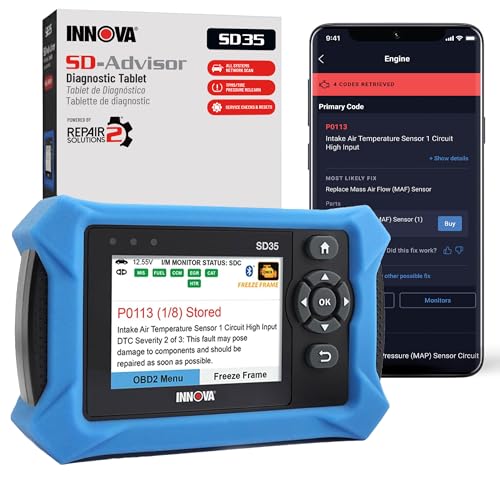
- OBD2 SCANNER FOR ALL SYSTEMS – The INNOVA SD35 is a tablet-based OBD2 scanner designed for advanced diagnostics. Read and clear check engine light, ABS, SRS, and TPMS codes, plus test your car battery and alternator to prevent unexpected failures. Vehicle coverage may vary. Please use Innova’s Coverage Checker to verify compatibility.
- ALL-SYSTEM DIAGNOSTICS & LIVE DATA – Unlike basic code readers, this OBD2 scanner for all vehicles scans engine, transmission, ABS, SRS, and more. Get real-time live data, including RPM, fuel trims, temperature readings, and oxygen sensor performance.
- OBD2 TABLET WITH USER-FRIENDLY INTERFACE – This automotive scan tool features a high-resolution display, making vehicle diagnostics faster and easier.
- ADVANCED TPMS, OIL RESET & SERVICE FUNCTIONS – Perform TPMS sensor checks, oil light reset, and other service resets with ease This professional diagnostic tool provides comprehensive vehicle maintenance capabilities in one device.
- WIDE VEHICLE COVERAGE (1996 & NEWER CARS & TRUCKS) – This OBD2 scanner Bluetooth tablet is compatible with Toyota, Ford, Honda, Chevrolet
 , Nissan, Dodge, and more. However, feature coverage may vary. Please use Innova's Coverage Checker to verify coverage.
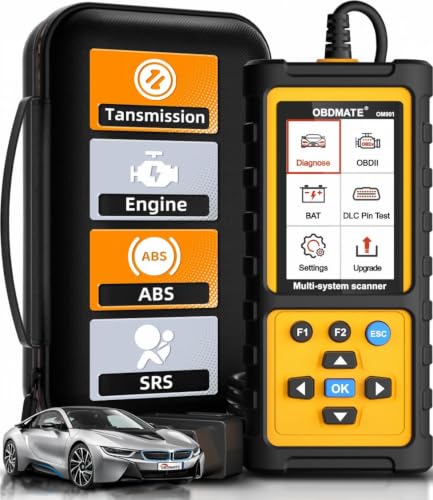
- 【Reset ABS/SRS/Transmission/Engine Lights】 More than an check engine code reader, OBDMATE OM901 obd2 scanner performs comprehensive diagnostics for the 4 most-used systems (ABS/SRS/Engine/Transmission). It quickly clears fault codes, turns off warning lights, read data stream and auto VIN.
- 【3.5" Handheld Scanner with 4 System Diagnose】 3.5" Super large TFT screen equipped displays an intuitive menu and clear readings of various sensors from ABS, SRS, ECM and TCM systems. It arrived with a silicone protective case and hard-shell carrying case, ensuring long-lived durability and drop resistance. The car diagnostic tool is plug-to-play designed, plug it and get diagnosis started without any batteries or updates required.
- 【One-Click I/M Readines&Full OBD2 Functions】 Press F1 to get an intuitive corloured form about whether various emissions-related systems on the vehicle are operating properly. Help you get smog-check ready quickly. OM901 car scanner supports all essential OBD2 functions you need: read & clear codes, view freeze frame, read I/M readiness, retrieve VIN, live data stream (with graphing display), O2 sensor test, onboard monitoring mode, and EVAP leak test.
- 【Battery Voltage Check&DLC Pin Test】 It allows you to monitor battery health by testing current battery voltage. Plus, this obd2 diagnostic tool features DLC 16-PIN test to check current voltage of every pin.
- 【Automotive Scanner Diagnostic Kit】 The package comes with 1 car scanner, 1 USB-type c cable, 1 hard storage bag and 1 user manual(en). Free to update without any hidden fees. 5 languanges available in setting including English, French, Italian, German and Espanish. Valuable and Portable, making it a great tool kit for car owners, DIY enthusiasts, and professional mechanics.
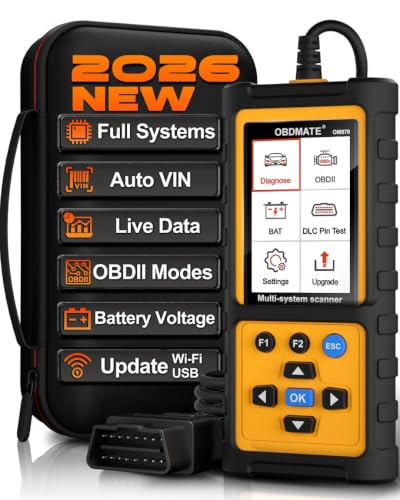
- 【Full Systems Automotive Diagnostic】 More than checking engine, ABS and SRS, OBDMATE OM970 obd2 scanner performs comprehensive diagnostics on all electric modules. It quickly scans and clears fault codes, turns off warning lights, reads live data, and features Auto-VIN technology.
- 【Live Datastream&4-in-1 Graph】 Easily view live sensor data such as RPM, fuel trims, ATF temperature, wheel speed sensor, battery voltage and so on. OM970 scan tool also supports 4-in-1 trend graphing. Spend just 3 minutes to check – and you'll know exactly what's going wrong, helping you avoid hundreds in dealership diagnostic fees.
- 【One-Click I/M Readiness&Full OBD2 Functions】 Press F1 to get an intuitive corloured form about whether your vehicle's emissions-related systems are operating properly. Help you get smog-check ready quickly. OM970 obd2 diagnostic tool supports all essential OBD2 functions you need. Plus, it features battery voltage test and DLC 16-PIN test.
- 【Straightforward Menus with Easy Navigation】 All functions are easy to understand without obscure decriptions. 3.5" Large screen delivers clear readings while keeping one-hand operation. The car diagnostic tool comes with a silicone protective case and a hard-shell carrying case, ensuring long-lived durability and drop resistance.
- 【Budget-Friendly, No Subscriptions, Free Software Updates】 Plug and play: no bluetooth pairing, monthly fees, Wi-Fi connection, or any other troublesome initial settings. OM970 obd2 scanner works out of the box with the latest software. Lifetime free upgrade.
- Comprehensive OBD2 Scanner with 16 Resets: The XTOOL D5S car code reader and vehicle reset tool provides an advanced diagnostic solution with 16 commonly needed reset functions, including Electronic Parking Brake Reset (EPB Reset), SAS, BMS Reset (Battery Test), Throttle Body Relearn, TPMS Reset, ABS Bleeding, Injector Coding, Gearbox Match, Suspension Adjustment, Headlight, Window Initialization, Crank Sensor Relearn and more. Equipped with CAN FD Protocol and FAC AutoAuth, the D5S obd2 scanner diagnostic tool ensures compatibility with a broad range of modern vehicles, allowing users to address common maintenance needs quickly. NOTE: Please Check the Compatibility before ordering.
- 4 Main System Car Scanner & Full OBD2 Diagnostics: The XTOOL D5S car code reader is ideal for home mechanics, DIYers, and professionals, providing access to Transmission/Engine/ABS/SRS systems to read DTCs, Live data can be displayed in text or up to 4 PID data graphs, along with full OBD2 diagnostics to check the engine light on, other obd2 issues and routine maintenance. This car diagnostic scanner ensures you can keep your vehicles in top condition, avoiding costly repairs or unexpected breakdowns. NOTE: Some vehicles display three systems after connection because the transmission and engine of some vehicles are integrated into one.
- Check Engine Code Reader & Real-Time Engine Monitoring: Whether you're a car owner, a DIYer, or run a repair shop, the XTOOL D5S obd2 scanner diagnostic tool makes engine diagnostics fast and frustration-free, reading and explaining trouble codes in seconds—no confusion. Check live data like fuel trim, 02 sensor voltage, RPM, and coolant temp to pinpoint mis~fires, rough idle, or sensor issues. After repairs, simply use the D5S check engine code reader and reset tool to turn off the check engine light and confirm the problem’s fixed—saving time, money, and unnecessary shop visits. - Note: If the check engine light comes back on, it indicates the original problem still exists.
- Portable Car Scanner for ABS and SRS: XTOOL D5S gives you peace of mind when ABS or airbag warning lights come on. It reads and clears ABS codes to help you fix brake sensor, traction control, or wheel speed issues, and supports ABS bleeding after repairs like caliper or master cylinder replacement. For airbag systems, it scans and clears SRS codes related to airbags, seatbelt tensioners, and crash sensors. Whether you're doing repairs at home or running a small shop, the D5S is a cost-effective solution for safety diagnostics. Note: If a fault code returns after clearing, it usually means the issue hasn’t been fully resolved. Please check the compatibility before ordering.
- Transmission Warning Light ON? Here’s the Transmission Diagnostic and Reset Tool You Need: The XTOOL D5S is more than just a basic car scanner—it’s an easy-to-use transmission diagnostic tool. From rough shifts to slipping gears, the D5S lets you read and clear transmission trouble codes, monitor real-time TCM data, and perform transmission resets after fluid changes or repairs. Whether you’re a hands-on car owner or a pro running a busy shop, this OBD2 scanner with transmission functions helps you catch problems early—saving you time, money, and future headaches.. Note: Clearing fault codes is equivalent to a reset on some vehicles, but not all. For help, contact XTOOL Tech Support.
SEOCONTENT-START
Ford Motor Company (Ford) Recall No. 21S56 Chronology Ford Motor Company (Ford) Recall No. 21S56 CERTAIN 2021-2022 FORD F-150 VEHICLES EQUIPPED WITH ALUMINUM DRIVESHAFTS– UNDERBODY INSULATORS LOOSE Date of Submission: 16-DEC-2021 Chronology of Defect / Noncompliance Determination Provide the chronology of events leading up to the defect decision or test data for the noncompliance decision. July – August 2021 On July 1, 2021, Ford’s Critical Concern Review Group (CCRG) initiated an investigation into reports of inadequate underbody insulator adhesion on 2021 MY F-150 vehicles based on warranty claims of insulators coming loose. Two underbody acoustic/thermal insulators are installed on certain Crew Cab F-150 vehicles with the 302A and above option package. Two push pins assist in attachment of each insulator to the cab underbody in addition to pressure sensitive adhesive. Warranty claims at the time described sagging of one or both insulators, in some cases making contact with the U-joint at the transfer case end of the driveshaft on HEV units that was audible to a driver. No reports of driveline fracture attributed to insulator contact had been received, and CCRG’s investigation into potential vehicle effects continued. September 2021 On September 16, 2021, Driveline Engineering informed CCRG that seven reports of driveshaft damage on 2021 MY F-150 vehicles had been received and were likely caused by underbody insulator contact. Package and vehicle complexity studies were conducted and found that 4×4 145” wheelbase Crew Cab vehicles are equipped with an aluminum driveshaft that is susceptible to contact from a sagging passenger side insulator. October – November 2021 Vehicle package and CAD studies continued, including assessment of powertrain variation. Field return parts were also evaluated. A vehicle clinic was conducted to evaluate all potential effects of a loose insulator on a variety of F-150 vehicle configurations, including proximity to other driveline configurations, fuel lines, brake lines, and electrical systems. Subsequent analysis found that the risk of driveline contact exists with a loose or sagging driver or passenger side insulator. As of December 7, 2021, there have been 27 reports of fractured aluminum driveshafts potentially related to a sagging underbody insulator on these vehicles. On December 9, 2021, Ford’s Field Review Committee reviewed the concern and approved a field action. Ford is not aware of any reports of accident or injury related to this condition.
**************************************************************************************************************
Ford Motor Company (Ford) Recall No. 21S56 Amendment #1 Chronology Ford Motor Company (Ford) Recall No. 21S56 Amendment #1 CERTAIN 2021-2022 FORD F-150 VEHICLES EQUIPPED WITH ALUMINUM DRIVESHAFTS– UNDERBODY INSULATORS LOOSE 21S56 Amendment #1 Submission Date: 14-JAN-2022 Chronology of Defect / Noncompliance Determination Provide the chronology of events leading up to the defect decision or test data for the noncompliance decision. July – August 2021 On July 1, 2021, Ford’s Critical Concern Review Group (CCRG) initiated an investigation into reports of inadequate underbody insulator adhesion on 2021 MY F-150 vehicles based on warranty claims of insulators coming loose. Two underbody acoustic/thermal insulators are installed on certain Crew Cab F-150 vehicles with the 302A and above option package. Two push pins assist in attachment of each insulator to the cab underbody in addition to pressure sensitive adhesive. Warranty claims at the time described sagging of one or both insulators, in some cases making contact with the U-joint at the transfer case end of the driveshaft on HEV units that was audible to a driver. CCRG’s investigation into potential vehicle effects of loose insulators continued. September 2021 On September 16, 2021, Driveline Engineering informed CCRG that seven reports of driveshaft damage likely caused by underbody insulator contact on 2021 MY F-150 vehicles had been received, with the earliest dated July 23, 2021. The first four of the seven reports did not attribute driveshaft fracture to insulator contact. Once the CCRG was made aware of reports attributing driveshaft fracture to insulator contact, package and vehicle complexity studies were conducted and found that 4×4 145” wheelbase Crew Cab vehicles are equipped with an aluminum driveshaft that is susceptible to contact from a sagging passenger side insulator. October – November 2021 Vehicle package and CAD studies continued, including assessment of powertrain variation. Field return parts were also evaluated. A vehicle clinic was conducted to evaluate all potential effects of a loose insulator on a variety of F-150 vehicle configurations, including proximity to other driveline configurations, fuel lines, brake lines, and electrical systems. Subsequent analysis found that the risk of driveline contact exists with a loose or sagging driver or passenger side insulator. As of December 7, 2021, there have been 27 reports of fractured aluminum driveshafts potentially related to a sagging underbody insulator on these vehicles. On December 9, 2021, Ford’s Field Review Committee reviewed the concern and approved a field action. Ford is not aware of any reports of accident or injury related to this condition.
**************************************************************************************************************
February 2022 Ford Motor Company Ford Customer Service Division P. O. Box 1904 Dearborn, Michigan 48121 1904 * * * IMPORTANT SAFETY RECALL * * * Safety Recall Notice 21S56 / NHTSA Recall 21V986 2021 F-150 Ford Truck Your Vehicle Identification Number (VIN): This notice is sent to you in accordance with the National Traffic and Motor Vehicle Safety Act. Ford Motor Company has decided that a defect which relates to motor vehicle safety exists in your vehicle, with the VIN shown above. We apologize for this situation and want to assure you that, with your assistance, we will correct this condition. Our commitment, together with your dealer, is to provide you with the highest level of service and support. What is the issue? On your vehicle, underbody insulators may loosen and contact the aluminum driveshaft, resulting in marking or scoring of the driveshaft. Continued contact may result in driveshaft fracture. What is the risk? A fractured driveshaft poses the risks of loss of motive power while driving, unintended vehicle movement while the vehicle is in park if the parking brake is not applied, and secondary damage to surrounding components. A fractured driveshaft may also contact the ground which may cause loss of control of the vehicle while driving. A fractured driveshaft increases the risk of injury or crash. What will Ford and your dealer do? Ford Motor Company has authorized your dealer to secure the underbody insulators, and inspect the driveshaft, fuel vapor lines and electrical connectors for damage and repair as necessary free of charge (parts and labor). How long will it take? The time needed for this repair is less than one-half day. However, due to service scheduling requirements, your dealer may need your vehicle for a longer period of time. In addition, your vehicle will require an inspection to determine if parts need to be ordered. What should you do? Please call your dealer without delay and request a service date for Recall 21S56. Provide the dealer with your VIN, which is printed near your name at the beginning of this letter. Ford has not issued instructions to stop driving your vehicle under this safety recall. You should contact your dealer for an appointment to have your vehicle remedied as soon as practicable. You can continue to safely drive your vehicle. If you do not already have a servicing dealer, you can access ford.com/support for dealer addresses, maps, and driving instructions. Ford Motor Company wants you to have this safety recall completed on your vehicle. The vehicle owner is responsible for making arrangements to have the work completed. Ford Motor Company can deny coverage for any vehicle damage that may result from the failure to have this recall performed on a timely basis. Therefore, please have this recall performed as soon as possible. Please note: Federal law requires that any vehicle lessor receiving this recall notice must forward a copy of this notice to the lessee within ten days. © Copyright 2022 Ford Motor Company 07510 21S56/DTB121S561 1 of 4 A/1/000001/1 771514328216 A/1/000001/1 JOHN A. SAMPLE 123 SAMPLE ST SAMPLE CITY, MI 12345-6789 What should you do? (continued) NOTE: You can receive information about Recalls and Customer Satisfaction Programs through our FordPass App. The app can be downloaded through the App Store or Google Play. In addition there are other features such as reserving parking in certain locations and controlling certain functions on your vehicle (lock or unlock doors, remote start) if it is equipped to allow control. COVID-19 (CORONAVIRUS) Ford dealerships have implemented enhanced protocols to ensure both your safety and the safety of dealership employees. This includes specific procedures for cleaning and disinfecting customer vehicles before and after each vehicle is serviced. In most places, vehicle service has been deemed a critical service. Please contact your local dealer to confirm current service hours. For more information on how Ford and your local dealer are working hard to keep you on the road during these challenging times, please visit ford.com/support. Do you need a rental vehicle? If your dealer determines that either the driveshaft, fuel vapor line or electrical connectors requires replacement and needs your vehicle overnight, your dealer is authorized to provide a rental vehicle for your personal transportation at no charge (except for fuel and insurance) while your vehicle is at the dealership for repairs. Please see your dealer for guidelines and limitations. What if you no longer own this vehicle? If you no longer own this vehicle, and have an address for the current owner, please forward this letter to the new owner. You received this notice because government regulations require that notification be sent to the last known owner of record. Our records are based primarily on state registration and title data, which indicate that you are the current owner. Can we assist you further? If you have difficulties getting your vehicle repaired promptly and without charge, please contact your dealership’s Service Manager for assistance. RETAIL OWNERS: If you have questions or concerns, please contact our Ford Customer Relationship Center at 1-866-436-7332 and one of our representatives will be happy to assist you. If you wish to contact us through the Internet, our address is: ford.com/support. For the hearing impaired call 1-800-232-5952 (TDD). Representatives are available Monday through Friday: 8:00AM – 8:00PM (Eastern Time). FLEET OWNERS: If you have questions or concerns, please contact our Fleet Customer Information Center at 1-800-34-FLEET, choose Option #3, and one of our representatives will be happy to assist you. If you wish to contact us through the Internet, our address is: fleet.ford.com. Representatives are available Monday through Friday: 8:00AM – 8:00PM (Eastern Time). If you are still having difficulty getting your vehicle repaired in a reasonable time or without charge, you may write the Administrator, National Highway Traffic Safety Administration, 1200 New Jersey Ave. S.E., Washington, D.C. 20590 or call the toll free Vehicle Safety Hotline at 1-888-327-4236 (TTY: 1-800-424-9153) or go to safercar.gov. Reference NHTSA Safety Recall 21V986. Thank you for your attention to this important matter. Ford Customer Service Division © Copyright 2022 Ford Motor Company 07510 21S56/DTB121S561 2 of 4 A/2/000001/1 * * * CAMPAÑA DE SEGURIDAD IMPORTANTE * * * Seguridad Aviso de campaña 21S56 / Campaña 21V986 de la NHTSA 2021 F-150 Ford Truck Número de identificación del vehículo (VIN): Este aviso se le envía de acuerdo con la Ley Nacional de Seguridad y Tránsito de Vehículos de los EE. UU. Ford Motor Company ha determinado que existe un defecto relacionado con la seguridad de su vehículo, con el VIN que aparece más arriba. Lamentamos esta situación y deseamos asegurarle que, con su ayuda, corregiremos el problema. Nuestro compromiso, junto con el de su distribuidor, es ofrecerle servicio y apoyo de alto nivel. ¿Cuál es el problema? En su vehículo, aisladores de la parte inferior de la carrocería podrían aflojarse y tener contacto con la flecha de mando de aluminio, lo que genera marcas o rayados de la flecha de mando. El contacto continuo podría tener como resultado la fractura de la flecha de mando. ¿Qué riesgo existe? Una fractura de la flecha de mando pone en riesgo la pérdida de la potencia motriz mientras maneja, un movimiento accidental del vehículo mientras está en estacionamiento si el freno de estacionamiento no se aplica y daño secundario en los componentes de los alrededores. Una flecha de mando fracturada también podría entrar en contacto con la tierra que podría causar la pérdida de control del vehículo mientras maneja. Una flecha de mando fracturada aumenta el riesgo de choque o de sufrir lesiones o choque. ¿Qué medidas adoptarán Ford y su distribuidor? Ford Motor Company ha autorizado a su distribuidor a asegurar los aisladores de la parte inferior de la carrocería y a inspeccionar la flecha de mando, las tuberías de vapor de combustible y los conectores eléctricos en busca de daños y reparar si fuera necesario, sin costo alguno (piezas y mano de obra). ¿Cuánto tiempo tomará? El tiempo necesario para reparar será menos de medio día. Sin embargo, debido a los requisitos de planificación de servicio, es posible que su distribuidor tarde un poco más. Además, se deberá realizar una inspección del vehículo para determinar si se deben solicitar piezas. ¿Qué debe hacer? Llame a su distribuidor lo antes posible y solicite una cita de servicio para llevar a cabo la campaña 21S56. Proporcione el VIN a su distribuidor, el cual está impreso debajo de sus datos al comienzo de esta carta. Para esta campaña de seguridad, Ford no ha emitido instrucciones de no manejar el vehículo. Deberá ponerse en contacto con su distribuidor a fin de programar una cita para solucionar este problema lo más pronto posible. Puede continuar manejando su vehículo con seguridad. Si aún no tiene un distribuidor para realizar el servicio, puede acceder a ford.com/support para conocer las direcciones de los distribuidores, ver mapas y obtener las instrucciones para llegar. Ford Motor Company le recomienda realizar esta campaña de seguridad en su vehículo. El propietario del vehículo es responsable de realizar los arreglos necesarios para llevar a cabo el trabajo. Ford Motor Company puede negar la cobertura en caso de que el vehículo hubiese sufrido daños por no haber realizado la campaña de manera oportuna. Por lo tanto, le solicitamos que realice esta campaña lo antes posible. 3 of 4 A/3/000001/1 07510 21S56/DTB121S561 Febrero de 2022 Ford Motor Company División de Servicio al Cliente de Ford P. O. Box 1904 Dearborn, Michigan 48121 © Copyright 2022 Ford, División de Servicio al Cliente 771514328216 A/3/000001/1 JOHN A. SAMPLE 123 SAMPLE ST SAMPLE CITY, MI 12345-6789 ¿Qué debe hacer? (continuación) Tenga presente que: La ley federal exige que los arrendadores de vehículos que reciban este aviso de campaña envíen una copia del mismo al arrendatario en un plazo de diez días. NOTA: Puede recibir información sobre las campañas y los programas de satisfacción del cliente a través de la aplicación FordPass. La aplicación se puede descargar a través de App Store o Google Play. Adicionalmente, existen otras funciones como reserva de estacionamientos en determinados lugares, además de control de ciertas funciones en el vehículo (bloqueo o desbloqueo de puertas, arranque remoto) si así está equipado para permitir el control. COVID-19 (CORONAVIRUS) Los distribuidores Ford han implementado protocolos mejorados con el fin de asegurar tanto su seguridad como la de los empleados de los diferentes distribuidores. Esto incluye procedimientos específicos de limpieza y desinfección antes y después de realizar servicio en cada uno de los vehículos de nuestros clientes. En la mayoría de los lugares, la atención de vehículos se ha considerado un servicio esencial. Póngase en contacto con su distribuidor local para confirmar las horas de servicio actuales. Para obtener más información sobre cómo Ford y su distribuidor local están trabajando arduamente para mantenerlo en las calles durante estos tiempos difíciles, visite ford.com/support. ¿Necesita un vehículo de alquiler? Si su distribuidor determina que es necesario reemplazar ya sea la flecha de mando, la tubería de vapor de combustible o los conectores eléctrico y el vehículo debe permanecer en las instalaciones durante la noche, el distribuidor está autorizado a ofrecerle un vehículo de alquiler para su transporte personal sin costo (excepto el combustible y el seguro) mientras su vehículo se encuentre en reparación. Comuníquese con su distribuidor para conocer las pautas y limitaciones. ¿Qué pasa si usted ya no es el propietario del vehículo? Si usted ya no es el propietario del vehículo y tiene la dirección del propietario actual, le solicitamos que le reenvíe esta carta. Usted recibió este aviso porque las regulaciones del gobierno exigen el envío de notificaciones al propietario conocido más reciente del registro. Nuestros registros se basan principalmente en datos estatales y de propiedad, que indican que usted es el propietario actual del vehículo. ¿Podemos hacer algo más por usted? Si tiene problemas para reparar de inmediato su vehículo y sin costo alguno, comuníquese con el Gerente de Servicio de su distribuidor para solicitar ayuda. PROPIETARIOS MINORISTAS: Si tiene dudas o preguntas, comuníquese con nuestro Centro de Relación con Clientes Ford al 1-866-436-7332 y uno de nuestros representantes con gusto lo atenderá. Si desea comunicarse con nosotros a través de Internet, nuestra dirección es: ford.com/support. Las personas con problemas de audición pueden llamar al 1-800-232-5952 (TDD). Los representantes atienden de lunes a viernes, de 8:00 a.m. a 8:00 p.m. (hora del este). PROPIETARIOS DE FLOTAS: Si tiene dudas o preguntas, comuníquese con nuestro Centro de Información a Clientes de flotas al 1-800-34-FLEET, elija la opción n.° 3 y uno de nuestros representantes con gusto lo atenderá. Si desea comunicarse con nosotros a través de Internet, nuestra dirección es: fleet.ford.com. Los representantes atienden de lunes a viernes, de 8:00 a.m. a 8:00 p.m. (hora del este). Si aun así tiene problemas para reparar su vehículo en un periodo de tiempo razonable o sin costo, puede escribir al Administrador de National Highway Traffic Safety Administration, 1200 New Jersey Ave. S.E., Washington, D.C. 20590, llamar a la Línea directa de seguridad vehicular al 1-888-327-4236 (TTY: 1-800-424-9153) o visitar safercar.gov. Remítase a la Campaña de seguridad 21V986 de la NHTSA. Gracias por su atención en este asunto sumamente importante. Ford, División de Servicio al Cliente 4 of 4 A/4/000001/1 07510 21S56/DTB121S561 © Copyright 2022 Ford, División de Servicio al Cliente
**************************************************************************************************************
Copyright 2022 Ford Motor Company David J. Johnson Ford Motor Company Director P. O. Box 1904 Service Engineering Operations Dearborn, Michigan 48121 Ford Customer Service Division August 10, 2022 TO: All U.S. Ford and Lincoln Dealers SUBJECT: NEW VEHICLE DEMONSTRATION / DELIVERY HOLD – Safety Recall 21S56 – Supplement #7 Certain 2021 – 2022 Model Year F-150 Vehicles Equipped with Crew Cab, 145” Wheelbase, 4×4, 302a & Above Option Package, and One-Piece Aluminum Driveshaft Loose/Sagging Underbody Insulators AFFECTED VEHICLES Vehicle Model Year Assembly Plant Build Dates F-150 2021 Dearborn (DTP) January 10, 2020 through November 20, 2021 F-150 2021 Kansas City (KCAP) February 17, 2020 through October 19, 2021 F-150 2022 Dearborn (DTP) October 29, 2021 through November 6, 2021 F-150 2022 Kansas City (KCAP) October 13, 2021 through October 13, 2021 The eleventh VIN position is the assembly plant code. • F – Dearborn Assembly (Dearborn, Michigan) = DTP • K – Kansas City Assembly (Claycomo, Missouri) = KCAP Affected vehicles are identified in OASIS and FSA VIN Lists. New! REASON FOR THIS SUPPLEMENT PM-13-A will no longer be sold as a case of four, it will sell as an individual can. The part number is updated to PM-13-B (PM-13-A will no longer be available). All orders for PM-13-A will be cancelled. REASON FOR THIS SAFETY RECALL In some of the affected vehicles, underbody insulators may loosen and contact the aluminum driveshaft, resulting in marking or scoring of the driveshaft. Over time, the aluminum driveshaft may fracture, which can result in loss of motive power while driving, unintended vehicle movement while the vehicle is in park if the parking brake is not applied, and secondary damage to surrounding components. A fractured driveshaft may also contact the ground which may cause loss of control of the vehicle while driving. A fractured driveshaft increases the risk of injury or crash. SERVICE ACTION Before demonstrating or delivering any new in-stock vehicles involved in this recall, dealers are to secure both the driver and passenger-side underbody insulators and inspect the driveshaft, fuel vapor lines and electrical connectors for damage and repair as required. This service must be performed on all affected vehicles at no charge to the vehicle owner. OWNER NOTIFICATION MAILING SCHEDULE Owner letters were mailed the week of January 31, 2022. Dealers should repair any affected vehicles that arrive at their dealerships, whether or not the customer has received a letter. Copyright 2022 Ford Motor Company PLEASE NOTE: Federal law requires dealers to complete this recall service before a new vehicle is delivered to the buyer or lessee. Violation of this requirement by a dealer could result in a civil penalty of up to $21,000 per vehicle. Correct all vehicles in your new vehicle inventory before delivery. New! ATTACHMENTS Attachment I: Administrative Information Attachment II: Labor Allowances and Parts Ordering Information Attachment III: Technical Information – Gas Engines manufactured at Dearborn Truck Attachment IV: Technical Information – Diesel Engine Attachment V: Technical Information – Hybrid Engine Attachment VI: Technical Information – Gas Engines manufactured at Kansas City Owner Notification Letter QUESTIONS & ASSISTANCE For questions and assistance, contact the Special Service Support Center (SSSC) via the SSSC Web Contact Site. The SSSC Web Contact Site can be accessed through the Professional Technician System (PTS) website using the SSSC link listed at the bottom of the OASIS VIN report screen or listed under the SSSC tab. Sincerely, David J. Johnson Copyright 2022 Ford Motor Company ATTACHMENT I Page 1 of 3 NEW VEHICLE DEMONSTRATION / DELIVERY HOLD – Safety Recall 21S56 – Supplement #7 Certain 2021 – 2022 Model Year F-150 Vehicles Equipped with Crew Cab, 145” Wheelbase, 4×4, 302a & Above Option Package, and One-Piece Aluminum Driveshaft Loose/Sagging Underbody Insulators OASIS ACTIVATION OASIS was activated on December 17, 2021. FSA VIN LISTS ACTIVATION FSA VIN Lists were available through https://web.fsavinlists.dealerconnection.com on December 17, 2021. Owner names and addresses were available on February 18, 2022. NOTE: Your FSA VIN Lists may contain owner names and addresses obtained from motor vehicle registration records. The use of such motor vehicle registration data for any purpose other than in connection with this recall is a violation of law in several states, provinces, and countries. Accordingly, you must limit the use of this listing to the follow-up necessary to complete this recall. SOLD VEHICLES Ford has not issued instructions to stop selling/delivering or driving used vehicles under this safety recall. Owners should contact their dealer for an appointment to have their vehicles remedied as soon as practicable. Owners can continue to safely drive their vehicles. Immediately contact any of your affected customers whose vehicles are not on your VIN list but are identified in OASIS. Give the customer a copy of the Owner Notification Letter (when available) and schedule a service date. Correct other affected vehicles identified in OASIS which are brought to your dealership. Dealers are to prioritize repairs of customer vehicles over repairs of new and used vehicle inventory. STOCK VEHICLES Correct all affected units in your new vehicle inventory before delivery. Use OASIS to identify any affected vehicles in your used vehicle inventory. DEALER-OPERATED RENTAL VEHICLES The Fixing America’s Surface Transportation (FAST) Act law effective June 2016 prohibits a rental company from selling, renting or leasing vehicles subject to a safety or compliance recall. Please consult your legal counsel for legal advice. TITLE BRANDED / SALVAGED VEHICLES Affected title branded and salvaged vehicles are eligible for this recall. OWNER REFUNDS Refunds are not approved for this program. Copyright 2022 Ford Motor Company ATTACHMENT I Page 2 of 3 NEW VEHICLE DEMONSTRATION / DELIVERY HOLD – Safety Recall 21S56 – Supplement #7 Certain 2021 – 2022 Model Year F-150 Vehicles Equipped with Crew Cab, 145” Wheelbase, 4×4, 302a & Above Option Package, and One-Piece Aluminum Driveshaft Loose/Sagging Underbody Insulators RENTAL VEHICLES PASS INSPECTION: Vehicles that pass the applicable driveshaft, fuel systems, and electrical inspections are NOT affected and are not approved for rental vehicles. Refer to the 21S56 technical instructions for additional information. FAIL INSPECTION: Vehicles that fail either the applicable driveshaft, fuel systems, or electrical inspections o Parts are NOT available: Driveshaft, vapor line, or pigtail is on back-order. PARTS ESCALATION PROCESS (Vehicle Off Road) process has been followed and COPIS ticket with VOR flagged has been submitted. Prior approval is required from the SSSC, submit contact type long-term rental for consideration and approval if appropriate. A ten-digit prior-approval code is required from the SSSC for rental vehicles, a new approval code is required from SSSC every 30 days. If rental vehicles are needed beyond June 30, 2022, dealers will have to contact SSSC for an extension. Approval for all rental vehicles for this program will end on June 30, 2022. Follow Extended Service Plan (ESP) guidelines for dollar amounts. Prior approval is required from the SSSC. ADDITIONAL REPAIR (LABOR TIME AND/OR PARTS) Additional repairs identified as necessary to complete the FSA should be managed as follows: For related damage and access time requirements, refer to the Warranty and Policy Manual / Section 6 – Ford & Lincoln Program Policies / General Information & Special Circumstances for FSA’s / Related Damage. For vehicles within new vehicle bumper-to-bumper warranty coverage, no SSSC approval is required, although related damage must be on a separate repair line with the “Related Damage” radio button checked. o Ford vehicles – 3 years or 36,000 miles For vehicles outside new vehicle bumper-to-bumper warranty coverage, submit an Approval Request to the SSSC Web Contact Site prior to completing the repair. Copyright 2022 Ford Motor Company ATTACHMENT I Page 3 of 3 NEW VEHICLE DEMONSTRATION / DELIVERY HOLD – Safety Recall 21S56 – Supplement #7 Certain 2021 – 2022 Model Year F-150 Vehicles Equipped with Crew Cab, 145” Wheelbase, 4×4, 302a & Above Option Package, and One-Piece Aluminum Driveshaft Loose/Sagging Underbody Insulators CLAIMS PREPARATION AND SUBMISSION Claim Entry: Enter claims using Dealer Management System (DMS) or One Warranty Solution (OWS) online. o When entering claims, select claim type 31: Field Service Action. The FSA number (21S56) is the sub code. o For additional claims preparation and submission information, refer to the Recall and Customer Satisfaction Program (CSP) Repairs in the OWS User Guide. Related Damage/Additional labor and/or parts: Must be claimed as Related Damage on a separate repair line from the FSA with same claim type and sub code as described in Claim Entry above. IMPORTANT: Click the Related Damage Indicator radio button. Rentals: For rental vehicle claiming, follow Extended Service Plan (ESP) guidelines for dollar amounts. Enter the total amount of the rental expense under Miscellaneous Expense code RENTAL. Provision for Misc. Expense: Provision for Misc. Expense: Washers and Loctite 243 as needed. o Program Code: 21S56 o Misc. Expense: OTHER o Amount: Actual cost up to $15.00 Copyright 2022 Ford Motor Company ATTACHMENT II Page 1 of 7 NEW VEHICLE DEMONSTRATION / DELIVERY HOLD – Safety Recall 21S56 – Supplement #7 Certain 2021 – 2022 Model Year F-150 Vehicles Equipped with Crew Cab, 145” Wheelbase, 4×4, 302a & Above Option Package, and One-Piece Aluminum Driveshaft Loose/Sagging Underbody Insulators LABOR ALLOWANCES Dearborn Truck Plant Build Dates– Design change that removed underbody insulators from production Passenger-Side Insulator 10/15/2021 and later Driver-Side Insulator 11/19/2021 and later 1. Where was the vehicle manufactured? a. Kansas City – see Attachment VI for correct Technical Instructions to complete repair. b. Dearborn Truck – Proceed to step 2. 2. Passenger-Side: a. What is the production date of the vehicle? _____________________ b. If production date = 10/15/2021 and later: i. Passenger-side not present – follow technical instructions, per dealer bulletin claim 21S56B 3. Driver-Side: a. What is the production date of the vehicle? _____________________ b. If production date = 11/19/2021 and later: i. Driver-side not present – follow technical instructions, per dealer bulletin claim 21S56B 4. Both Passenger and Driver-side: a. What is the production date of the vehicle? _____________________ b. If production date = 11/19/2021 and later: i. If both passenger and driver-side not present – no repair is necessary, close recall – claim 21S56E with 0.3 hours. Kansas City Build Dates – Design change that removed underbody insulators from production Passenger-Side Insulator 10/18/2021 and later Driver-Side Insulator 11/19/2021 and later 1. Where was the vehicle manufactured? a. Dearborn Truck – see either Attachment III, IV, or V for correct Technical Instructions to complete repair. b. Kansas City – Proceed to step 2. 2. Passenger-Side: a. What is the production date of the vehicle? _____________________ b. If production date = 10/18/2021 and later: i. Passenger-side not present – follow technical instructions, per dealer bulletin claim 21S56B 3. Driver-Side: a. What is the production date of the vehicle? _____________________ b. If production date = 11/19/2021 and later: i. Driver-side not present – follow technical instructions, per dealer bulletin claim 21S56B 4. Both Passenger and Driver-side: a. What is the production date of the vehicle? _____________________ b. If production date = 11/19/2021 and later: i. If both passenger and driver-side not present – no repair is necessary, close recall – claim 21S56E with 0.3 hours. Copyright 2022 Ford Motor Company ATTACHMENT II Page 2 of 7 NEW VEHICLE DEMONSTRATION / DELIVERY HOLD – Safety Recall 21S56 – Supplement #7 Certain 2021 – 2022 Model Year F-150 Vehicles Equipped with Crew Cab, 145” Wheelbase, 4×4, 302a & Above Option Package, and One-Piece Aluminum Driveshaft Loose/Sagging Underbody Insulators LABOR ALLOWANCES (continued) Description Labor Operation Labor Time Parts are available to complete repair: 1. Retrieve DTC’s (gas engine only) 2. Inspect both underbody insulators for contact with driveshaft, fuel vapor lines for gas engine and coolant sensor wiring for hybrid. 3. Drill 2 holes (KCAP vehicles) or 5 holes (DTP vehicles) and install corresponding # of rivets and washers to secure insulators. 4. Clean four driveshaft bolts and apply Note: Includes time to remove, and install or replace driveshaft Note: Hybrid Vehicles should claim labor operation code 21S56H or 21S56HH 21S56B 0.9 Hours Driveshaft Replacement Necessary, part on back-order (this will not close recall): 1. Retrieve DTC’s (gas engine only) 2. Inspect both underbody insulators for contact with driveshaft, fuel vapor lines for gas engine and coolant sensor wiring for hybrid. 3. Drill 2 holes (KCAP vehicles) or 5 holes (DTP vehicles) and install corresponding # of rivets and washers to secure insulators. 4. Clean four driveshaft bolts and apply Notes: • Includes time to remove, and install or replace driveshaft • Hybrid Vehicles should claim labor operation code 21S56H or 21S56HH • This should only be claimed if driveshaft is on back-order, COPIS ticket submitted, VOR flagged, SSSC 10 digit approval code required • If driveshaft fails inspection criteria, vehicles should not be returned to customer to continue to drive • Can only be claimed with MT21S56C, 21S56ZZ and 21S56K 21S56BB 0.9 Hours Gas engine only: Diagnose DTC P0442 and/or P0456 (PPT and inspection) Remove fuel tank for additional inspection (if necessary) Repair damage to vapor lines caused by the underbody insulator MT21S56C Up to 2.0 Hours Copyright 2022 Ford Motor Company ATTACHMENT II Page 3 of 7 NEW VEHICLE DEMONSTRATION / DELIVERY HOLD – Safety Recall 21S56 – Supplement #7 Certain 2021 – 2022 Model Year F-150 Vehicles Equipped with Crew Cab, 145” Wheelbase, 4×4, 302a & Above Option Package, and One-Piece Aluminum Driveshaft Loose/Sagging Underbody Insulators LABOR ALLOWANCES (continued) Hybrid – Repair damaged coolant sensor wiring cause by underbody insulator MT21S56D Up to 1.0 Hour Time allowed to submit photos (required for driveshaft, vapor lines, electrical, underbody insulators, and other related damage) NOTE: This labor operation code will be deactivated once parts are available open order. 21S56ZZ 0.2 Hours If both underbody insulators are missing with build dates listed above, no repair necessary, close recall. 21S56E 0.3 Hours Raptor Vehicles – extra time to remove muffler and tail pipe to install rivets 21S56G 0.5 Hours Parts are available to complete repair: Hybrid — Inspect drive shaft, remove drive shaft, remove under shield/clean, install one rivet, install drive shaft, and install/tape patch in interior of the vehicle (can only be claimed with 21S56E, 21S56J, MT21S56D, 21S56ZZ) 21S56H 1.5 Hours Driveshaft Replacement Necessary, part on back-order (this will not close recall): Hybrid — Inspect drive shaft, remove drive shaft, remove under shield/clean, install one rivet, install drive shaft, and install/tape patch in interior of the vehicle (Can only be claimed with 21S56E, 21S56J, MT21S56D, 21S56ZZ, and 21S56K) 21S56HH 1.5 Hours Hybrid Vehicles equipped with rear interior storage box Only – Extra time to remove and install storge box if equipped (can only be claimed with 21S56E, 21S56H, MT21S56D, 21S56ZZ, 21S56K) NOTE: Photo of rear interior storage box in vehicle must be attached to SSSC contact to claim this labor operation code 21S56J 0.2 Hours All – Vehicle returns for driveshaft replacement (This labor operation code cannot be claimed with 21S56B or 21S56H 21S56K 0.4 Hours Copyright 2022 Ford Motor Company ATTACHMENT II Page 4 of 7 NEW VEHICLE DEMONSTRATION / DELIVERY HOLD – Safety Recall 21S56 – Supplement #7 Certain 2021 – 2022 Model Year F-150 Vehicles Equipped with Crew Cab, 145” Wheelbase, 4×4, 302a & Above Option Package, and One-Piece Aluminum Driveshaft Loose/Sagging Underbody Insulators New! PARTS REQUIREMENTS / ORDERING INFORMATION Video Instruction: Review the following video clips before ordering parts or attempting to repair a vehicle: https://bcove.video/3rdmqR0. This video does not include the updated HEV repair procedure. SSSC Web Contact Site: Parts are not yet available to repair all vehicles. Until parts are available to repair all vehicles, dealers may only order parts and repair vehicles, which are customer-owned vehicles currently in the dealership and unsold vehicles with a signed sales contract. To place an order for the following parts, submit a VIN-specific Part Order contact via the SSSC Web Contact Site – three or more photos as required per the technical instructions. 1. Door label with VIN 2. Odometer showing mileage of vehicle 3. Review the updated technical instructions and provide photos as requested for each step the driveshaft fails the inspection process. Any unsold vehicles must include a copy of the signed sales contract. Driveshaft – Only replace the driveshaft if marks are present per the technical instructions. Part Number Description Order Quantity *-4602-* Driveshaft (part number varies by vehicle – use Ford ECat to identify the specific part number by VIN) As Required Dealers will be notified via a DOES II communication if circumstances warrant a change in part supply strategy and when open ordering resumes. NOTE: The Driveshaft flange to pinion flange bolt part number N800594-S100 has been removed from the parts list for this program, and may be reused. Refer to the 21S56 Technical Information on updated instructions for thread cleaning and application of thread adhesive. Copyright 2022 Ford Motor Company ATTACHMENT II Page 5 of 7 NEW VEHICLE DEMONSTRATION / DELIVERY HOLD – Safety Recall 21S56 – Supplement #7 Certain 2021 – 2022 Model Year F-150 Vehicles Equipped with Crew Cab, 145” Wheelbase, 4×4, 302a & Above Option Package, and One-Piece Aluminum Driveshaft Loose/Sagging Underbody Insulators New! Order the parts below through normal order processing channels: Rivet Part Number’s Description Order Quantity Claim Quantity Any of the following part numbers may be used: W702554-S900 W702554-S900C W702554-S437 W708777-S900 W708777-S900C W705297-S417 W705297-S300 W719880-S417 Rivets (Pack of 4, 5 needed per DTP vehicles, 2 needed per KCAP vehicles) NOTE: Part numbers ending in S900C are packages of 100 2 DTP 5 Rivets 1 KCAP 2 Rivets Repair Part Number Description Order Quantity Claim Quantity All PM-13-B or Equivalent (use OSP) Motorcraft Anti-Corrosion Coating (16 fl. Oz per container, applied to all rivets liberally, 2 Oz. per repair, repair 8 vehicles per can) Check dealer inventory before ordering additional quantities As Needed 0.13 All TA-2-B or Equivalent (use OSP) Motorcraft Seam Sealer (9.5 fl. Oz per tube, applied to all rivets liberally, 1 Oz per rivet, 1-5 Oz per vehicle, repair 1-5 vehicles per tube) Check dealer inventory before ordering additional quantities As Needed 0.11 each rivet 0.5 maximum per repair Driveshaft Replacement XG-1-E1 Motorcraft® Premium Long-Life Grease 1 As Required Driveshaft Replacement XT-10- QLVC MERCON® LV Automatic Transmission Fluid (12 per case, 1 Quart bottle required) 1 1 Quart HEV ML3Z- 1611165-A Lytherm Patch for interior of vehicle 1 1 To guarantee the shortest delivery time, an emergency order for parts must be placed. Copyright 2022 Ford Motor Company ATTACHMENT II Page 6 of 7 NEW VEHICLE DEMONSTRATION / DELIVERY HOLD – Safety Recall 21S56 – Supplement #7 Certain 2021 – 2022 Model Year F-150 Vehicles Equipped with Crew Cab, 145” Wheelbase, 4×4, 302a & Above Option Package, and One-Piece Aluminum Driveshaft Loose/Sagging Underbody Insulators Obtain the parts below locally: Part Number Description Quantity Needed Obtain Locally Zinc coated steel or Aluminum washers, ¼ inch ID, 2-inch OD, Thickness 2mm (Max). 5 needed per DTP Vehicle Claim as Misc. Other 2 needed per KCAP Vehicle Claim as Misc. Other Obtain Locally LOCTITE 243 Blue Medium Strength Threadlocker or equivalent – Specification WSK-M2G349-A7 1 tube needed per vehicle Claim as Misc. Other Copyright 2022 Ford Motor Company ATTACHMENT II Page 7 of 7 NEW VEHICLE DEMONSTRATION / DELIVERY HOLD – Safety Recall 21S56 – Supplement #7 Certain 2021 – 2022 Model Year F-150 Vehicles Equipped with Crew Cab, 145” Wheelbase, 4×4, 302a & Above Option Package, and One-Piece Aluminum Driveshaft Loose/Sagging Underbody Insulators DEALER PRICE For latest prices, refer to DOES II. PARTS RETENTION, RETURN, & SCRAPPING Follow the provisions of the Warranty and Policy Manual, Section 1 – WARRANTY PARTS RETENTION AND RETURN POLICIES. If a replaced part receives a scrap disposition, the part must be scrapped in accordance with all applicable local, state and federal environmental protection and hazardous material regulations. Federal law prohibits selling motor vehicle parts or components that are under safety, compliance, or emissions recall. EXCESS STOCK RETURN Excess stock returned for credit must have been purchased from Ford Customer Service Division in accordance with Policy Procedure Bulletin 4000. REPLACED FSA PARTS INSPECTION AND SIGN OFF Effective March 1st 2021 all parts replaced as part of an FSA repair with a repair order open date of March 1st 2021 or later must be inspected and signed off on the repair order by a member of your dealers fixed operations management team or an employee the task has been delegated to. If the task is to be delegated to a non-management employee, the employee needs to be someone other than the technician who completed the repair and needs to understand the importance of completing this task consistently and accurately. All parts replaced as part of an FSA repair should be returned to the parts department following the Warranty Parts Retention and Return Policies. Inspect the replaced parts to verify the FSA repair was completed. If the FSA repair is found to be complete, the designated employee signs the repair order line or parts return stamp area (electronic or hand signed) for the FSA repair indicating the parts were inspected and validated to have been replaced. After the parts have been inspected, they should be handled based on the guidance in the parts status report in the Online Warranty System (Hold, Return, CORE, Scrap, etc.). This process is subject to review during warranty audits for FSA repairs with a repair order open date of March 1st, 2021 or later. Any eligible FSA claims requiring parts replacement, found not to have been inspected and signed off during a warranty audit will be subject to chargeback and consideration for enrollment into the Dealer Incomplete Recall Repair Process. Note: Other approvals (electronic or handwritten) for add-on repair lines, dealer owned vehicle repairs, and repeat repairs do not qualify as FSA parts inspection approvals. The post repair FSA parts inspection process (electronic or handwritten) is independent from other warranty approval requirements. The approval by the designated employee implies that the FSA parts were found to be replaced and must be able to be clearly identified on the Repair Order. If multiple FSA’s require approval on a single Repair Order, each applicable occurrence will require individual post repair approval by the designated employee. ATTACHMENT III PAGE 1 OF 14 SAFETY RECALL 21S56-S7 CPR © 2022 FORD MOTOR COMPANY DEARBORN, MICHIGAN 48121 08/2022 CERTAIN 2021-2022 MODEL YEAR F-150 VEHICLES EQUIPPED WITH A CREW CAB, 145″ WHEELBASE, 4X4, 302A AND ABOVE OPTION PACKAGE, AND ONEPIECE ALUMINUM DRIVESHAFT – LOOSE/SAGGING UNDERBODY INSULATORS SERVICE PROCEDURE GAS ENGINES – VEHICLES MANUFACTURED AT DEARBORN TRUCK ASSEMBLY PLANT Table Of Contents Check for DTCs………………………………………………………………………………………3 Inspection………………………………………………………………………………………………3 Driveshaft…………………………………………………………………………………..3 Zones 1, 3 and 4………………………………………………………………3 Zone 2…………………………………………………………………………….5 Driver Side Insulator…………………………………………………………………..7 Vapor Line………………………………………………………………………………….7 Securing Underbody Insulators………………………………………………………………9 Appendix A – Acceptable Photos…………………………………………………………..13 Review the video link below before starting this repair procedure: https://bcove.video/3rdmqR0 Materials List Ruler/Scale/ Straight Edge 13 mm (1/2 in) Drill Stop Small Brush Drill 6.7 mm (17/64 in) Drill Bit Marker 1/4″ Rivet Gun 5.1 mm (13/64 in) Drill Bit – Rivet W719880-S417 Tape NOTE: A ¼” air over hydraulic rivet gun was used for the service trials for this program, however a pneumatic rivet gun or a manual rivet gun may also be used. However, it may not be possible to access and properly secure the rivets into the floor pan using a manual rivet gun. It is important to always confirm the rivet is properly secured to the floor pan of the vehicle. ATTACHMENT III PAGE 2 OF 14 SAFETY RECALL 21S56-S7 CPR © 2022 FORD MOTOR COMPANY DEARBORN, MICHIGAN 48121 08/2022 FIGURE 1 DRIVER SIDE INSULATOR PLACE COPY HERE PLACE COPY HERE PLACE COPY HERE STUD FOR MISSING NUT STUD FOR MISSING NUT STUD FOR MISSING NUT 21367E METAL ANCHOR EYELET PASSENGER SIDE INSULATOR Front of Vehicle Dearborn Truck Plant Build Date – Design change that removed underbody insulators from production Passenger Side Insulator 10/15/2021 and later Driver Side Insulator 11/19/2021 and later 1. Where was the vehicle manufactured? Kansas City – See Attachment VI for correct Technical Instructions to complete repair. Dearborn Truck – Proceed to step 2. 2. Is the production date of the vehicle 10/15/2021 and later? Yes – If the passenger-side insulator is not present, follow technical instructions and per dealer bulletin claim 21S56B. No – Proceed to step 3. 3. Is the production date of the vehicle 11/19/2021 and later? Yes – If the driver-side insulator is not present, follow technical instructions and per dealer bulletin claim 21S56B. – If both the passenger-side and driver-side insulators are not present, no repair is necessary, close recall and claim 21S56E with 0.3 hours. No – Proceed to step 4. NOTE: Underbody Insulators should not be installed on vehicles where they were removed from production as indicated above. NOTE: The driver side insulator is located directly above the fuel tank. NOTE: The passenger side insulator is located directly above the exhaust. NOTE: Insulators are highlighted for illustration purposes only. ATTACHMENT III PAGE 3 OF 14 SAFETY RECALL 21S56-S7 CPR © 2022 FORD MOTOR COMPANY DEARBORN, MICHIGAN 48121 08/2022 Check for DTCs 4. Using the Ford Diagnostic and Repair System (FDRS), check the Powertrain Control Module (PCM) for DTCs. Are either of the following DTC’s present in the PCM, P0442 and/or P0456? Yes – Please follow Workshop Manual (WSM) procedures for pinpoint test HX in Section 303-13, then proceed to step 5. No – Proceed to step 5. Inspection 5. With the vehicle in NEUTRAL, position it on a hoist. Please follow Workshop Manual (WSM) procedures in Section 100-02. 6. Is the vehicle a Raptor? Yes – Proceed to step 7. No – Proceed to step 8. 7. Remove the muffler inlet pipe. Please follow WSM procedures in Section 309-00C then proceed to step 9. 8. Remove the driveshaft. Please follow WSM procedures in Section 205-01. NOTE: Do NOT discard the driveshaft flange to pinion flange bolts. Zones 1, 3 and 4 9. Inspect Zones 1, 3 and 4 of the rear driveshaft for any marks caused by the front and/or rear edges of the passenger side insulator. Are there any marks present in Zones 1, 3 or 4? See Figure 2. Yes – Proceed to step 10. No – Proceed to step 12. FIGURE 2 ZONE 4 21367AS ZONE 1 ZONE 3 ATTACHMENT III PAGE 4 OF 14 SAFETY RECALL 21S56-S7 CPR © 2022 FORD MOTOR COMPANY DEARBORN, MICHIGAN 48121 08/2022 10. What is the current odometer reading? > 2,500 miles – Proceed to step 11. < 2,500 miles – Proceed to step 12. 11. Place a straight edge along the driveshaft over the wear mark and attempt to fit a 0.018in (0.45mm) feeler gauge between the flat edge and the wear mark. Can the feeler gauge fit between the straight edge and anywhere along the wear mark? See Figures 3 and 4. Yes – Does not pass inspection. Contact the SSSC and provide a picture of the driveshaft with the feeler gauge fitting between the straight edge and wear mark. Once approved, rear driveshaft replacement will be required, but do not install at this time. Proceed to step 14. No – Passes inspection. Proceed to step 12. SEATBELT PLACE COPY HERE PLACE COPY HERE STUD FOR MISSING NUT STUD FOR MISSING NUT STUD FOR MISSING NUT 21367AL METAL ANCHOR EYELET STRAIGHT FEELER GAUGE EDGE CANNOT FIT BETWEEN THE STRAIGHT EDGE AND DRIVESHAFT PASS FIGURE 3 SEATBELT 21367AM METAL ANCHOR EYELET FAIL STRAIGHT EDGE FEELER GAUGE FITS BETWEEN THE STRAIGHT EDGE AND DRIVESHAFT FIGURE 4 ATTACHMENT III PAGE 5 OF 14 SAFETY RECALL 21S56-S7 CPR © 2022 FORD MOTOR COMPANY DEARBORN, MICHIGAN 48121 08/2022 PLACE COPY HERE PLACE COPY HERE PLACE COPY HERE STUD FOR MISSING NUT STUD FOR MISSING NUT STUD FOR MISSING NUT 21367AT ZONE 2 FIGURE 5 13. Inspect the marks found on Zone 2. Is the aluminum tube surface grain pattern worn off, completely smooth, or have an appearance of necking? See Figures 6 through 9. Yes – Does not pass inspection. Contact the SSSC and provide a picture of the driveshaft with the grain pattern worn off. Be sure to show a clear image of the grain pattern missing. Once approved, rear driveshaft replacement will be required, but do not install at this time. Proceed to step 14. No – Passes inspection. Driveshaft may be reused. Proceed to step 14. Zone 2 12. Inspect Zone 2 (transition from larger tube diameter to smaller diameter section) of the driveshaft tube for any marks caused by the front edge of the passenger side insulator. Are there any marks present? See Figure 5. Yes – Does not pass inspection. Proceed to step 13. No – Passes inspection. Driveshaft may be reused. Proceed to step 14. SEATBELT 21367AN FAIL GRAIN PATTERN IS WORN OFF, WEAR AREA COMPLETELY SMOOTH, AND APPEARANCE OF NECKING FIGURE 6 ATTACHMENT III PAGE 6 OF 14 SAFETY RECALL 21S56-S7 CPR © 2022 FORD MOTOR COMPANY DEARBORN, MICHIGAN 48121 08/2022 SEATBELT PLACE COPY HERE STUD FOR MISSING NUT STUD FOR MISSING NUT STUD FOR MISSING NUT 21367AU METAL ANCHOR EYELET ALUMINUM TUBE SURFACE GRAIN PATTERN STILL VISIBLE AT WEAR MARK PASS LIGHT MARKINGS AND ARE TRANSPARENT IN COLOR FIGURE 8 PLACE COPY HERE PLACE COPY HERE PLACE COPY HERE STUD FOR MISSING NUT STUD FOR MISSING NUT STUD FOR MISSING NUT 21367AR FAIL PASS GRAIN PATTERN IS PARTIALLY WORN OFF AT WEAR MARK GRAIN PATTERN IS STILL VISIBLE AT WEAR MARK FIGURE 7 SEATBELT 21367AV FAIL GRAIN PATTERN IS WORN OFF, WEAR AREA COMPLETELY SMOOTH, AND/OR APPEARANCE OF NECKING PASS GRAIN PATTERN IS STILL VISIBLE AT WEAR MARK FIGURE 9 ATTACHMENT III PAGE 7 OF 14 SAFETY RECALL 21S56-S7 CPR © 2022 FORD MOTOR COMPANY DEARBORN, MICHIGAN 48121 08/2022 PLACE COPY HERE PLACE COPY HERE PLACE COPY HERE STUD FOR MISSING NUT STUD FOR MISSING NUT 21367V FAIL FIGURE 10 Driver Side Insulator 14. Inspect the driver side insulator for any edges hanging down or touching the fuel tank. Is the insulator hanging down or touching the fuel tank? See Figure 10. Yes – Does not pass inspection. Proceed to step 15. No – Passes inspection. Proceed to step 17. 15. Remove the fuel tank to gain access to the vapor line. Please follow WSM procedures in Section 310-01. 16. Inspect the vapor line for any damage caused by the driver side insulator. Is there any damage to the line? See Figures 11 through 13. Yes – Does not pass inspection. Replace the damaged line. Please follow WSM procedures in Section 310-01, then proceed to step 17. No – Passes inspection. Proceed to step 17. FIGURE 11 21367N METAL ANCHOR EYELET VAPOR LINE ATTACHMENT III PAGE 8 OF 14 SAFETY RECALL 21S56-S7 CPR © 2022 FORD MOTOR COMPANY DEARBORN, MICHIGAN 48121 08/2022 FIGURE 13 DRIVER SIDE SHIELD PLACE COPY HERE STUD FOR MISSING NUT STUD FOR MISSING NUT STUD FOR MISSING NUT 21367H PASSENGER SIDE SHIELD *CREW CAB SHOWN* ABRASION ON THE SIDE OF A BEND FIGURE 12 DRIVER SIDE SHIELD PLACE COPY HERE PLACE COPY HERE PLACE COPY HERE STUD FOR MISSING NUT STUD FOR MISSING NUT STUD FOR MISSING NUT 21367G PASSENGER SIDE SHIELD *CREW CAB SHOWN* SMALL GOUGES ON OUTSIDE ATTACHMENT III PAGE 9 OF 14 SAFETY RECALL 21S56-S7 CPR © 2022 FORD MOTOR COMPANY DEARBORN, MICHIGAN 48121 08/2022 Securing Underbody Insulators 17. Measure and mark the four locations on the passenger side insulator and mark the one location on the driver side insulator. See Figures 14 and 15. FIGURE 14 PLACE COPY HERE PLACE COPY HERE PLACE COPY HERE STUD FOR MISSING NUT STUD FOR MISSING NUT STUD FOR MISSING NUT 21367O SEE FIGURE 15 Front of Vehicle Passenger Side Insulator Driver Side Insulator FIGURE 15 21367R ATTACHMENT III PAGE 10 OF 14 SAFETY RECALL 21S56-S7 CPR © 2022 FORD MOTOR COMPANY DEARBORN, MICHIGAN 48121 08/2022 18. Use the 5.1 mm (13/64 in) drill bit for rivet part number W719880-S417 or the 6.7mm (17/64 in) drill bit for all other rivet part numbers to drill a hole through the insulator and into the floor. See Figure 16. NOTE: Use the 13 mm (1/2 in) drill stop to ensure you do not drill through the carpet. FIGURE 16 SEATBELT PLACE COPY HERE PLACE COPY HERE PLACE COPY HERE STUD FOR MISSING NUT STUD FOR MISSING NUT STUD FOR MISSING NUT 21367J METAL ANCHOR EYELET 19. Repeat step 18 for the remaining four marked locations. 20. Using a small brush, apply a layer of the anti-corrosion coating to the edges of the newly drilled holes. 21. Install the washer onto the rivet. See Figure 17. NOTE: All approved listed rivet part numbers may not look identical to the photos in the technical instructions. FIGURE 17 SEATBELT 21367K METAL ANCHOR EYELET ATTACHMENT III PAGE 11 OF 14 SAFETY RECALL 21S56-S7 CPR © 2022 FORD MOTOR COMPANY DEARBORN, MICHIGAN 48121 08/2022 22. Apply a thick layer of seam sealer to the rivet, and the backside of the washer. See Figure 18. FIGURE 18 SEATBELT PLACE COPY HERE PLACE COPY HERE PLACE COPY HERE STUD FOR MISSING NUT STUD FOR MISSING NUT STUD FOR MISSING NUT 21367L 23. Using a 1/4″ rivet gun, install the rivet and washer to the drilled hole. See Figure 19. NOTE: To ensure the rivet is properly secured, apply as much force to the rivet gun as possible. FIGURE 19 24. Attempt to move the washer/rivet to confirm it is properly secured. 25. Using a small brush, apply a layer of the anti-corrosion coating to the washer and rivet. 26. Repeat steps 21-25 for the remaining four drilled holes. STUD FOR 21367AA ATTACHMENT III PAGE 12 OF 14 SAFETY RECALL 21S56-S7 CPR © 2022 FORD MOTOR COMPANY DEARBORN, MICHIGAN 48121 08/2022 27. Install the fuel tank if it was removed in the inspection. Please follow WSM procedures in Section 310-01. 28. Using an air blow gun, remove any debris from threaded holes in axle flange. See Figure 20. NOTE: Make sure that the mating faces are clean and free of foreign material. 30. Install the driveshaft if it was removed in the inspection. Please follow WSM procedures in Section 205-01. 31. Install the muffler inlet pipe if it was removed in the inspection. Please follow WSM procedures in Section 309-00C. FIGURE 20 PLACE COPY HERE PLACE COPY HERE PLACE COPY HERE STUD FOR MISSING NUT STUD FOR MISSING NUT STUD FOR MISSING NUT 21367T 29. Inspect the original driveshaft flange to pinion flange bolts for rust in the threads and replace if rusted or damaged. Clean threads of the original driveshaft flange to pinion flange bolts with a wire brush and coat the threads with LOCTITE 243 Blue Medium Strength Threadlocker or equivalent. See Figure 21. FIGURE 21 21367U ATTACHMENT III PAGE 13 OF 14 SAFETY RECALL 21S56-S7 CPR © 2022 FORD MOTOR COMPANY DEARBORN, MICHIGAN 48121 08/2022 Appendix A – Acceptable Photos FIGURE 22 PLACE COPY HERE PLACE COPY HERE PLACE COPY HERE STUD FOR MISSING NUT STUD FOR MISSING NUT STUD FOR MISSING NUT 21367W UNACCEPTABLE PHOTO FIGURE 23 STUD FOR MISSING NUT STUD FOR MISSING NUT STUD FOR MISSING NUT 21367X ACCEPTABLE PHOTO Photo shows proper lighting and clear focus. ATTACHMENT III PAGE 14 OF 14 SAFETY RECALL 21S56-S7 CPR © 2022 FORD MOTOR COMPANY DEARBORN, MICHIGAN 48121 08/2022 FIGURE 24 PLACE COPY HERE PLACE COPY HERE PLACE COPY HERE STUD FOR MISSING NUT STUD FOR MISSING NUT STUD FOR MISSING NUT 21367Y UNACCEPTABLE PHOTO Damage to driveline is not visible. FIGURE 25 STUD FOR MISSING NUT STUD FOR MISSING NUT 21367Z ACCEPTABLE PHOTO Photo shows proper lighting and clear focus. Damage to driveline is clearly evident and field of view is unobstructed. ATTACHMENT IV PAGE 1 OF 12 SAFETY RECALL 21S56-S7 CPR © 2022 FORD MOTOR COMPANY DEARBORN, MICHIGAN 48121 08/2022 CERTAIN 2021-2022 MODEL YEAR F-150 VEHICLES EQUIPPED WITH A CREW CAB, 145″ WHEELBASE, 4X4, 302A AND ABOVE OPTION PACKAGE, AND ONEPIECE ALUMINUM DRIVESHAFT – LOOSE/SAGGING UNDERBODY INSULATORS SERVICE PROCEDURE DIESEL ENGINES Table Of Contents Inspection………………………………………………………………………………………………3 Driveshaft…………………………………………………………………………………..3 Zones 1, 3 and 4………………………………………………………………3 Zone 2…………………………………………………………………………….5 Securing Underbody Insulators………………………………………………………………7 Appendix A – Acceptable Photos…………………………………………………………..11 Review the video link below before starting this repair procedure: https://bcove.video/3rdmqR0 Materials List Ruler/Scale/ Straight Edge 13 mm (1/2 in) Drill Stop Small Brush Drill 6.7 mm (17/64 in) Drill Bit Marker 1/4″ Rivet Gun 5.1 mm (13/64 in) Drill Bit – Rivet W719880-S417 Tape NOTE: A ¼” air over hydraulic rivet gun was used for the service trials for this program, however a pneumatic rivet gun or a manual rivet gun may also be used. However, it may not be possible to access and properly secure the rivets into the floor pan using a manual rivet gun. It is important to always confirm the rivet is properly secured to the floor pan of the vehicle. NOTE: The driver side insulator is located directly above the fuel tank. NOTE: The passenger side insulator is located directly above the exhaust. NOTE: Insulators are highlighted for illustration purposes only. ATTACHMENT IV PAGE 2 OF 12 SAFETY RECALL 21S56-S7 CPR © 2022 FORD MOTOR COMPANY DEARBORN, MICHIGAN 48121 08/2022 FIGURE 1 DRIVER SIDE INSULATOR PLACE COPY HERE PLACE COPY HERE PLACE COPY HERE STUD FOR MISSING NUT STUD FOR MISSING NUT STUD FOR MISSING NUT 21367E METAL ANCHOR EYELET PASSENGER SIDE INSULATOR Front of Vehicle Dearborn Truck Plant Build Date – Design change that removed underbody insulators from production Passenger Side Insulator 10/15/2021 and later Driver Side Insulator 11/19/2021 and later 1. Where was the vehicle manufactured? Kansas City – See Attachment VI for correct Technical Instructions to complete repair. Dearborn Truck – Proceed to step 2. 2. Is the production date of the vehicle 10/15/2021 and later? Yes – If the passenger-side insulator is not present, follow technical instructions and per dealer bulletin claim 21S56B. No – Proceed to step 3. 3. Is the production date of the vehicle 11/19/2021 and later? Yes – If the driver-side insulator is not present, follow technical instructions and per dealer bulletin claim 21S56B. – If both the passenger-side and driver-side insulators are not present, no repair is necessary, close recall and claim 21S56E with 0.3 hours. No – Proceed to step 4. NOTE: Underbody Insulators should not be installed on vehicles where they were removed from production as indicated above. ATTACHMENT IV PAGE 3 OF 12 SAFETY RECALL 21S56-S7 CPR © 2022 FORD MOTOR COMPANY DEARBORN, MICHIGAN 48121 08/2022 Inspection 4. With the vehicle in NEUTRAL, position it on a hoist. Please follow Workshop Manual (WSM) procedures in Section 100-02. 5. Remove the driveshaft. Please follow WSM procedures in Section 205-01. NOTE: Do NOT discard the driveshaft flange to pinion flange bolts. Zones 1, 3 and 4 6. Inspect Zones 1, 3 and 4 of the rear driveshaft for any marks caused by the front and/or rear edges of the passenger side insulator. Are there any marks present in Zones 1, 3 or 4? See Figure 2. Yes – Proceed to step 7. No – Proceed to step 9. FIGURE 2 ZONE 4 PLACE COPY HERE PLACE COPY HERE PLACE COPY HERE STUD FOR MISSING NUT STUD FOR MISSING NUT STUD FOR MISSING NUT 21367AS ZONE 1 ZONE 3 7. What is the current odometer reading? > 2,500 miles – Proceed to step 8. < 2,500 miles – Proceed to step 9. 8. Place a straight edge along the driveshaft over the wear mark and attempt to fit a 0.018in (0.45mm) feeler gauge between the flat edge and the wear mark. Can the feeler gauge fit between the straight edge and anywhere along the wear mark? See Figures 3 and 4. Yes – Does not pass inspection. Contact the SSSC and provide a picture of the driveshaft with the feeler gauge fitting between the straight edge and wear mark. Once approved, rear driveshaft replacement will be required, but do not install at this time. Proceed to step 11. No – Passes inspection. Proceed to step 9. ATTACHMENT IV PAGE 4 OF 12 SAFETY RECALL 21S56-S7 CPR © 2022 FORD MOTOR COMPANY DEARBORN, MICHIGAN 48121 08/2022 PLACE COPY HERE PLACE COPY HERE PLACE COPY HERE STUD FOR MISSING NUT STUD FOR MISSING NUT STUD FOR MISSING NUT 21367AL STRAIGHT FEELER GAUGE EDGE CANNOT FIT BETWEEN THE STRAIGHT EDGE AND DRIVESHAFT PASS FIGURE 3 SEATBELT PLACE COPY HERE STUD FOR MISSING NUT STUD FOR MISSING NUT STUD FOR MISSING NUT 21367AM METAL ANCHOR EYELET FAIL STRAIGHT EDGE FEELER GAUGE FITS BETWEEN THE STRAIGHT EDGE AND DRIVESHAFT FIGURE 4 ATTACHMENT IV PAGE 5 OF 12 SAFETY RECALL 21S56-S7 CPR © 2022 FORD MOTOR COMPANY DEARBORN, MICHIGAN 48121 08/2022 PLACE COPY HERE PLACE COPY HERE PLACE COPY HERE STUD FOR MISSING NUT STUD FOR MISSING NUT STUD FOR MISSING NUT 21367AT ZONE 2 FIGURE 5 10. Inspect the marks found on Zone 2. Is the aluminum tube surface grain pattern worn off, completely smooth, or have an appearance of necking? See Figures 6 through 9. Yes – Does not pass inspection. Contact the SSSC and provide a picture of the driveshaft with the grain pattern worn off. Be sure to show a clear image of the grain pattern missing. Once approved, rear driveshaft replacement will be required, but do not install at this time. Proceed to step 11. No – Passes inspection. Driveshaft may be reused. Proceed to step 11. Zone 2 9. Inspect Zone 2 (transition from larger tube diameter to smaller diameter section) of the driveshaft tube for any marks caused by the front edge of the passenger side insulator. Are there any marks present? See Figure 5. Yes – Does not pass inspection. Proceed to step 10. No – Passes inspection. Driveshaft may be reused. Proceed to step 11. SEATBELT 21367AN FAIL GRAIN PATTERN IS WORN OFF, WEAR AREA COMPLETELY SMOOTH, AND APPEARANCE OF NECKING FIGURE 6 ATTACHMENT IV PAGE 6 OF 12 SAFETY RECALL 21S56-S7 CPR © 2022 FORD MOTOR COMPANY DEARBORN, MICHIGAN 48121 08/2022 SEATBELT PLACE COPY HERE STUD FOR MISSING NUT STUD FOR MISSING NUT STUD FOR MISSING NUT 21367AU METAL ANCHOR EYELET ALUMINUM TUBE SURFACE GRAIN PATTERN STILL VISIBLE AT WEAR MARK PASS LIGHT MARKINGS AND ARE TRANSPARENT IN COLOR FIGURE 8 PLACE COPY HERE PLACE COPY HERE PLACE COPY HERE STUD FOR MISSING NUT STUD FOR MISSING NUT STUD FOR MISSING NUT 21367AR FAIL PASS GRAIN PATTERN IS PARTIALLY WORN OFF AT WEAR MARK GRAIN PATTERN IS STILL VISIBLE AT WEAR MARK FIGURE 7 SEATBELT 21367AV FAIL GRAIN PATTERN IS WORN OFF, WEAR AREA COMPLETELY SMOOTH, AND/OR APPEARANCE OF NECKING PASS GRAIN PATTERN IS STILL VISIBLE AT WEAR MARK FIGURE 9 ATTACHMENT IV PAGE 7 OF 12 SAFETY RECALL 21S56-S7 CPR © 2022 FORD MOTOR COMPANY DEARBORN, MICHIGAN 48121 08/2022 Securing Underbody Insulators 11. Measure and mark the four locations on the passenger side insulator and mark the one location on the driver side insulator. See Figures 10 and 11. FIGURE 10 PLACE COPY HERE PLACE COPY HERE PLACE COPY HERE STUD FOR MISSING NUT STUD FOR MISSING NUT STUD FOR MISSING NUT 21367P SEE FIGURE 11 Front of Vehicle Passenger Side Insulator Driver Side Insulator FIGURE 11 21367R ATTACHMENT IV PAGE 8 OF 12 SAFETY RECALL 21S56-S7 CPR © 2022 FORD MOTOR COMPANY DEARBORN, MICHIGAN 48121 08/2022 12. Use the 5.1 mm (13/64 in) drill bit for rivet part number W719880-S417 or the 6.7mm (17/64 in) drill bit for all other rivet part numbers to drill a hole through the insulator and into the floor. See Figure 12. NOTE: Use the 13mm (1/2 in) drill stop to ensure you do not drill through the carpet. FIGURE 12 SEATBELT PLACE COPY HERE PLACE COPY HERE PLACE COPY HERE STUD FOR MISSING NUT STUD FOR MISSING NUT STUD FOR MISSING NUT 21367J METAL ANCHOR EYELET 13. Repeat step 12 for the remaining four marked locations. 14. Using a small brush, apply a layer of the anti-corrosion coating to the edges of the newly drilled holes. 15. Install the washer onto the rivet. See Figure 13. NOTE: All approved listed rivet part numbers may not look identical to the photos in the technical instructions. FIGURE 13 SEATBELT 21367K METAL ANCHOR EYELET ATTACHMENT IV PAGE 9 OF 12 SAFETY RECALL 21S56-S7 CPR © 2022 FORD MOTOR COMPANY DEARBORN, MICHIGAN 48121 08/2022 16. Apply a thick layer of seam sealer to the rivet, and the backside of the washer. See Figure 14. FIGURE 14 SEATBELT PLACE COPY HERE PLACE COPY HERE PLACE COPY HERE STUD FOR MISSING NUT STUD FOR MISSING NUT STUD FOR MISSING NUT 21367L 17. Using a 1/4″ rivet gun, install the rivet and washer to the drilled hole. See Figure 15. NOTE: To ensure the rivet is properly secured, apply as much force to the rivet gun as possible. FIGURE 15 18. Attempt to move the washer/rivet to confirm it is properly secured. 19. Using a small brush, apply a layer of the anti-corrosion coating to the washer and rivet. 20. Repeat steps 15-19 for the remaining four drilled holes. STUD FOR 21367AA ATTACHMENT IV PAGE 10 OF 12 SAFETY RECALL 21S56-S7 CPR © 2022 FORD MOTOR COMPANY DEARBORN, MICHIGAN 48121 08/2022 21. Using an air blow gun, remove any debris from threaded holes in axle flange. See Figure 16. NOTE: Make sure that the mating faces are clean and free of foreign material. 23. Install the driveshaft. Please follow WSM procedures in Section 205-01. FIGURE 16 PLACE COPY HERE PLACE COPY HERE PLACE COPY HERE STUD FOR MISSING NUT STUD FOR MISSING NUT STUD FOR MISSING NUT 21367T 22. Inspect the original driveshaft flange to pinion flange bolts for rust in the threads and replace if rusted or damaged. Clean threads of the original driveshaft flange to pinion flange bolts with a wire brush and coat the threads with LOCTITE 243 Blue Medium Strength Threadlocker or equivalent. See Figure 17. FIGURE 17 STUD FOR MISSING NUT 21367U ATTACHMENT IV PAGE 11 OF 12 SAFETY RECALL 21S56-S7 CPR © 2022 FORD MOTOR COMPANY DEARBORN, MICHIGAN 48121 08/2022 Appendix A – Acceptable Photos FIGURE 18 PLACE COPY HERE PLACE COPY HERE PLACE COPY HERE STUD FOR MISSING NUT STUD FOR MISSING NUT STUD FOR MISSING NUT 21367W UNACCEPTABLE PHOTO FIGURE 19 STUD FOR MISSING NUT STUD FOR STUD FOR MISSING NUT 21367X ACCEPTABLE PHOTO Photo shows proper lighting and clear focus. ATTACHMENT IV PAGE 12 OF 12 SAFETY RECALL 21S56-S7 CPR © 2022 FORD MOTOR COMPANY DEARBORN, MICHIGAN 48121 08/2022 FIGURE 20 PLACE COPY HERE PLACE COPY HERE PLACE COPY HERE STUD FOR MISSING NUT STUD FOR MISSING NUT STUD FOR MISSING NUT 21367Y UNACCEPTABLE PHOTO Damage to driveline is not visible. FIGURE 21 STUD FOR MISSING NUT STUD FOR MISSING NUT 21367Z ACCEPTABLE PHOTO Photo shows proper lighting and clear focus. Damage to driveline is clearly evident and field of view is unobstructed. ATTACHMENT V PAGE 1 OF 18 SAFETY RECALL 21S56-S7 CPR © 2022 FORD MOTOR COMPANY DEARBORN, MICHIGAN 48121 08/2022 CERTAIN 2021-2022 MODEL YEAR F-150 VEHICLES EQUIPPED WITH A CREW CAB, 145″ WHEELBASE, 4X4, 302A AND ABOVE OPTION PACKAGE, AND ONEPIECE ALUMINUM DRIVESHAFT – LOOSE/SAGGING UNDERBODY INSULATORS SERVICE PROCEDURE HYBRID ENGINES Table Of Contents Inspection………………………………………………………………………………………………3 Driveshaft…………………………………………………………………………………..3 Zones 1, 3 and 4………………………………………………………………3 Zone 2…………………………………………………………………………….5 ECT Sensor Connectors………………………………………………………………7 Underneath Vehicle…………………………………………………………………………………8 Remove Passenger Side Insulator………………………………………………..8 Clean Sheet Metal Surface……………………………………………………………8 Secure Driver Side Insulator………………………………………………………..9 Inside Vehicle……………………………………………………………………………………….13 Installing LyTherm Patch…………………………………………………………..13 Appendix A – Acceptable Photos…………………………………………………………..17 Materials List Ruler/Scale/ Straight Edge 13 mm (1/2 in) Drill Stop Small Brush Drill 6.7 mm (17/64 in) Drill Bit Marker 1/4″ Rivet Gun 5.1 mm (13/64 in) Drill Bit – Rivet W719880-S417 Tape Lint-Free Rags Adhesive Remover Plastic Scraper NOTE: A ¼” air over hydraulic rivet gun was used for the service trials for this program, however a pneumatic rivet gun or a manual rivet gun may also be used. However, it may not be possible to access and properly secure the rivets into the floor pan using a manual rivet gun. It is important to always confirm the rivet is properly secured to the floor pan of the vehicle. NOTE: The driver side insulator is located directly above the fuel tank. NOTE: The passenger side insulator is located directly above the exhaust. NOTE: Insulators are highlighted for illustration purposes only. ATTACHMENT V PAGE 2 OF 18 SAFETY RECALL 21S56-S7 CPR © 2022 FORD MOTOR COMPANY DEARBORN, MICHIGAN 48121 08/2022 FIGURE 1 DRIVER SIDE INSULATOR PLACE COPY HERE PLACE COPY HERE PLACE COPY HERE STUD FOR MISSING NUT STUD FOR MISSING NUT STUD FOR MISSING NUT 21367E METAL ANCHOR EYELET PASSENGER SIDE INSULATOR Front of Vehicle Dearborn Truck Plant Build Date – Design change that removed underbody insulators from production Driver Side Insulator 11/19/2021 and later 1. Where was the vehicle manufactured? Kansas City – See Attachment VI for correct Technical Instructions to complete repair. Dearborn Truck – Proceed to step 2. 2. Is the production date of the vehicle 11/19/2021 and later? Yes – If the driver-side insulator is not present, follow technical instructions and per dealer bulletin claim 21S56B. – If both the passenger-side and driver-side insulators are not present, no repair is necessary, close recall and claim 21S56E with 0.3 hours. No – Proceed to step 3. NOTE: Underbody Insulators should not be installed on vehicles where they were removed from production as indicated above. ATTACHMENT V PAGE 3 OF 18 SAFETY RECALL 21S56-S7 CPR © 2022 FORD MOTOR COMPANY DEARBORN, MICHIGAN 48121 08/2022 Inspection 3. With the vehicle in NEUTRAL, position it on a hoist. Please follow Workshop Manual (WSM) procedures in Section 100-02. 4. Remove the driveshaft. Please follow WSM procedures in Section 205-01. NOTE: Do NOT discard the driveshaft flange to pinion flange bolts. Zones 1, 3 and 4 5. Inspect Zones 1, 3 and 4 of the rear driveshaft for any marks caused by the front and/or rear edges of the passenger side insulator. Are there any marks present in Zones 1, 3 or 4? See Figure 2. Yes – Proceed to step 6. No – Proceed to step 8. FIGURE 2 ZONE 4 PLACE COPY HERE PLACE COPY HERE PLACE COPY HERE STUD FOR MISSING NUT STUD FOR MISSING NUT STUD FOR MISSING NUT 21367AS ZONE 1 ZONE 3 6. What is the current odometer reading? > 2,500 miles – Proceed to step 7. < 2,500 miles – Proceed to step 8. 7. Place a straight edge along the driveshaft over the wear mark and attempt to fit a 0.018in (0.45mm) feeler gauge between the flat edge and the wear mark. Can the feeler gauge fit between the straight edge and anywhere along the wear mark? See Figures 3 and 4. Yes – Does not pass inspection. Contact the SSSC and provide a picture of the driveshaft with the feeler gauge fitting between the straight edge and wear mark. Once approved, rear driveshaft replacement will be required, but do not install at this time. Proceed to step 10. No – Passes inspection. Proceed to step 8. ATTACHMENT V PAGE 4 OF 18 SAFETY RECALL 21S56-S7 CPR © 2022 FORD MOTOR COMPANY DEARBORN, MICHIGAN 48121 08/2022 PLACE COPY HERE PLACE COPY HERE PLACE COPY HERE STUD FOR MISSING NUT STUD FOR MISSING NUT STUD FOR MISSING NUT 21367AL STRAIGHT FEELER GAUGE EDGE CANNOT FIT BETWEEN THE STRAIGHT EDGE AND DRIVESHAFT PASS FIGURE 3 SEATBELT PLACE COPY HERE STUD FOR MISSING NUT STUD FOR MISSING NUT STUD FOR MISSING NUT 21367AM METAL ANCHOR EYELET FAIL STRAIGHT EDGE FEELER GAUGE FITS BETWEEN THE STRAIGHT EDGE AND DRIVESHAFT FIGURE 4 ATTACHMENT V PAGE 5 OF 18 SAFETY RECALL 21S56-S7 CPR © 2022 FORD MOTOR COMPANY DEARBORN, MICHIGAN 48121 08/2022 PLACE COPY HERE PLACE COPY HERE PLACE COPY HERE STUD FOR MISSING NUT STUD FOR MISSING NUT STUD FOR MISSING NUT 21367AT ZONE 2 FIGURE 5 9. Inspect the marks found on Zone 2. Is the aluminum tube surface grain pattern worn off, completely smooth, or have an appearance of necking? See Figures 6 through 9. Yes – Does not pass inspection. Contact the SSSC and provide a picture of the driveshaft with the grain pattern worn off. Be sure to show a clear image of the grain pattern missing. Once approved, rear driveshaft replacement will be required, but do not install at this time. Proceed to step 10. No – Passes inspection. Driveshaft may be reused. Proceed to step 10. Zone 2 8. Inspect Zone 2 (transition from larger tube diameter to smaller diameter section) of the driveshaft tube for any marks caused by the front edge of the passenger side insulator. Are there any marks present? See Figure 5. Yes – Does not pass inspection. Proceed to step 9. No – Passes inspection. Driveshaft may be reused. Proceed to step 10. SEATBELT 21367AN FAIL GRAIN PATTERN IS WORN OFF, WEAR AREA COMPLETELY SMOOTH, AND APPEARANCE OF NECKING FIGURE 6 ATTACHMENT V PAGE 6 OF 18 SAFETY RECALL 21S56-S7 CPR © 2022 FORD MOTOR COMPANY DEARBORN, MICHIGAN 48121 08/2022 SEATBELT PLACE COPY HERE STUD FOR MISSING NUT STUD FOR MISSING NUT STUD FOR MISSING NUT 21367AU METAL ANCHOR EYELET ALUMINUM TUBE SURFACE GRAIN PATTERN STILL VISIBLE AT WEAR MARK PASS LIGHT MARKINGS AND ARE TRANSPARENT IN COLOR FIGURE 8 PLACE COPY HERE PLACE COPY HERE PLACE COPY HERE STUD FOR MISSING NUT STUD FOR MISSING NUT STUD FOR MISSING NUT 21367AR FAIL PASS GRAIN PATTERN IS PARTIALLY WORN OFF AT WEAR MARK GRAIN PATTERN IS STILL VISIBLE AT WEAR MARK FIGURE 7 SEATBELT 21367AV FAIL GRAIN PATTERN IS WORN OFF, WEAR AREA COMPLETELY SMOOTH, AND/OR APPEARANCE OF NECKING PASS GRAIN PATTERN IS STILL VISIBLE AT WEAR MARK FIGURE 9 ATTACHMENT V PAGE 7 OF 18 SAFETY RECALL 21S56-S7 CPR © 2022 FORD MOTOR COMPANY DEARBORN, MICHIGAN 48121 08/2022 10. Inspect the front Engine Coolant Temperature (ECT) sensor connectors for any damage caused by the passenger side insulator. Is there any damage? See Figure 10. Yes – Does not pass inspection. Contact the SSSC and provide a picture of the damage for proper technical instructions and part numbers, then proceed to step 11. No – Proceed to step 11. FIGURE 10 DRIVER SIDE SHIELD PLACE COPY HERE PLACE COPY HERE PLACE COPY HERE STUD FOR MISSING NUT STUD FOR MISSING NUT STUD FOR MISSING NUT 21367F METAL ANCHOR EYELET PASSENGER SIDE SHIELD *CREW CAB SHOWN* ATTACHMENT V PAGE 8 OF 18 SAFETY RECALL 21S56-S7 CPR © 2022 FORD MOTOR COMPANY DEARBORN, MICHIGAN 48121 08/2022 Underneath Vehicle Remove Passenger Side Insulator 11. Carefully remove and discard the passenger side insulator from the underside of the pickup bed. See Figure 11. NOTE: Do NOT use metal scrapers, wire brushes, power sanding or grinding discs, or any abrasive means to clean surfaces. These tools cause scratches and gouges which make leak paths. FIGURE 11 SEATBELT PLACE COPY HERE PLACE COPY HERE PLACE COPY HERE STUD FOR MISSING NUT STUD FOR MISSING NUT STUD FOR MISSING NUT 21367AO PASSENGER SIDE INSULATOR Clean Sheet Metal Surface 12. Using both hands and/or a plastic scraper, remove as much of the remaining substrate material as possible. See Figure 12. 13. Using Mineral Spirits/Goo-Gone/3M Adhesive Remover/Brake Cleaner and lint-free rags or equivalent, clean the sheet metal surface. FIGURE 12 ACCEPTABLE 21367AP NOT ACCEPTABLE ATTACHMENT V PAGE 9 OF 18 SAFETY RECALL 21S56-S7 CPR © 2022 FORD MOTOR COMPANY DEARBORN, MICHIGAN 48121 08/2022 Secure Driver Side Insulator 14. Measure and mark the one location on the driver side insulator. See Figures 13 and 14. FIGURE 13 PLACE COPY HERE PLACE COPY HERE PLACE COPY HERE STUD FOR MISSING NUT STUD FOR MISSING NUT STUD FOR MISSING NUT 21367AQ Front of Vehicle DRIVER SIDE INSULATOR FIGURE 14 STUD FOR 21367R ATTACHMENT V PAGE 10 OF 18 SAFETY RECALL 21S56-S7 CPR © 2022 FORD MOTOR COMPANY DEARBORN, MICHIGAN 48121 08/2022 15. Use the 5.1 mm (13/64 in) drill bit for rivet part number W719880-S417 or the 6.7mm (17/64 in) drill bit for all other rivet part numbers to drill a hole through the insulator and into the floor. See Figure 15. NOTE: Use the 13mm (1/2 in) drill stop to ensure you do not drill through the carpet. FIGURE 15 SEATBELT PLACE COPY HERE PLACE COPY HERE PLACE COPY HERE STUD FOR MISSING NUT STUD FOR MISSING NUT STUD FOR MISSING NUT 21367J METAL ANCHOR EYELET 16. Using a small brush, apply a layer of the anti-corrosion coating to the edges of the newly drilled hole. 17. Install the washer onto the rivet. See Figure 16. NOTE: All approved listed rivet part numbers may not look identical to the photos in the technical instructions. FIGURE 16 SEATBELT 21367K METAL ANCHOR EYELET ATTACHMENT V PAGE 11 OF 18 SAFETY RECALL 21S56-S7 CPR © 2022 FORD MOTOR COMPANY DEARBORN, MICHIGAN 48121 08/2022 18. Apply a thick layer of seam sealer to the rivet, and the backside of the washer. See Figure 17. FIGURE 17 SEATBELT PLACE COPY HERE PLACE COPY HERE PLACE COPY HERE STUD FOR MISSING NUT STUD FOR MISSING NUT STUD FOR MISSING NUT 21367L 19. Using a 1/4″ rivet gun, install the rivet and washer to the drilled hole. See Figure 18. NOTE: To ensure the rivet is properly secured, apply as much force to the rivet gun as possible. FIGURE 18 STUD FOR 21367AA 20. Attempt to move the washer/rivet to confirm it is properly secured. 21. Using a small brush, apply a layer of the anti-corrosion coating to the washer and rivet. ATTACHMENT V PAGE 12 OF 18 SAFETY RECALL 21S56-S7 CPR © 2022 FORD MOTOR COMPANY DEARBORN, MICHIGAN 48121 08/2022 22. Using an air blow gun, remove any debris from threaded holes in axle flange. See Figure 19. NOTE: Make sure that the mating faces are clean and free of foreign material. 24. Install the driveshaft. Please follow WSM procedures in Section 205-01. FIGURE 19 PLACE COPY HERE PLACE COPY HERE PLACE COPY HERE STUD FOR MISSING NUT STUD FOR MISSING NUT STUD FOR MISSING NUT 21367T 23. Inspect the original driveshaft flange to pinion flange bolts for rust in the threads and replace if rusted or damaged. Clean threads of the original driveshaft flange to pinion flange bolts with a wire brush and coat the threads with LOCTITE 243 Blue Medium Strength Threadlocker or equivalent. See Figure 20. FIGURE 20 STUD FOR MISSING NUT 21367U ATTACHMENT V PAGE 13 OF 18 SAFETY RECALL 21S56-S7 CPR © 2022 FORD MOTOR COMPANY DEARBORN, MICHIGAN 48121 08/2022 Inside Vehicle Installing LyTherm Patch 25. Position the front RH seat in the full forward position. 26. Remove the RH front scuff plate trim panel. Please follow WSM procedures in Section 501-05. 27. Remove the RH rear scuff plate trim panel. Please follow WSM procedures in Section 501-05. 28. Release the tabs and remove the RH front seatbelt retractor and pretensioner opening trim cover. See Figure 21. FIGURE 21 PLACE COPY HERE PLACE COPY HERE PLACE COPY HERE STUD FOR MISSING NUT STUD FOR MISSING NUT 21367AD E331743 29. Release the RH front seatbelt retractor and pretensioner boot from the lower B-pillar trim panel and position upward on the seatbelt. See Figure 22. FIGURE 22 21367AE E331746 ATTACHMENT V PAGE 14 OF 18 SAFETY RECALL 21S56-S7 CPR © 2022 FORD MOTOR COMPANY DEARBORN, MICHIGAN 48121 08/2022 30. Release the RH lower B-pillar trim panel clips and position the lower B-pillar trim panel aside. See Figure 23. FIGURE 23 PLACE COPY HERE PLACE COPY HERE PLACE COPY HERE STUD FOR MISSING NUT STUD FOR MISSING NUT 21367AF 31. Is the vehicle equipped with a rear underseat storage box? See Figure 24. Yes – For additional allowed labor time to remove, contact the SSSC and provide a picture of the rear underseat storage box. Once approved, proceed to step 32. No – Proceed to step 33. FIGURE 24 STUD FOR 21367AG UNDERSEAT STORAGE BOX ATTACHMENT V PAGE 15 OF 18 SAFETY RECALL 21S56-S7 CPR © 2022 FORD MOTOR COMPANY DEARBORN, MICHIGAN 48121 08/2022 32. Remove the rear underseat storage box. a. Remove all four nut covers. b. Remove all four nuts. c. Remove the rear underseat storage box. 33. Lift up the carpet and slide the LyTherm patch between the floor and the carpet into the proper location. See Figures 25 and 26. NOTE: Make sure there are no bumps or folds in the patch after installing. FIGURE 25 PLACE COPY HERE PLACE COPY HERE PLACE COPY HERE 21367AH 21367AI PATCH IN THE CORRECT LOCATION FIGURE 26 ATTACHMENT V PAGE 16 OF 18 SAFETY RECALL 21S56-S7 CPR © 2022 FORD MOTOR COMPANY DEARBORN, MICHIGAN 48121 08/2022 34. Cut two 8 inch long pieces of tape and install them to the edge of the patch. See Figure 27. FIGURE 27 PLACE COPY HERE PLACE COPY HERE PLACE COPY HERE 21367AJ TAPE 35. Install the rear underseat storage box if it was removed. a. Install the rear underseat storage box. b. Install all four nuts. • Torque: 14.75 lb. ft (20Nm) c. Install all four nut covers. 36. Re-install all previously removed components by reversing steps 25 through 30. ATTACHMENT V PAGE 17 OF 18 SAFETY RECALL 21S56-S7 CPR © 2022 FORD MOTOR COMPANY DEARBORN, MICHIGAN 48121 08/2022 Appendix A – Acceptable Photos FIGURE 28 PLACE COPY HERE PLACE COPY HERE PLACE COPY HERE STUD FOR MISSING NUT STUD FOR MISSING NUT STUD FOR MISSING NUT 21367W UNACCEPTABLE PHOTO FIGURE 29 STUD FOR MISSING NUT STUD FOR MISSING NUT STUD FOR MISSING NUT 21367X ACCEPTABLE PHOTO Photo shows proper lighting and clear focus. ATTACHMENT V PAGE 18 OF 18 SAFETY RECALL 21S56-S7 CPR © 2022 FORD MOTOR COMPANY DEARBORN, MICHIGAN 48121 08/2022 FIGURE 30 PLACE COPY HERE PLACE COPY HERE PLACE COPY HERE STUD FOR MISSING NUT STUD FOR MISSING NUT STUD FOR MISSING NUT 21367Y UNACCEPTABLE PHOTO Damage to driveline is not visible. FIGURE 31 STUD FOR MISSING NUT STUD FOR MISSING NUT 21367Z ACCEPTABLE PHOTO Photo shows proper lighting and clear focus. Damage to driveline is clearly evident and field of view is unobstructed. ATTACHMENT VI PAGE 1 OF 12 SAFETY RECALL 21S56-S7 CPR © 2022 FORD MOTOR COMPANY DEARBORN, MICHIGAN 48121 08/2022 CERTAIN 2021-2022 MODEL YEAR F-150 VEHICLES EQUIPPED WITH A CREW CAB, 145″ WHEELBASE, 4X4, 302A AND ABOVE OPTION PACKAGE, AND ONEPIECE ALUMINUM DRIVESHAFT – LOOSE/SAGGING UNDERBODY INSULATORS SERVICE PROCEDURE GAS ENGINES – VEHICLES MANUFACTURED AT KANSAS CITY TRUCK ASSEMBLY PLANT Table Of Contents Check for DTCs………………………………………………………………………………………3 Inspection………………………………………………………………………………………………3 Driveshaft…………………………………………………………………………………..3 Zones 1, 3 and 4………………………………………………………………3 Zone 2…………………………………………………………………………….5 Securing Underbody Insulators………………………………………………………………7 Appendix A – Acceptable Photos…………………………………………………………..11 Review the video link below before starting this repair procedure: https://bcove.video/3rdmqR0 Materials List Ruler/Scale/ Straight Edge 13 mm (1/2 in) Drill Stop Small Brush Drill 6.7 mm (17/64 in) Drill Bit Marker 1/4″ Rivet Gun 5.1 mm (13/64 in) Drill Bit – Rivet W719880-S417 Tape NOTE: A ¼” air over hydraulic rivet gun was used for the service trials for this program, however a pneumatic rivet gun or a manual rivet gun may also be used. However, it may not be possible to access and properly secure the rivets into the floor pan using a manual rivet gun. It is important to always confirm the rivet is properly secured to the floor pan of the vehicle. NOTE: The driver side insulator is located directly above the fuel tank. NOTE: The passenger side insulator is located directly above the exhaust. NOTE: Insulators are highlighted for illustration purposes only. ATTACHMENT VI PAGE 2 OF 12 SAFETY RECALL 21S56-S7 CPR © 2022 FORD MOTOR COMPANY DEARBORN, MICHIGAN 48121 08/2022 FIGURE 1 DRIVER SIDE INSULATOR PLACE COPY HERE PLACE COPY HERE PLACE COPY HERE STUD FOR MISSING NUT STUD FOR MISSING NUT STUD FOR MISSING NUT 21367E METAL ANCHOR EYELET PASSENGER SIDE INSULATOR Front of Vehicle Kansas City Build Date – Design change that removed underbody insulators from production Passenger Side Insulator 10/18/2021 and later Driver Side Insulator 11/19/2021 and later 1. Where was the vehicle manufactured? Dearborn Truck – See either Attachment III, IV, or V for correct Technical Instructions to complete repair. Kansas City– Proceed to step 2. 2. Is the production date of the vehicle 10/18/2021 and later? Yes – If the passenger-side insulator is not present, follow technical instructions and per dealer bulletin claim 21S56B. No – Proceed to step 3. 3. Is the production date of the vehicle 11/19/2021 and later? Yes – If the driver-side insulator is not present, follow technical instructions and per dealer bulletin claim 21S56B. – If both the passenger-side and driver-side insulators are not present, no repair is necessary, close recall and claim 21S56E with 0.3 hours. No – Proceed to step 4. NOTE: Underbody Insulators should not be installed on vehicles where they were removed from production as indicated above. ATTACHMENT VI PAGE 3 OF 12 SAFETY RECALL 21S56-S7 CPR © 2022 FORD MOTOR COMPANY DEARBORN, MICHIGAN 48121 08/2022 Check for DTCs 4. Using the Ford Diagnostic and Repair System (FDRS), check the Powertrain Control Module (PCM) for DTCs. Are either of the following DTC’s present in the PCM, P0442 and/or P0456? Yes – Please follow Workshop Manual (WSM) procedures for pinpoint test HX in Section 303-13, then proceed to step 5. No – Proceed to step 5. Inspection 5. With the vehicle in NEUTRAL, position it on a hoist. Please follow Workshop Manual (WSM) procedures in Section 100-02. 6. Remove the driveshaft. Please follow WSM procedures in Section 205-01. NOTE: Do NOT discard the driveshaft flange to pinion flange bolts. Zones 1, 3 and 4 7. Inspect Zones 1, 3 and 4 of the rear driveshaft for any marks caused by the front and/or rear edges of the passenger side insulator. Are there any marks present in Zones 1, 3 or 4? See Figure 2. Yes – Proceed to step 8. No – Proceed to step 10. FIGURE 2 ZONE 4 STUD FOR MISSING NUT STUD FOR MISSING NUT 21367AS ZONE 1 ZONE 3 8. What is the current odometer reading? > 2,500 miles – Proceed to step 9. < 2,500 miles – Proceed to step 10. ATTACHMENT VI PAGE 4 OF 12 SAFETY RECALL 21S56-S7 CPR © 2022 FORD MOTOR COMPANY DEARBORN, MICHIGAN 48121 08/2022 9. Place a straight edge along the driveshaft over the wear mark and attempt to fit a 0.018in (0.45mm) feeler gauge between the flat edge and the wear mark. Can the feeler gauge fit between the straight edge and anywhere along the wear mark? See Figures 3 and 4. Yes – Does not pass inspection. Contact the SSSC and provide a picture of the driveshaft with the feeler gauge fitting between the straight edge and wear mark. Once approved, rear driveshaft replacement will be required, but do not install at this time. Proceed to step 12. No – Passes inspection. Proceed to step 10. SEATBELT PLACE COPY HERE PLACE COPY HERE PLACE COPY HERE STUD FOR MISSING NUT STUD FOR MISSING NUT STUD FOR MISSING NUT 21367AL METAL ANCHOR EYELET STRAIGHT FEELER GAUGE EDGE CANNOT FIT BETWEEN THE STRAIGHT EDGE AND DRIVESHAFT PASS FIGURE 3 SEATBELT STUD FOR 21367AM METAL ANCHOR EYELET FAIL STRAIGHT EDGE FEELER GAUGE FITS BETWEEN THE STRAIGHT EDGE AND DRIVESHAFT FIGURE 4 ATTACHMENT VI PAGE 5 OF 12 SAFETY RECALL 21S56-S7 CPR © 2022 FORD MOTOR COMPANY DEARBORN, MICHIGAN 48121 08/2022 PLACE COPY HERE PLACE COPY HERE PLACE COPY HERE STUD FOR MISSING NUT STUD FOR MISSING NUT STUD FOR MISSING NUT 21367AT ZONE 2 FIGURE 5 11. Inspect the marks found on Zone 2. Is the aluminum tube surface grain pattern worn off, completely smooth, or have an appearance of necking? See Figures 6 through 9. Yes – Does not pass inspection. Contact the SSSC and provide a picture of the driveshaft with the grain pattern worn off. Be sure to show a clear image of the grain pattern missing. Once approved, rear driveshaft replacement will be required, but do not install at this time. Proceed to step 12. No – Passes inspection. Driveshaft may be reused. Proceed to step 12. Zone 2 10. Inspect Zone 2 (transition from larger tube diameter to smaller diameter section) of the driveshaft tube for any marks caused by the front edge of the passenger side insulator. Are there any marks present? See Figure 5. Yes – Does not pass inspection. Proceed to step 11. No – Passes inspection. Driveshaft may be reused. Proceed to step 12. SEATBELT 21367AN FAIL GRAIN PATTERN IS WORN OFF, WEAR AREA COMPLETELY SMOOTH, AND APPEARANCE OF NECKING FIGURE 6 ATTACHMENT VI PAGE 6 OF 12 SAFETY RECALL 21S56-S7 CPR © 2022 FORD MOTOR COMPANY DEARBORN, MICHIGAN 48121 08/2022 SEATBELT PLACE COPY HERE STUD FOR MISSING NUT STUD FOR MISSING NUT STUD FOR MISSING NUT 21367AU METAL ANCHOR EYELET ALUMINUM TUBE SURFACE GRAIN PATTERN STILL VISIBLE AT WEAR MARK PASS LIGHT MARKINGS AND ARE TRANSPARENT IN COLOR FIGURE 8 PLACE COPY HERE PLACE COPY HERE PLACE COPY HERE STUD FOR MISSING NUT STUD FOR MISSING NUT STUD FOR MISSING NUT 21367AR FAIL PASS GRAIN PATTERN IS PARTIALLY WORN OFF AT WEAR MARK GRAIN PATTERN IS STILL VISIBLE AT WEAR MARK FIGURE 7 SEATBELT 21367AV FAIL GRAIN PATTERN IS WORN OFF, WEAR AREA COMPLETELY SMOOTH, AND/OR APPEARANCE OF NECKING PASS GRAIN PATTERN IS STILL VISIBLE AT WEAR MARK FIGURE 9 ATTACHMENT VI PAGE 7 OF 12 SAFETY RECALL 21S56-S7 CPR © 2022 FORD MOTOR COMPANY DEARBORN, MICHIGAN 48121 08/2022 Securing Underbody Insulators 12. Measure and mark the two locations on the passenger side insulator. See Figure 10. FIGURE 10 PLACE COPY HERE PLACE COPY HERE PLACE COPY HERE STUD FOR MISSING NUT STUD FOR MISSING NUT STUD FOR MISSING NUT 21367S Front of Vehicle Passenger Side Insulator Driver Side Insulator 13. Use the 5.1 mm (13/64 in) drill bit for rivet part number W719880-S417 or the 6.7mm (17/64 in) drill bit for all other rivet part numbers to drill a hole through the insulator and into the floor. See Figure 11. NOTE: Use the 13mm (1/2 in) drill stop to ensure you do not drill through the carpet. FIGURE 11 SEATBELT 21367J METAL ANCHOR EYELET ATTACHMENT VI PAGE 8 OF 12 SAFETY RECALL 21S56-S7 CPR © 2022 FORD MOTOR COMPANY DEARBORN, MICHIGAN 48121 08/2022 14. Repeat step 13 for the second marked location. 15. Using a small brush, apply a layer of the anti-corrosion coating to the edges of the newly drilled holes. 16. Install the washer onto the rivet. See Figure 12. NOTE: All approved listed rivet part numbers may not look identical to the photos in the technical instructions. FIGURE 12 SEATBELT PLACE COPY HERE PLACE COPY HERE PLACE COPY HERE STUD FOR MISSING NUT STUD FOR MISSING NUT STUD FOR MISSING NUT 21367K METAL ANCHOR EYELET 17. Apply a thick layer of seam sealer to the rivet, and the backside of the washer. See Figure 13. FIGURE 13 SEATBELT 21367L METAL ANCHOR EYELET ATTACHMENT VI PAGE 9 OF 12 SAFETY RECALL 21S56-S7 CPR © 2022 FORD MOTOR COMPANY DEARBORN, MICHIGAN 48121 08/2022 18. Using a 1/4″ rivet gun, install the rivet and washer to the drilled hole. See Figure 14. NOTE: To ensure the rivet is properly secured, apply as much force to the rivet gun as possible. FIGURE 14 PLACE COPY HERE PLACE COPY HERE PLACE COPY HERE STUD FOR MISSING NUT STUD FOR MISSING NUT STUD FOR MISSING NUT 21367AA 19. Attempt to move the washer/rivet to confirm it is properly secured. 20. Using a small brush, apply a layer of the anti-corrosion coating to the washer and rivet. 21. Repeat steps 16-20 for the second drilled hole. ATTACHMENT VI PAGE 10 OF 12 SAFETY RECALL 21S56-S7 CPR © 2022 FORD MOTOR COMPANY DEARBORN, MICHIGAN 48121 08/2022 22. Using an air blow gun, remove any debris from threaded holes in axle flange. See Figure 15. NOTE: Make sure that the mating faces are clean and free of foreign material. FIGURE 15 PLACE COPY HERE PLACE COPY HERE PLACE COPY HERE STUD FOR MISSING NUT STUD FOR MISSING NUT STUD FOR MISSING NUT 21367T 24. Install the driveshaft. Please follow WSM procedures in Section 205-01. 23. Inspect the original driveshaft flange to pinion flange bolts for rust in the threads and replace if rusted or damaged. Clean threads of the original driveshaft flange to pinion flange bolts with a wire brush and coat the threads with LOCTITE 243 Blue Medium Strength Threadlocker or equivalent. See Figure 16. FIGURE 16 STUD FOR MISSING NUT 21367U ATTACHMENT VI PAGE 11 OF 12 SAFETY RECALL 21S56-S7 CPR © 2022 FORD MOTOR COMPANY DEARBORN, MICHIGAN 48121 08/2022 Appendix A – Acceptable Photos FIGURE 17 PLACE COPY HERE PLACE COPY HERE PLACE COPY HERE STUD FOR MISSING NUT STUD FOR MISSING NUT STUD FOR MISSING NUT 21367W UNACCEPTABLE PHOTO FIGURE 18 STUD FOR MISSING NUT STUD FOR MISSING NUT STUD FOR MISSING NUT 21367X ACCEPTABLE PHOTO Photo shows proper lighting and clear focus. ATTACHMENT VI PAGE 12 OF 12 SAFETY RECALL 21S56-S7 CPR © 2022 FORD MOTOR COMPANY DEARBORN, MICHIGAN 48121 08/2022 FIGURE 19 PLACE COPY HERE PLACE COPY HERE PLACE COPY HERE STUD FOR MISSING NUT STUD FOR MISSING NUT STUD FOR MISSING NUT 21367Y UNACCEPTABLE PHOTO Damage to driveline is not visible. FIGURE 20 STUD FOR MISSING NUT STUD FOR MISSING NUT 21367Z ACCEPTABLE PHOTO Photo shows proper lighting and clear focus. Damage to driveline is clearly evident and field of view is unobstructed.
**************************************************************************************************************
OMB Control No.: 2127-0004 Part 573 Safety Recall Report 21V-986 The information contained in this report was submitted pursuant to 49 CFR §573 Manufacturer Name : Ford Motor Company Submission Date : DEC 16, 2021 NHTSA Recall No. : 21V-986 Manufacturer Recall No. : 21S56 Manufacturer Information : Manufacturer Name : Ford Motor Company Address : 330 Town Center Drive Suite 500 Dearborn MI 48126-2738 Company phone : 1-866-436-7332 Population : Number of potentially involved : 184,698 Estimated percentage with defect : 10 % Vehicle Information : Vehicle 1 : 2021-2022 Ford F-150 Vehicle Type : LIGHT VEHICLES Body Style : Power Train : NR Descriptive Information : Affected vehicles are 4×4 145” wheelbase Crew Cab configurations with 302A and above equipment group and sound insulation package that are equipped with an aluminum driveshaft. These vehicles are not produced in VIN order. Information as to the applicability of this action to specific vehicles can best be obtained by either calling Ford’s toll-free line (1-866-436-7332) or by contacting a local Ford or Lincoln dealer who can obtain specific information regarding the vehicles from the Ford On-line Automotive Service Information System (OASIS) database. Production Dates : JAN 10, 2020 – NOV 20, 2021 VIN Range 1 : Begin : NR End : NR Not sequential Description of Defect : Description of the Defect : Underbody thermal/acoustic insulators may loosen and contact the aluminum driveshaft, resulting in marking or scoring of the driveshaft. Over time, the aluminum driveshaft may fracture due to heat build-up and/or material thickness reduction that changes the mechanical properties of the aluminum material. FMVSS 1 : NR FMVSS 2 : NR Description of the Safety Risk : A fractured driveshaft may result in loss of motive power while driving, unintended vehicle movement while the vehicle is in park if the parking brake is not applied, and may result in secondary damage to surrounding Part 573 Safety Recall Report 21V-986 Page 2 The information contained in this report was submitted pursuant to 49 CFR §573 components. A fractured driveshaft may also contact the ground which may cause loss of control of the vehicle while driving. A fractured driveshaft increases the risk of injury or crash. Description of the Cause : Inadequate adhesion of the insulators to the vehicle underbody results in loosening and sagging of the insulators. Identification of Any Warning that can Occur : Operators may observe a loose underbody insulator, or they may hear a rattling, clicking or clunking noise due to a loose underbody insulator contacting the driveshaft. Marking or scoring of the driveshaft may be visible in the area of underbody insulator contact. Involved Components : Component Name 1 : Underbody Insulator – Driver Side Component Description : Underbody Acoustic Insulator – Driver Side Component Part Number : ML3B-1611205-AC Component Name 2 : Underbody Insulator – Driver Side Component Description : Underbody Acoustic Insulator – Driver Side Component Part Number : ML3B-1611205-BA Component Name 3 : Underbody Insulator – Passenger Side Component Description : Underbody Thermal/Acoustic Insulator – Passenger Side Component Part Number : ML3B-1611204-AD Component Name 4 : Underbody Insulator – Passenger Side Component Description : Underbody Thermal/Acoustic Insulator – Passenger Side Component Part Number : ML3B-1611204-BB Supplier Identification : Component Manufacturer Name : Lydall Thermal/Acoustical, Inc. Address : 1245 Buck Shoals Road Part 573 Safety Recall Report 21V-986 Page 3 The information contained in this report was submitted pursuant to 49 CFR §573 Hamptonville North Carolina 27020 Country : United States Chronology : Chronology is provided as an attachment. Description of Remedy : Description of Remedy Program : Owners will be notified by mail and instructed to take their vehicle to a Ford or Lincoln dealer to have positive attachment features added to the underbody insulators. Dealers will inspect the driveshaft for damage and repair as required. There will be no charge for this service. Ford is excluding reimbursement for costs because the original warranty program would provide for a free repair for this concern. Ford will forward a copy of the notification letters to dealers to the agency when available. How Remedy Component Differs from Recalled Component : The underbody insulators (ML3B-1611205-AC, ML3B-1611205-BA, ML3B-1611204-AD, ML3B-1611204-BB) will be properly attached to the vehicle. Identify How/When Recall Condition was Corrected in Production : The passenger side underbody thermal acoustic insulator was removed from production and replaced with an under-carpet thermal patch on October 16, 2021 at Dearborn Truck Plant (DTP) and October 20, 2021 at Kansas City Assembly Plant (KCAP) while CCRG’s investigation continued. The driver side underbody acoustic insulator was similarly removed from production at DTP and KCAP on November 19, 2021. Recall Schedule : Description of Recall Schedule : Notification to dealers is expected to occur on December 21, 2021. Mailing of owner notification letters is expected to begin January 31, 2022 and is expected to be completed by February 4, 2022. Planned Dealer Notification Date : DEC 21, 2021 – DEC 21, 2021 Planned Owner Notification Date : JAN 31, 2022 – FEB 04, 2022 * NR – Not Reported
**************************************************************************************************************
OMB Control No.: 2127-0004 Part 573 Safety Recall Report 21V-986 The information contained in this report was submitted pursuant to 49 CFR §573 Manufacturer Name : Ford Motor Company Submission Date : JAN 14, 2022 NHTSA Recall No. : 21V-986 Manufacturer Recall No. : 21S56 Manufacturer Information : Manufacturer Name : Ford Motor Company Address : 330 Town Center Drive Suite 500 Dearborn MI 48126-2738 Company phone : 1-866-436-7332 Population : Number of potentially involved : 184,698 Estimated percentage with defect : 10 % Vehicle Information : Vehicle 1 : 2021-2022 Ford F-150 Vehicle Type : LIGHT VEHICLES Body Style : Power Train : NR Descriptive Information : Affected vehicles are 4×4 145” wheelbase Crew Cab configurations with 302A and above equipment group and sound insulation package that are equipped with an aluminum driveshaft. These vehicles are not produced in VIN order. Information as to the applicability of this action to specific vehicles can best be obtained by either calling Ford’s toll-free line (1-866-436-7332) or by contacting a local Ford or Lincoln dealer who can obtain specific information regarding the vehicles from the Ford On-line Automotive Service Information System (OASIS) database. Production Dates : JAN 10, 2020 – NOV 20, 2021 VIN Range 1 : Begin : NR End : NR Not sequential Description of Defect : Description of the Defect : Underbody thermal/acoustic insulators may loosen and contact the aluminum driveshaft, resulting in marking or scoring of the driveshaft. Over time, the aluminum driveshaft may fracture due to heat build-up and/or material thickness reduction that changes the mechanical properties of the aluminum material. FMVSS 1 : NR FMVSS 2 : NR Description of the Safety Risk : A fractured driveshaft may result in loss of motive power while driving, unintended vehicle movement while the vehicle is in park if the parking brake is not applied, and may result in secondary damage to surrounding Part 573 Safety Recall Report 21V-986 Page 2 The information contained in this report was submitted pursuant to 49 CFR §573 components. A fractured driveshaft may also contact the ground which may cause loss of control of the vehicle while driving. A fractured driveshaft increases the risk of injury or crash. Description of the Cause : Inadequate adhesion of the insulators to the vehicle underbody results in loosening and sagging of the insulators. Identification of Any Warning that can Occur : Operators may observe a loose underbody insulator, or they may hear a rattling, clicking or clunking noise due to a loose underbody insulator contacting the driveshaft. Marking or scoring of the driveshaft may be visible in the area of underbody insulator contact. Involved Components : Component Name 1 : Underbody Insulator – Driver Side Component Description : Underbody Acoustic Insulator – Driver Side Component Part Number : ML3B-1611205-AC Component Name 2 : Underbody Insulator – Driver Side Component Description : Underbody Acoustic Insulator – Driver Side Component Part Number : ML3B-1611205-BA Component Name 3 : Underbody Insulator – Passenger Side Component Description : Underbody Thermal/Acoustic Insulator – Passenger Side Component Part Number : ML3B-1611204-AD Component Name 4 : Underbody Insulator – Passenger Side Component Description : Underbody Thermal/Acoustic Insulator – Passenger Side Component Part Number : ML3B-1611204-BB Supplier Identification : Component Manufacturer Name : Lydall Thermal/Acoustical, Inc. Address : 1245 Buck Shoals Road Part 573 Safety Recall Report 21V-986 Page 3 The information contained in this report was submitted pursuant to 49 CFR §573 Hamptonville North Carolina 27020 Country : United States Chronology : Chronology is provided as an attachment. Description of Remedy : Description of Remedy Program : Owners will be notified by mail and instructed to take their vehicle to a Ford or Lincoln dealer to have positive attachment features added to the underbody insulators. Dealers will inspect the driveshaft for damage and repair as required. There will be no charge for this service. Ford is excluding reimbursement for costs because the original warranty program would provide for a free repair for this concern. Ford will forward a copy of the notification letters to dealers to the agency when available. How Remedy Component Differs from Recalled Component : The underbody insulators (ML3B-1611205-AC, ML3B-1611205-BA, ML3B-1611204-AD, ML3B-1611204-BB) will be properly attached to the vehicle. Identify How/When Recall Condition was Corrected in Production : The passenger side underbody thermal acoustic insulator was removed from production and replaced with an under-carpet thermal patch on October 16, 2021 at Dearborn Truck Plant (DTP) and October 20, 2021 at Kansas City Assembly Plant (KCAP) while CCRG’s investigation continued. The driver side underbody acoustic insulator was similarly removed from production at DTP and KCAP on November 19, 2021. Recall Schedule : Description of Recall Schedule : Notification to dealers is expected to occur on December 21, 2021. Mailing of owner notification letters is expected to begin January 31, 2022 and is expected to be completed by February 4, 2022. Planned Dealer Notification Date : DEC 21, 2021 – DEC 21, 2021 Planned Owner Notification Date : JAN 31, 2022 – FEB 04, 2022 * NR – Not Reported
**************************************************************************************************************
SEOCONTENT-END
This product presentation was made with AAWP plugin.