| TSB 14-0137 | GURGLE/PERCOLATING/TAPPING NOISE FROM FUEL TANK AREA |
This article supersedes TSBs 14-0031 and 13-12-18 to consolidate previously released information and update the Parts List.
ISSUE:
Some 2013-2014 Fusion vehicles equipped with a 1.5L Gasoline Turbocharged Direct Injection (GTDI), 1.6L GTDI, or 2.0L GTDI engine and 2013-2014 MKZ vehicles equipped with a 2.0L GTDI or 3.7L engine may exhibit a gurgle, percolating, or tapping noise from the fuel tank area while idling, stopping, or during slow parking lot-type maneuvers.
The condition may only be present with the fuel level at 7/8 of a tank or above.
ACTION:
Follow the Service Procedure steps to correct the condition.
SERVICE PROCEDURE
This procedure addresses gurgle, percolating or tapping noise concerns related to the actuation of the canister purge solenoid and will not affect fuel slosh-type noise. Fuel slosh-type noise should be considered characteristic and no repairs should be attempted.
- Is the vehicle equipped with all wheel drive (AWD) or a 3.7L engine with front wheel drive (FWD)?
- Yes – proceed to Step 2.
- No – proceed to Step 3.
- Determine the vehicle build date.
- If the vehicle was built on or before 2/8/2013, proceed to Step 10.
- If the vehicle was built on or after 2/9/2013, this article does not apply. Refer to Workshop Manual (WSM), Section 100-04 for normal diagnosis.
- Determine the first character of the vehicle identification number (VIN).
- If the first character of the VIN is a 3, proceed to Step 4.
- If the first character of the VIN is a 1, proceed to Step 8.
- Is the vehicle equipped with a 1.5L, 1.6L or 2.0L GTDI engine?
- Yes – proceed to Step 5.
- No – this article does not apply. Refer to WSM, Section 100-04 for normal diagnosis.
- Determine the Emissions Level of the vehicle by performing one of the methods below.
- Click on the additional information link in the upper right corner of the OASIS results for the vehicle. The emissions level will be displayed in the detailed vehicle specification chart, located in the top section of the pop-up window.
- For 49 state/non-green state requirement vehicles – proceed to Step 6.
- For California/green state requirement vehicles – proceed to Step 7.
- Connect the Integrated Diagnostic System (IDS) service tool, or equivalent Scan Tool and determine the emissions level from the vehicle specification screen.
- Federal Emissions – proceed to Step 6.
- 50 State Emissions – proceed to Step 7.
- Click on the additional information link in the upper right corner of the OASIS results for the vehicle. The emissions level will be displayed in the detailed vehicle specification chart, located in the top section of the pop-up window.
- Determine the vehicle build date.
- If the vehicle was built on or before 5/14/2013, proceed to Step 10.
- If the vehicle was built on or after 5/15/2013, this article does not apply. Refer to WSM, Section 100-04 for normal diagnosis.
- Determine the vehicle build date.
- If the vehicle was built on or before 4/26/2014, proceed to Step 10.
- If the vehicle was built on or after 4/27/2014, this article does not apply. Refer to WSM, Section 100-04 for normal diagnosis.
- Determine the engine displacement.
- If the vehicle is equipped with a 1.5L – proceed Step 9.
- If the vehicle is equipped with a 2.5L – this article does not apply. Refer to WSM, Section 100-04 for normal diagnosis.
- Determine the vehicle build date.
- If the vehicle was built on or before 4/24/2014, proceed to Step 10.
- If the vehicle was built on or after 4/25/2014, this article does not apply. Refer to WSM, Section 100-04 for normal diagnosis.
- Replace the fuel tank. Refer to WSM, Section 310-01.
| DG9Z-9002-J | Fuel Tank — AWD and 3.7L FWD |
| EG9Z-9002-E | Fuel Tank — FWD – All Others |
| CV6Z-9450-D
No products found. | Exhaust Gasket |
4L3Z-9276-AA
Ford Gasket
| Fuel Pump Gasket |
W520103-S442 | Exhaust Nut |
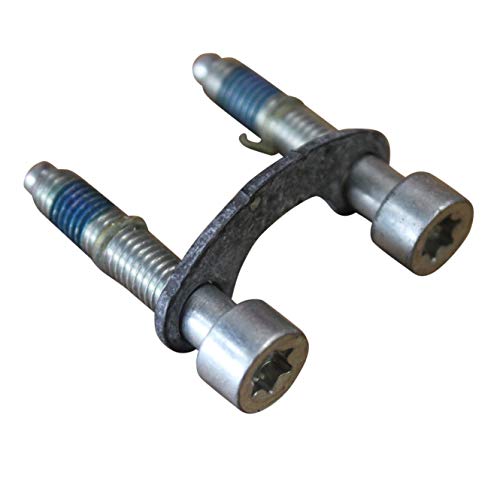
| W712154-S439 | Carrier Bolt |
| 5F9Z-4682-AA | Drive Shaft Nut Kit (3 Required) |
| OPERATION | DESCRIPTION | TIME |
|---|---|---|
| 140137A | 2013-2014 Fusion/MKZ FWD: Replace The Fuel Tank (Do Not Use With Any Other Labor Operations) | 2.6 Hrs. |
| 140137B | 2013-2014 Fusion/MKZ AWD: Replace The Fuel Tank (Do Not Use With Any Other Labor Operations) | 3.0 Hrs. |
WARRANTY STATUS
Eligible Under Provisions Of New Vehicle Limited Warranty Coverage And Emissions Warranty Coverage.
Warranty/ESP coverage limits/policies/prior approvals are not altered by a TSB. Warranty/ESP coverage limits are determined by the identified causal part and verified using the OASIS part coverage tool.
DEALER CODING
| BASIC PART NO. | CONDITION CODE |
| 9002 | 42 |
- For best performance, follow the manufacturer's recommendations in your vehicle owner’s manual.
- Cleans, restores, protects the entire fuel system (fuel injectors, carburetors, intake valves and combustion chambers)
- Restores: lost power, acceleration, lost fuel economy, and operation of the fuel gauge sensor
- Reduces: rough idle, engine surge, hesitation, and spark plus fouling
- Improves: cold start performance, and fuel stability for up to one year

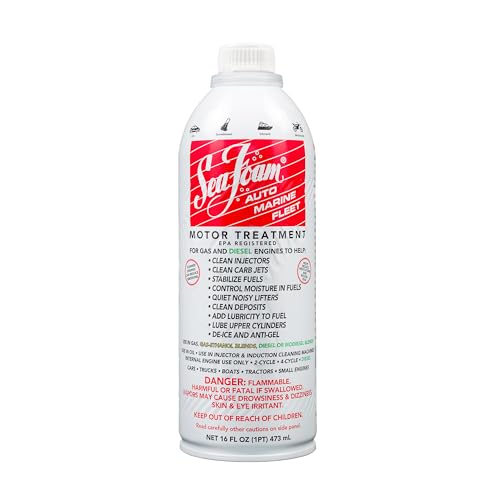
- DEEP FUEL SYSTEM CLEANING - Cleans the entire fuel system (injectors, carburetor passageways, intake valves, and chamber areas) to help restore power, MPG, and throttle response.
- FUEL ADDITIVE FOR GASOLINE AND DIESEL ENGINES - Breaks down fuel residues and varnish for smoother idling and cleaner combustion in gasoline and diesel engines.
- OIL TREATMENT FOR ENGINE CLEANING - Cleans sludge and deposits that can restrict oil flow and lubrication in motor oil crankcases, helping support longer engine life in car and truck engines.
- FUEL STABILIZER - Keeps gas or diesel fresh for up to 2 years. Ideal as a fuel stabilizer and gas stabilizer for stored cars, motorcycles, and generators.
- SAFE FOR ALL ENGINES & FUELS - Compatible with all gasoline and diesel fuels and blends, including E10 and E85. Trusted for use as a gasoline and diesel fuel additive.

- The world’s #1 fuel additive for both gasoline and diesel engines
- A great tune-up in a bottle – treats gasoline, diesel fuel and increases MPG
- Cleans and lubricates the fuel system, including fuel injectors, carburetor and combustion chamber
- Improves fuel economy by burning excess exhaust emissions
- Increases power and acceleration by improving fuel flow and reducing deposit buildup
This product presentation was made with AAWP plugin.
Bought a 2018 Ford Taurus SE; When I fill up tank hear a sloshing of fuel and bubbling of fuel in tank. I took car to Ford for EVAP test; results were negative.
Any idea what problem can be? It happens when I fill up tank to full; once tank goes below 3/4 noise decreases. At 1/2 tank the sloshing/bubbling noise is almost gone.
You may need an updated Fuel Tank to get rid of the noise.
Bought a 2018 Ford Taurus SE; When I fill up tank hear a sloshing of fuel and bubbling of fuel in tank. I took car to Ford for EVAP test; results were negative.
Any idea what problem can be? It happens when I fill up tank to full; once tank goes below 3/4 noise decreases. At 1/2 tank the sloshing/bubbling noise is almost gone.