NHTSA ID Number: 10225509
Manufacturer Communication Number: TSB 22-2403
Summary
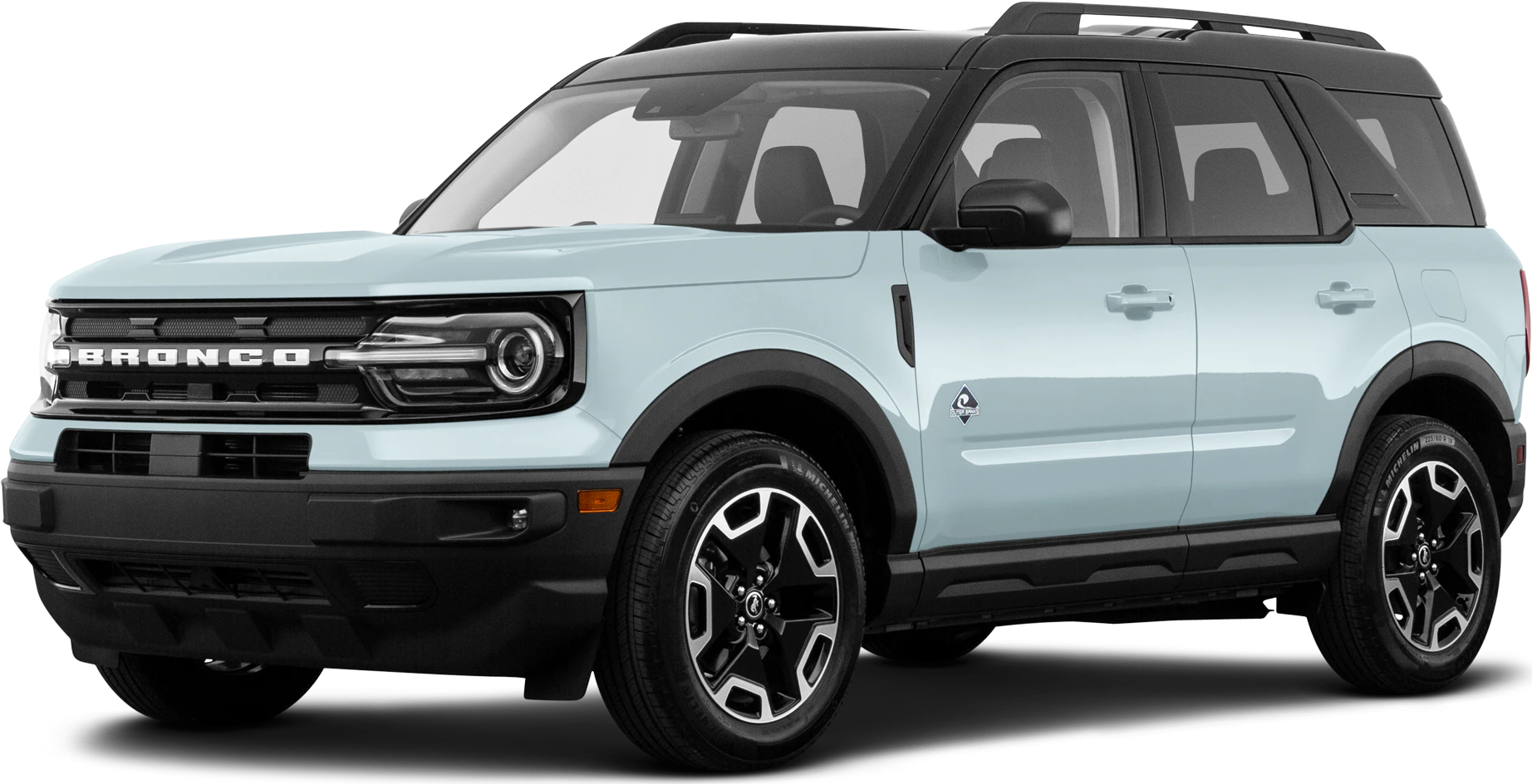
Some 2021-2022 Bronco vehicles may exhibit water leaks located at the A-pillars, overhead console/upfitter switches and/or sun visors. To correct the condition, follow the Service Procedure to diagnose and repair the water leak.
This bulletin supersedes 22-2074.
Model:
| Ford
2021-2022 Bronco |
Summary
This TSB supersedes TSB 22-2074 to update the Service Procedure.
Issue: Some 2021-2022 Bronco vehicles may exhibit water leaks located at the A-pillars, overhead console/upfitter switches and/or sun visors. To correct the condition, follow the Service Procedure to diagnose and repair the water leak.
Action: Follow the Service Procedure to correct the condition on vehicles that meet all of the following criteria:
- 2021-2022 Bronco
- Water leak coming from at least one of the following locations:
- A-pillars
- Sun visors
- Overhead console/upfitter switches
Parts
Parts To Replace Only If Necessary
| Service Part Number | Quantity | Description |
| M2DZ-7803110-C | 1 | Header Seal |
| Obtain Locally | As Needed | 3M™ Strip-Calk |
Service Procedure
NOTE: When submitting the warranty claim for this TSB, include the repair results such as the location of the water leak and/or the procedural Step that led to repairing the vehicle.
1. Does the vehicle exhibit a water leak from any of the locations shown in Figure 1 and Figure 2?
Figure 1 – Right side A-pillar shown, left side similar
Figure 2
(1). Yes – proceed to Step 2.
(2). No – this article does not apply. Refer to the Workshop Manual (WSM), Section 501-18.
2. Remove/retract the front roof sections.
(1). Vehicles equipped with a hard top roof, remove only the front 2 sections covering the driver and passenger seats. Refer to the Digital Owner’s Manual, Removable Vehicle Components > Removable Hard Top > Removing and Installing the Hard Top.
(2). Vehicles equipped with a soft top roof, place it in the partially open position. Refer to the Digital Owner’s Manual, Removable Vehicle Components > Removable Soft Top > Opening and Closing the Soft Top.
3. Is the vehicle equipped with a hard top roof?
(1). Yes – proceed to Step 4.
(2). No – proceed to Step 5.
4. Inspect the side roof channels shown in Figure 3. Are there any signs of water in this area leading back to the hard top center panel and hard top rear cap?
Figure 3 – Left side shown, right side similar
(1). Yes – inspect the hard top center panel seal (3-door vehicle) and/or hard top rear cap seal (5-door vehicles) for proper sealing. Repair as necessary. Repair is complete.
(2). No – proceed to Step 5.
5. Inspect the header seal locator pin which can be found to the left of the middle header seal bolt. Is the locator pin missing, broken and/or damaged? (Figure 4)
Figure 4
(1). Yes – proceed to Step 11
(2). No – proceed to Step 6.
6. Inspect the five fasteners that secure the header seal to the body. Make sure these are tightened to 9 Nm (80 lb-in). The nuts that receive these bolts are not welded to the body will free spin with the bolt if they are loose. If a bolt spins freely during this check, temporarily remove the windshield header trim panel to gain access. Refer to Workshop Manual (WSM), Section 501-05. (Figure 5)
Figure 5
7. Inspect the 2 small bolts on both corners of the header seal. Make sure these are tightened to 3 Nm (26 lb-in). (Figure 6)
Figure 6 – Left side shown, right side similar
8. By hand, firmly massage the header seal in the areas shown in Figure 7. The header seal has butyl located throughout this area. Firmly pressing down while massaging the header seal will make sure the butyl is properly adhered to the body creating a water-tight seal which is required to prevent leaks.
Figure 7 – Left side shown, right side similar
9. Reseal the header seal edge to the body. (Figure 8)
(1). Gain access to the front header seal edge by gently pulling back on the corner.
(2). Inspect for the presence of a clear plastic circular sticker attached to the body. The sticker may only be partially visible. If this sticker is present, use needle nose pliers to completely remove it.
(3). Insert a marble-sized ball of 3M™ Strip-Calk into the gap between the rubber header seal and the body. Return the header seal corner flap to its natural position then Firmly massage the seal in this area (pushing on the seal, onto the body) to be sure it is formed correctly, creating a water-tight seal. When complete, there should not be any visible strip-calk outside of the seal.
Figure 8 – Left side shown, right side similar
10. Has the water leak been repaired?
(1). Yes – reinstall the front roof panels, refer to Step 1. Repair is complete.
(2). No – proceed to Step 11.
11. Remove both windshield trim covers by pressing the button on the rear of the cover and rotating it forward. If a roof rack is installed on the vehicle, it needs to be removed using the assistance of a second person. Refer to the Digital Owner’s Manual for removal instructions. (Figure 9)
Figure 9
12. Remove the windshield header trim panel. Refer to Workshop Manual (WSM), Section 501-05, Interior Trim and Ornamentation > Removal and Installation > Windshield Header Trim Panel.
13. Remove the 5 center bolts and nuts securing the header seal to the body. (Figure 10)
Figure 10
14. Remove the 4 bolts (2 on each side) securing the header seal to the body. (Figure 11)
Figure 11 – Right side shown, left side similar
15. Remove the 2 pushpin fasteners (1 on each end). (Figure 12)
Figure 12
16. Remove the header seal from the vehicle.
17. Using a plastic scraper, remove all residual header seal foam that is still stuck to the vehicle. His foam will prevent proper sealing if left in place. The residual sticky adhesive can remain on the vehicle as it will assist with sealing.
18. Apply 3M™ Strip-Calk along the inside edges of the sheet metal drain openings. There are four drains, two on each A-pillar. These openings have multiple layers of sheet metal that must be completely sealed. (Figure 13)
Figure 13
19. Apply 3M™ Strip-Calk to the exposed body seams starting at the roof rack trim cover area and ending at the corner seal where the body seam ends. Do not leave a gap between the edge of the caulk and the corner seal. (Figures 14-17)
Figure 14 – Left side shown before application
Figure 15 – Left side shown, after application
Figure 16 – Right side shown, before application
Figure 17 – Right side shown, after application
20. Peel the plastic backings from the new header seal to expose the bottom sticky surface applied by the manufacturer.
21. Carefully install the header seal on the vehicle ensuring all attachment holes line up to the vehicle attachment points.
22. Install all header seal attachments.
(1). Tighten the 5 center bolts and nuts securing the header seal to the body to 9 Nm (80 lb-in). (Figure 10)
(2). Tighten the 4 bolts (2 on each side) securing the header seal to the body to 3 Nm (26 lb-in). (Figure 11)
(3). Install the 2 pushpin fasteners, 1 located at each end. (Figure 12)
23. Inspect the header seal to body surface by lightly pulling up on the edges of header seal. If any gaps are found in the sealing surface, fill the gaps using 3M™ Strip-Calk.
24. By hand, firmly massage the header seal in the areas shown in Figure 7 and any other areas where strip-calk was added. The header seal has adhesive located throughout these areas. Firmly pressing down while massaging the header seal will make sure the butyl is properly adhered to the body creating a water-tight seal.
25. Install the windshield header trim panel. Refer to WSM, Section 501-05, Interior Trim and Ornamentation > Removal and Installation > Windshield Header Trim Panel.
26. Pull/remove the cord that runs along the inside of the new header seal groove.
27. Install both windshield trim covers. If a roof rack was installed on the vehicle, it needs to be reinstalled with the assistance of a second person. Refer to the Digital Owner’s Manual for installation instructions. (Figure 9)
28. Return the roof to a fully closed position.
(1). Vehicles equipped with a hard top roof, remove only the front 2 sections covering the driver and passenger seats. Refer to the Digital Owner’s Manual, Removable Vehicle Components > Removable Hard Top > Removing and Installing the Hard Top.
(2). Vehicles equipped with a soft top roof, place it in the partially open position. Refer to the Digital Owner’s Manual, Removable Vehicle Components > Removable Soft Top > Opening and Closing the Soft Top.
29. If equipped, inspect the carpet for dampness and/or odor and service as necessary.
2 Affected Products
Vehicle
| MAKE | MODEL | YEAR |
| FORD | BRONCO | 2021-2022 |
1 Associated Document
Manufacturer Communications
22-2403
21 October 2022
MC-10225509-0001.pdf 659.227KB
NHTSA ID Number: 10208824
Manufacturer Communication Number: TSB 22-2074
Summary
Some 2021-2022 Bronco vehicles may experience a water leak that originates from the left and/or right A-pillars and/or the windshield header. This may be due to excessive gaps in the body seams from the factory. To correct the condition, follow the Service Procedure to reseal the affected body gaps and replace the front header seal.
1 Associated Document
Manufacturer Communications
22-2074
01 March 2022
MC-10208824-0001.pdf 376.097KB
NHTSA ID Number: 10203652
Manufacturer Communication Number: TSB 21-2403
Summary
Some 2021 Bronco vehicles may experience a water leak that originates from the left and/or right A-pillars and/or the windshield header. This may be due to excessive gaps in the body seams from the factory. To correct the condition, follow the Service Procedure to reseal the affected body gaps and replace the front header seal.
1 Associated Document
Manufacturer Communications
21-2403
15 November 2021
MC-10203652-0001.pdf 1166.076KB
![[Black] 2 Pack Professional Automotive Seam Sealer, Paintable Quick-Set Polyurethane Auto Body Seam Sealer for Metal Surfaces of Cars, Trucks, Etc, Includes Gloves & Tip - Black RV Roof Sealant](https://m.media-amazon.com/images/I/51rYdoPRb-L.jpg "Water Leak From A-Pillars And/Or Windshield Header - 2021-2022 Ford Bronco 2")
- Bonds to All Surfaces: Our seam sealer automotive formula bonds strongly with primed, painted, or bare metal surfaces, offering a fast curing solution. Ready for paint in just 30 minutes, it serves as an effective RV roof sealant and polyurethane auto body filler without the need for sanding.
- All-Weather Performance: Designed to deliver a long-lasting seal, our automotive seam sealer withstands extreme weather without shrinking or cracking. Seam seal technology ensures it remains flexible and durable for both indoor and outdoor applications, making it a versatile automotive sealant.
- Easy Application & No Prep Needed: Seamlessly compatible with any standard urethane caulk gun, this auto glass sealant offers excellent adhesion without the need for surface prep. Our car seam sealer ensures quick and professional-grade gap filling.
- Versatile Application Across Vehicles: Perfect as car body filler for boats, trucks, and RVs, this automotive paintable seam sealer ensures a seamless fit on body panel and seams. Acting as an RV seam sealer, it meets diverse automotive repair needs effectively.
- Professional Results Guaranteed: Trusted by auto repair experts across the USA, our auto body seam sealer ensures high-quality, professional repairs with every use. Satisfaction guaranteed—see the difference in your repairs!
![[Black] Professional Automotive Seam Sealer, Paintable Quick-Set Polyurethane Auto Body Seam Sealer for Metal Surfaces of Cars, Trucks, Etc, Includes Gloves & Tip - Black RV Roof Sealant](https://m.media-amazon.com/images/I/41CSSWLKzxL._SL160_.jpg "Water Leak From A-Pillars And/Or Windshield Header - 2021-2022 Ford Bronco 3")
- Bonds to All Surfaces: Our seam sealer automotive formula bonds strongly with primed, painted, or bare metal surfaces, offering a fast curing solution. Ready for paint in just 30 minutes, it serves as an effective RV roof sealant and polyurethane auto body filler without the need for sanding.
- All-Weather Performance: Designed to deliver a long-lasting seal, our automotive seam sealer withstands extreme weather without shrinking or cracking. Seam seal technology ensures it remains flexible and durable for both indoor and outdoor applications, making it a versatile automotive sealant.
- Easy Application & No Prep Needed: Seamlessly compatible with any standard urethane caulk gun, this auto glass sealant offers excellent adhesion without the need for surface prep. Our car seam sealer ensures quick and professional-grade gap filling.
- Versatile Application Across Vehicles: Perfect as car body filler for boats, trucks, and RVs, this automotive paintable seam sealer ensures a seamless fit on body panel and seams. Acting as an RV seam sealer, it meets diverse automotive repair needs effectively.
- Professional Results Guaranteed: Trusted by auto repair experts across the USA, our auto body seam sealer ensures high-quality, professional repairs with every use. Satisfaction guaranteed—see the difference in your repairs!
![[2-Pack] Berkland Polyurethane Seam Sealer, Black - Paintable Auto Body](https://m.media-amazon.com/images/I/4184QW8Um7L.jpg "Water Leak From A-Pillars And/Or Windshield Header - 2021-2022 Ford Bronco 4")
- PROFESSIONAL AUTOMOTIVE SEAM SEALER — BLACK — WON'T SHRINK OR CRACK — Polyurethane formula in black seals body panel seams, weld joints, and gaps with a durable, flexible compound. Black color blends with dark undercarriage surfaces, rocker panels, and wheel wells where visible sealant lines need to disappear.
- PAINTABLE IN 30 MINUTES — Apply, wait 30 minutes, and paint right over it. Fast cure time means you can prime and topcoat the same day. Black base color requires less paint coverage than white — ideal when working on dark-colored vehicles or undercarriage areas that won't be topcoated.
- BONDS TO BARE, PRIMED & PAINTED METAL — Adheres equally well to bare steel, primed surfaces, and already-painted panels. No special surface preparation beyond basic cleaning. Also bonds to fiberglass and composite panels for complete auto body restoration.
- 2-PACK WITH GLOVES — STANDARD CAULKING GUN COMPATIBLE — Two 10 oz cartridges provide enough seam sealer for full panel or floor pan restoration. Loads into any standard caulking gun for controlled bead application. Includes nitrile gloves for clean handling.
- AUTO BODY, RV & MARINE APPLICATIONS — Use as an automotive seam sealer, RV roof sealant, or marine joint compound. Seals truck bed seams, rocker panels, door jambs, wheel wells, floor pans, and undercarriage joints. Waterproof and weather resistant once cured.

- Permanent Repairs – Seal seams and fix holes in tents, tarps, awnings, rainflies, and gear like Thermarest sleeping pads with a flexible, waterproof adhesive.
- Covers 12 Feet of Seams – One 1 oz tube treats up to 12 feet of seams or patches torn fabric: 8 oz size also available for larger repair needs.
- Durable & Flexible Seal – Cures into a rubber seal that flexes with fabric, bonds to nylon, polyester, canvas, leather, and vinyl for long-lasting performance.
- Won’t Peel or Crack – Designed to stay put through heavy use and weather; ideal for re-proofing or fixing gear that needs to stay waterproof.
- Easy Application – Comes with applicator brush for precise, mess-free repairs at home or in the field.

- SINGLE COMPONENT FORMULA: Adheres well to bare metal, primed metal and painted surfaces
- MOISTURE CURING PROPERTY: Provides excellent performance in high heat and humidity environments
- NON-SHRINKING, NON-CRACKING: Remains flexible and offers superior results to solvent-based sealers
- QUICK PAINTABILITY: Allows painting after 30-45 minutes
- THICK CONSISTENCY: Fills large voids and can be smoothed to a featheredge or brushed
SEOCONTENT-START
TECHNICAL SERVICE BULLETIN Water Leak From The A-Pillars, O erhead Console/Upfitter Switches And/Or Sun Visors 22-2403 21 October 2022 This bulletin supersedes 22-2074. Model: Ford 2021-2022 Bronco Summary This TSB supersedes TSB 22-2074 to update the Service Procedure. Issue: Some 2021-2022 Bronco vehicles may exhibit water leaks located at the A-pillars, overhead console/upfitter switches and/or sun visors. To correct the condition, follow the Service Procedure to diagnose and repair the water leak. Action: Follow the Service Procedure to correct the condition on vehicles that meet all of the following criteria: • 2021-2022 Bronco • Water leak coming from at least one of the following locations: – A-pillars – Sun visors – Overhead console/upfitter switches Parts Parts To Replace Only If Necessary Service Part Number Quantity Description M2DZ-7803110-C 1 Header Seal Obtain Locally As Needed 3M™ Strip-Calk Warranty Status: Eligible under provisions of New Vehicle Limited Warranty (NVLW)/Service Part Warranty (SPW)/Special Service Part (SSP)/Extended Service Plan (ESP) coverage. Limits/policies/prior approvals are not altered by a TSB. NVLW/SPW/SSP/ESP coverage limits are determined by the identified causal part and verified using the OASIS part coverage tool. Labor Times Description 2021-2022 Bronco: Diagnose And Repair The Water Leak Following The Service Procedure (Do Not Use With Any Other Labor Operations) Operation No. MT222403 Time Actual Time Repair/Claim Coding Causal Part: 7803110 Condition Code: 68 Service Procedure NOTE: When submitting the warranty claim for this TSB, include the repair results such as the location of the water leak and/or the procedural Step that led to repairing the vehicle. 1. Does the vehicle exhibit a water leak from any of the locations shown in Figure 1 and Figure 2? Figure 1 – Right side A-pillar shown, left side similar Figure 2 (1). Yes – proceed to Step 2. (2). No – this article does not apply. Refer to the Workshop Manual (WSM), Section 501-18. 2. Remove/retract the front roof sections. (1). Vehicles equipped with a hard top roof, remove only the front 2 sections covering the driver and passenger seats. Refer to the Digital Owner’s Manual, Removable Vehicle Components > Removable Hard Top > Removing and Installing the Hard Top. (2). Vehicles equipped with a soft top roof, place it in the partially open position. Refer to the Digital Owner’s Manual, Removable Vehicle Components > Removable Soft Top > Opening and Closing the Soft Top. 3. Is the vehicle equipped with a hard top roof? (1). Yes – proceed to Step 4. (2). No – proceed to Step 5. 4. Inspect the side roof channels shown in Figure 3. Are there any signs of water in this area leading back to the hard top center panel and hard top rear cap? Figure 3 – Left side shown, right side similar (1). Yes – inspect the hard top center panel seal (3-door vehicle) and/or hard top rear cap seal (5-door vehicles) for proper sealing. Repair as necessary. Repair is complete. (2). No – proceed to Step 5. 5. Inspect the header seal locator pin which can be found to the left of the middle header seal bolt. Is the locator pin missing, broken and/or damaged? (Figure 4) Figure 4 (1). Yes – proceed to Step 11 (2). No – proceed to Step 6. 6. Inspect the five fasteners that secure the header seal to the body. Make sure these are tightened to 9 Nm (80 lb- in). The nuts that receive these bolts are not welded to the body will free spin with the bolt if they are loose. If a bolt spins freely during this check, temporarily remove the windshield header trim panel to gain access. Refer to Workshop Manual (WSM), Section 501-05. (Figure 5) Figure 5 7. Inspect the 2 small bolts on both corners of the header seal. Make sure these are tightened to 3 Nm (26 lb-in). (Figure 6) Figure 6 – Left side shown, right side similar 8. By hand, firmly massage the header seal in the areas shown in Figure 7. The header seal has butyl located throughout this area. Firmly pressing down while massaging the header seal will make sure the butyl is properly adhered to the body creating a water-tight seal which is required to prevent leaks. Figure 7 – Left side shown, right side similar 9. Reseal the header seal edge to the body. (Figure 8) (1). Gain access to the front header seal edge by gently pulling back on the corner. (2). Inspect for the presence of a clear plastic circular sticker attached to the body. The sticker may only be partially visible. If this sticker is present, use needle nose pliers to completely remove it. (3). Insert a marble-sized ball of 3M™ Strip-Calk into the gap between the rubber header seal and the body. Return the header seal corner flap to its natural position then Firmly massage the seal in this area (pushing on the seal, onto the body) to be sure it is formed correctly, creating a water-tight seal. When complete, there should not be any visible strip-calk outside of the seal. Figure 8 – Left side shown, right side similar 10. Has the water leak been repaired? (1). Yes – reinstall the front roof panels, refer to Step 1. Repair is complete. (2). No – proceed to Step 11. 11. Remove both windshield trim covers by pressing the button on the rear of the cover and rotating it forward. If a roof rack is installed on the vehicle, it needs to be removed using the assistance of a second person. Refer to the Digital Owner’s Manual for removal instructions. (Figure 9) Figure 9 12. Remove the windshield header trim panel. Refer to Workshop Manual (WSM), Section 501-05, Interior Trim and Ornamentation > Removal and Installation > Windshield Header Trim Panel. 13. Remove the 5 center bolts and nuts securing the header seal to the body. (Figure 10) Figure 10 14. Remove the 4 bolts (2 on each side) securing the header seal to the body. (Figure 11) Figure 11 – Right side shown, left side similar 15. Remove the 2 pushpin fasteners (1 on each end). (Figure 12) Figure 12 16. Remove the header seal from the vehicle. 17. Using a plastic scraper, remove all residual header seal foam that is still stuck to the vehicle. His foam will prevent proper sealing if left in place. The residual sticky adhesive can remain on the vehicle as it will assist with sealing. 18. Apply 3M™ Strip-Calk along the inside edges of the sheet metal drain openings. There are four drains, two on each A-pillar. These openings have multiple layers of sheet metal that must be completely sealed. (Figure 13) Figure 13 19. Apply 3M™ Strip-Calk to the exposed body seams starting at the roof rack trim cover area and ending at the corner seal where the body seam ends. Do not leave a gap between the edge of the caulk and the corner seal. (Figures 14-17) Figure 14 – Left side shown before application Figure 15 – Left side shown, after application Figure 16 – Right side shown, before application Figure 17 – Right side shown, after application 20. Peel the plastic backings from the new header seal to expose the bottom sticky surface applied by the manufacturer. 21. Carefully install the header seal on the vehicle ensuring all attachment holes line up to the vehicle attachment points. 22. Install all header seal attachments. (1). Tighten the 5 center bolts and nuts securing the header seal to the body to 9 Nm (80 lb-in). (Figure 10) (2). Tighten the 4 bolts (2 on each side) securing the header seal to the body to 3 Nm (26 lb-in). (Figure 11) (3). Install the 2 pushpin fasteners, 1 located at each end. (Figure 12) 23. Inspect the header seal to body surface by lightly pulling up on the edges of header seal. If any gaps are found in the sealing surface, fill the gaps using 3M™ Strip-Calk. 24. By hand, firmly massage the header seal in the areas shown in Figure 7 and any other areas where strip-calk was added. The header seal has adhesive located throughout these areas. Firmly pressing down while massaging the header seal will make sure the butyl is properly adhered to the body creating a water-tight seal. 25. Install the windshield header trim panel. Refer to WSM, Section 501-05, Interior Trim and Ornamentation > Removal and Installation > Windshield Header Trim Panel. 26. Pull/remove the cord that runs along the inside of the new header seal groove. 27. Install both windshield trim covers. If a roof rack was installed on the vehicle, it needs to be reinstalled with the assistance of a second person. Refer to the Digital Owner’s Manual for installation instructions. (Figure 9) 28. Return the roof to a fully closed position. (1). Vehicles equipped with a hard top roof, remove only the front 2 sections covering the driver and passenger seats. Refer to the Digital Owner’s Manual, Removable Vehicle Components > Removable Hard Top > Removing and Installing the Hard Top. (2). Vehicles equipped with a soft top roof, place it in the partially open position. Refer to the Digital Owner’s Manual, Removable Vehicle Components > Removable Soft Top > Opening and Closing the Soft Top. 29. If equipped, inspect the carpet for dampness and/or odor and service as necessary. © 2022 Ford Motor Company All rights reserved. NOTE: The information in Technical Service Bulletins is intended for use by trained, professional technicians with the knowledge, tools, and equipment to do the job properly and safely. It informs these technicians of conditions that may occur on some vehicles, or provides information that could assist in proper vehicle service. The procedures should not be performed by “do-it-yourselfers”. Do not assume that a condition described affects your car or truck. Contact a Ford or Lincoln dealership to determine whether the Bulletin applies to your vehicle. Warranty Policy and Extended Service Plan documentation determine Warranty and/or Extended Service Plan coverage unless stated otherwise in the TSB article. The information in this Technical Service Bulletin (TSB) was current at the time of printing. Ford Motor Company reserves the right de this information with updates. The most recent information is available through Ford Motor Company’s on-line technical resources.
**************************************************************************************************************
SEOCONTENT-END
This product presentation was made with AAWP plugin.